Understand a challenge
Air and health: we can change what we breathe
Air can look clean while containing pollutants. Some come directly from engines, heating or industry; others form in the atmosphere. Understanding their sources and our exposure helps improve everyday environments, indoors and outdoors.
Visual explainer · 5 min read
Reducing pollution at source protects many people at once; exposure does not depend only on individual choices.
How it works

Step 1 / 4
Emit pollutants
Combustion can release particles and gases such as nitrogen dioxide. Other sources include dust, brake and tyre wear, and farming activities. The contribution of each source varies with location and season.
Context illustration, not to scale. Select a step to explore the process.
People are part of the story
Air pollution affects respiratory and cardiovascular health. Children, older people and people with certain existing conditions can be more susceptible. Exposure is also unequal: housing, work and proximity to roads or industry constrain people’s ability to choose a less polluted setting.
What the evidence tells us
Stronger evidence, more demanding guidance
In 2021, WHO updated its air quality guidelines after reviewing evidence of effects at lower concentrations than previously recognised. Its values guide health policy; they are not automatically national legal standards or a boundary between risk and no risk.
WHO · Global air quality guidelines ↓Improvement and persistent exposure coexist
The European Environment Agency documents falling emissions and better air quality in Europe alongside continued high exposure and unequal impacts. An improving regional trend does not describe every neighbourhood or remove the need to address remaining sources.
EEA · Air pollution: sources, inequalities and progress ↓What can help
Change systems, not just routes
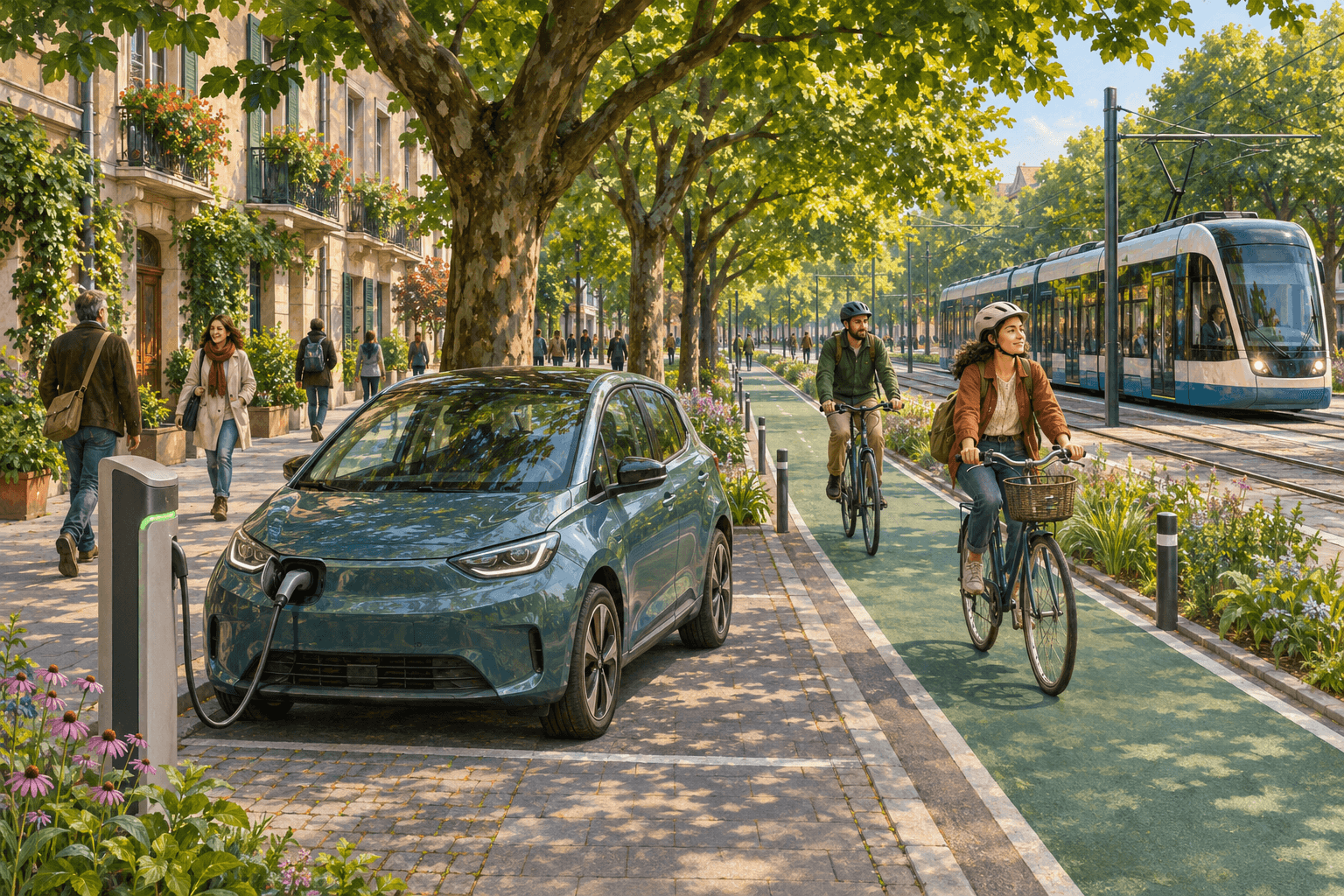
Accessible public transport, safe walking and cycling, cleaner energy and industrial emission controls can reduce shared sources. Measures should target the sources actually present.
Improve indoor air
Less-polluting equipment and fuels, suitable extraction and ventilation design help reduce emissions and accumulation. Solutions must also account for outdoor pollution and household affordability.
Measure and share useful information
Monitoring networks and clear alerts help evaluate policies and detect episodes. Comparing places requires attention to pollutant, period and method. One sensor reading does not represent someone’s full personal exposure.
What to keep in mind
Clean-looking air is not necessarily unpolluted. Cutting CO₂ does not guarantee lower levels of every local pollutant, and an electric car does not eliminate tyre or brake particles. This explainer concerns collective prevention; it cannot calculate individual risk or replace local health alerts.
Sources and further reading
- WHO · Global air quality guidelines ↗2021-09-22
- WHO · Types of pollutants ↗
- WHO · Ambient outdoor air pollution ↗
- WHO · Household air pollution ↗2025-12-16
- EEA · Air pollution: sources, inequalities and progress ↗
EkoPulse explanation based on the cited sources. Original AI-generated illustrations for EkoPulse; they are not photographs or research figures, and do not imply endorsement by the cited institutions.
Editorial review: