Evidence of progress
Electric mobility: looking beyond the exhaust
A battery electric car uses electricity to move and produces no exhaust emissions. Assessing its contribution also requires looking at manufacturing, charging electricity, distance travelled and the alternatives available for reaching a destination.
Visual explainer · 5 min read
Electrification can reduce emissions; combining efficient vehicles with less car dependence broadens the possibilities.
How it works
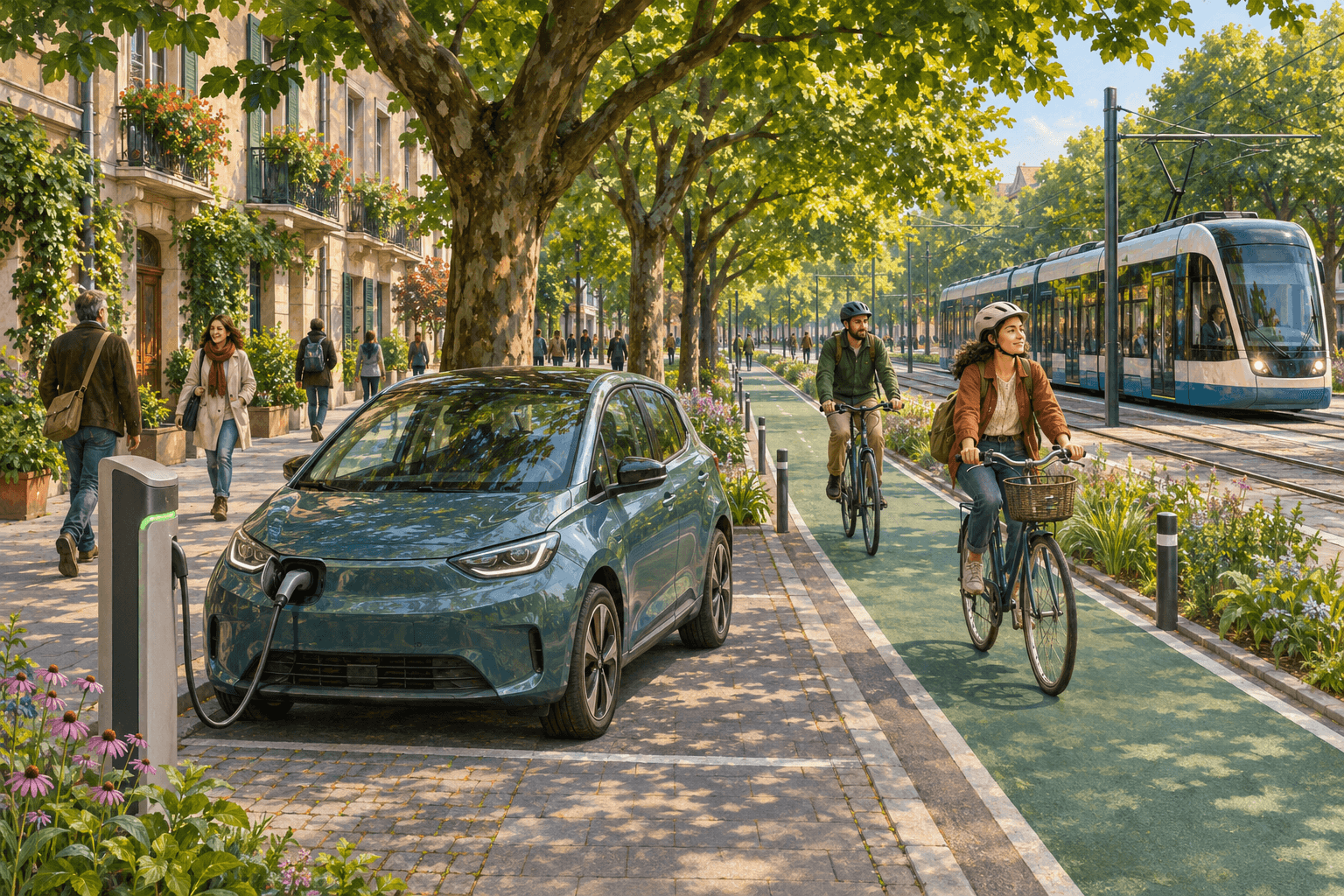
Step 1 / 4
Build the vehicle and battery
Extracting and processing materials and making the battery causes impacts before driving begins. Size, chemistry and manufacturing processes matter. This starting point belongs in comparisons with a combustion vehicle offering similar capabilities.
Context illustration, not to scale. Select a step to explore the process.
People are part of the story
Access to affordable, reliable transport matters more than owning a particular technology. Renters and people without private parking may face greater charging barriers. The transition needs to consider employment, extraction conditions, and rural, caring and disability-related travel needs.
What the evidence tells us
An observed shift in sales
The IEA records over 20 million electric cars sold in 2025, roughly one-quarter of new sales. Its category includes battery electric and plug-in hybrid cars. New sales do not yet describe the whole fleet on the road.
IEA · Global EV Outlook 2026: executive summary ↓Compare the whole lifecycle
EPA summarises research finding generally lower lifecycle greenhouse gas emissions for electric cars than average petrol cars, including manufacturing and charging. Results depend on the models, battery, lifetime and grid; there is no universal percentage.
US EPA · Electric Vehicle Myths: lifecycle, efficiency and charging ↓What can help
Make alternatives accessible
Connecting everyday destinations through public transport, walking routes and cycleways can reduce car dependence where feasible.
Electrify thoughtfully
When a vehicle is necessary, comparing size, real-world consumption and charging conditions helps selection. A very long range is not always needed.
Care for equipment and materials
Maintenance, repair and responsible battery collection help make use of materials. Recovery needs infrastructure and oversight as well as technical possibilities.
What to keep in mind
Electrification does not remove congestion, space use, crashes or all particles. A plug-in hybrid also uses fuel and its balance depends on actual electric driving. This explanation does not determine when to replace an existing car: that requires comparing options and context.
Sources and further reading
- IEA · Global EV Outlook 2026: executive summary ↗2026-05-20
- US EPA · Electric Vehicle Myths: lifecycle, efficiency and charging ↗
- IEA · Outlook for electric mobility: emissions impacts ↗2026-05-20
- IEA · Global EV Outlook 2026: batteries, charging and other modes ↗2026-05-20
- EEA · Sustainability of Europe’s mobility systems 2025: air pollution ↗2025
EkoPulse explanation based on the cited sources. Original AI-generated illustrations for EkoPulse; they are not photographs or research figures, and do not imply endorsement by the cited institutions.
Editorial review: