Understand a challenge
Urban heat: neighbourhoods that protect people better
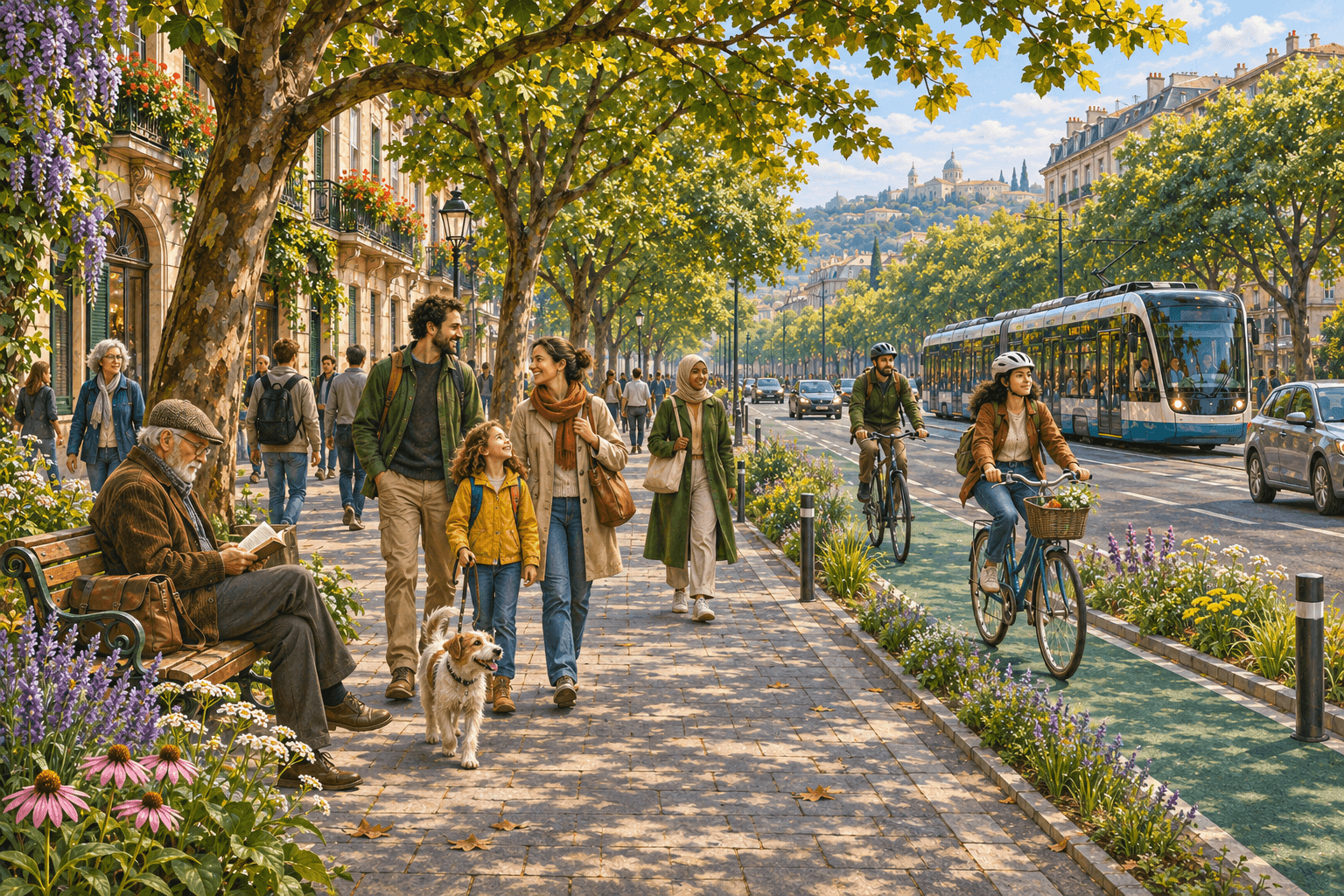
On the same day, an unshaded street and a park can feel very different. How we build and inhabit a city changes how much heat we absorb, retain and can avoid. Preparing neighbourhoods for heat connects climate, health and fairness.
Visual explainer · 5 min read
Reducing exposure requires shade, suitable buildings and accessible protection for those who need it most.
How it works

Step 1 / 4
Sunlight heats surfaces
Roofs, façades and paving absorb some solar energy. Materials, colour and local geometry influence this exchange. Urban surfaces do not all heat equally, and their temperature does not necessarily match air temperature.
Context illustration, not to scale. Select a step to explore the process.
People are part of the story
People working outdoors, living in overheating flats or unable to afford cooling have fewer options. Adaptation should involve residents and workers and improve public spaces, housing and services. Access to cool places matters as much as their existence.
What the evidence tells us
Measure the relevant heat
EPA distinguishes surface and air measurements when assessing heat islands. A thermal image can locate hot paving, but alone cannot assess the conditions people breathe and experience, or conditions inside their homes.
US EPA · Measuring Heat Islands ↓Protection requires several measures
WHO identifies heat as an environmental and occupational hazard and recommends coordinated preparedness, warnings and action plans. EEA connects urban inequalities with housing and access to green space. Useful interventions combine physical conditions with people’s actual ability to protect themselves.
WHO · Heat and health ↓EEA · Urban sustainability: heat and unequal access to green areas ↓What can help
Prioritise useful shade
Protecting mature trees and shading routes, courtyards and stops can improve heavily used places. Design should plan for soil, water, accessibility and maintenance.
Adapt buildings and materials
External shade, suitable roofs and climate-appropriate ventilation can limit overheating. Choices require assessing the building and avoiding shifting risks to other times or users.
Prepare services and protect access
Clear warnings, accessible cool spaces and work organisation are part of the response. Evaluation should check who actually receives protection, alongside counting trees or facilities.
What to keep in mind
There is no universal temperature reduction per tree or roof. Scale, climate and location matter. Air conditioning can protect indoors but needs energy and can release heat outside; green spaces need water and care. Adaptation does not replace reducing the causes of warming.
Sources and further reading
- US EPA · What Are Heat Islands? ↗
- US EPA · Measuring Heat Islands ↗
- US EPA · Benefits of Trees and Vegetation ↗
- US EPA · Reducing Urban Heat Islands: Compendium of Strategies ↗2008
- WHO · Heat and health ↗2026-07-31
- EEA · Urban sustainability: heat and unequal access to green areas ↗
- EEA Climate-ADAPT · Urban adaptation ↗
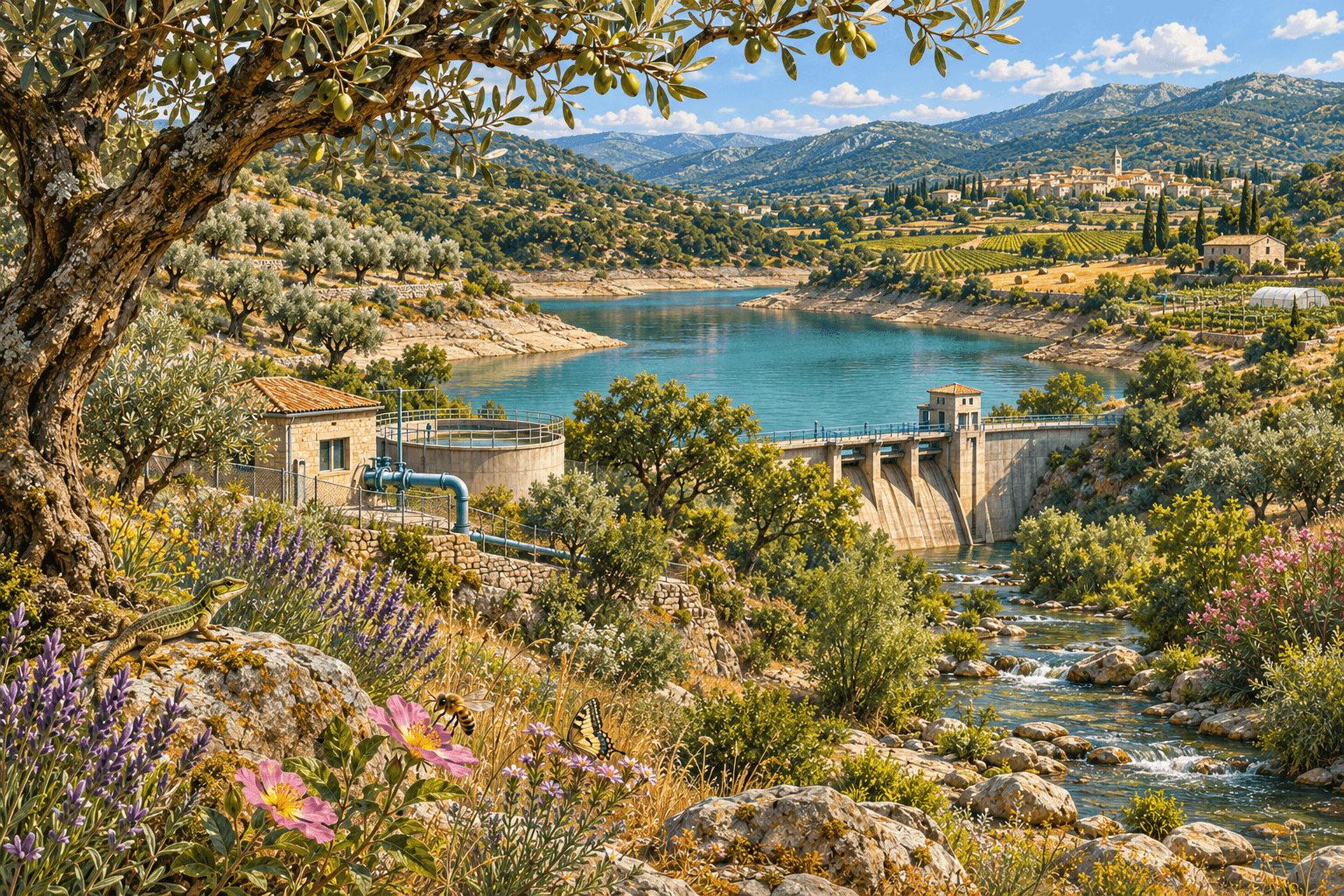
EkoPulse explanation based on the cited sources. Original AI-generated illustrations for EkoPulse; they are not photographs or research figures, and do not imply endorsement by the cited institutions.
Editorial review: