Understand a challenge
Water: availability, quality and access for everyone
A river can contain water while a home goes without it. Understanding scarcity means asking how much is available, when it arrives, its quality and who can use it. Rainfall, infrastructure and decisions about allocation are parts of the same story.
Visual explainer · 5 min read
Caring for water means protecting its sources and providing safe, affordable services, as well as avoiding unnecessary use.
How it works
Step 1 / 4
A cycle with local limits
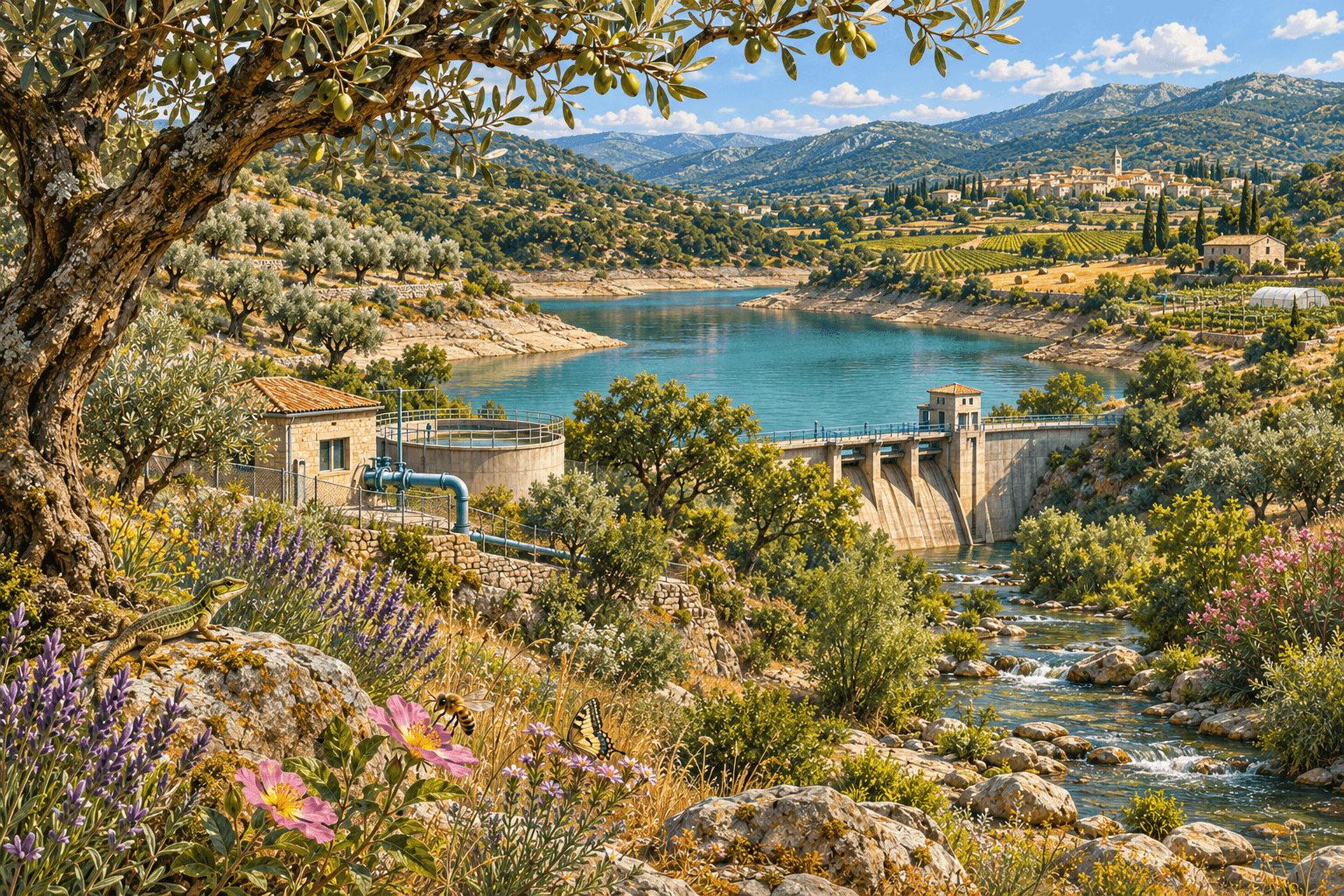
Water circulates, but availability changes between seasons and catchments. Rivers, wetlands, soils and aquifers store and convey it. Drought is an abnormal water shortage; scarcity can also occur under usual rainfall when demand exceeds availability.
Context illustration, not to scale. Select a step to explore the process.
People are part of the story
Lower-income households often have fewer alternatives when supplies fail, become polluted or cost more. Collecting water takes time away from education, paid work or rest. Management should involve service users and protect essential needs and ecosystems, rather than placing all responsibility on domestic consumption.
What the evidence tells us
Scarcity and access measure different things
FAO distinguishes physical availability, access and infrastructure problems. An indicator of pressure on resources does not by itself describe the safety of water reaching each home. Decisions require looking at both dimensions.
FAO · Water scarcity ↓UN-Water · Water scarcity ↓Connection does not equal safe service
The WHO/UNICEF Joint Monitoring Program assesses safely managed drinking water through three conditions: on premises, available when needed and free from contamination. This definition reveals gaps that simply counting connections would hide.
WHO/UNICEF JMP · Drinking-water service definitions ↓WHO · Drinking-water ↓What can help
Protect the catchment
Protecting wetlands and soils, controlling discharges and planning withdrawals help maintain quantity and quality. Decisions should consider dry seasons and ecosystem needs.
Maintain inclusive services
Repairing leaks, improving sanitation and testing quality require investment and maintenance. Tariffs and support should be designed to reach lower-income households too.
Save where it makes a difference
Reducing losses and unnecessary use across farming, industry and homes can ease pressure. Measure outcomes at catchment scale: greater efficiency does not guarantee lower withdrawals if total use expands.
What to keep in mind
Desalination, new reservoirs or reuse can help in some places, but involve costs, energy requirements and monitoring needs. There is no universal solution. An annual average can hide critical months and inequalities within one city.
Sources and further reading
- FAO · Water scarcity ↗
- UN-Water · Water scarcity ↗
- WHO/UNICEF JMP · Drinking-water service definitions ↗
- WHO · Drinking-water ↗2023-09-13
- IPCC · AR6 Working Group II, Chapter 4: Water ↗2022
EkoPulse explanation based on the cited sources. Original AI-generated illustrations for EkoPulse; they are not photographs or research figures, and do not imply endorsement by the cited institutions.
Editorial review: