Understand a challenge
Biodiversity: a web of life we can protect
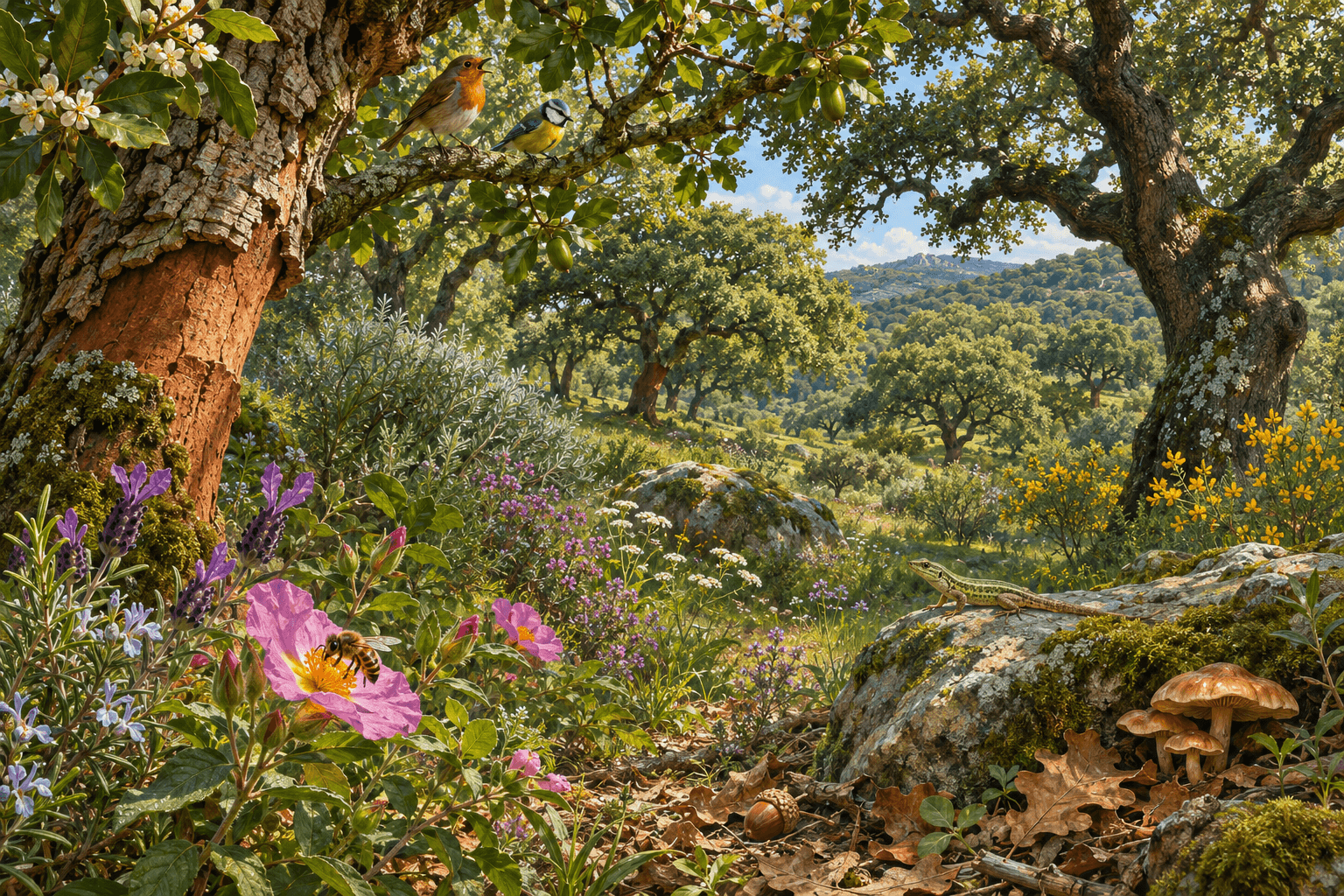
A forest is more than a collection of trees. Fungi, insects, birds and microorganisms participate in relationships that keep the place alive. Biodiversity loss means losing variety in life and some of those relationships, even before a species disappears.
Visual explainer · 6 min read
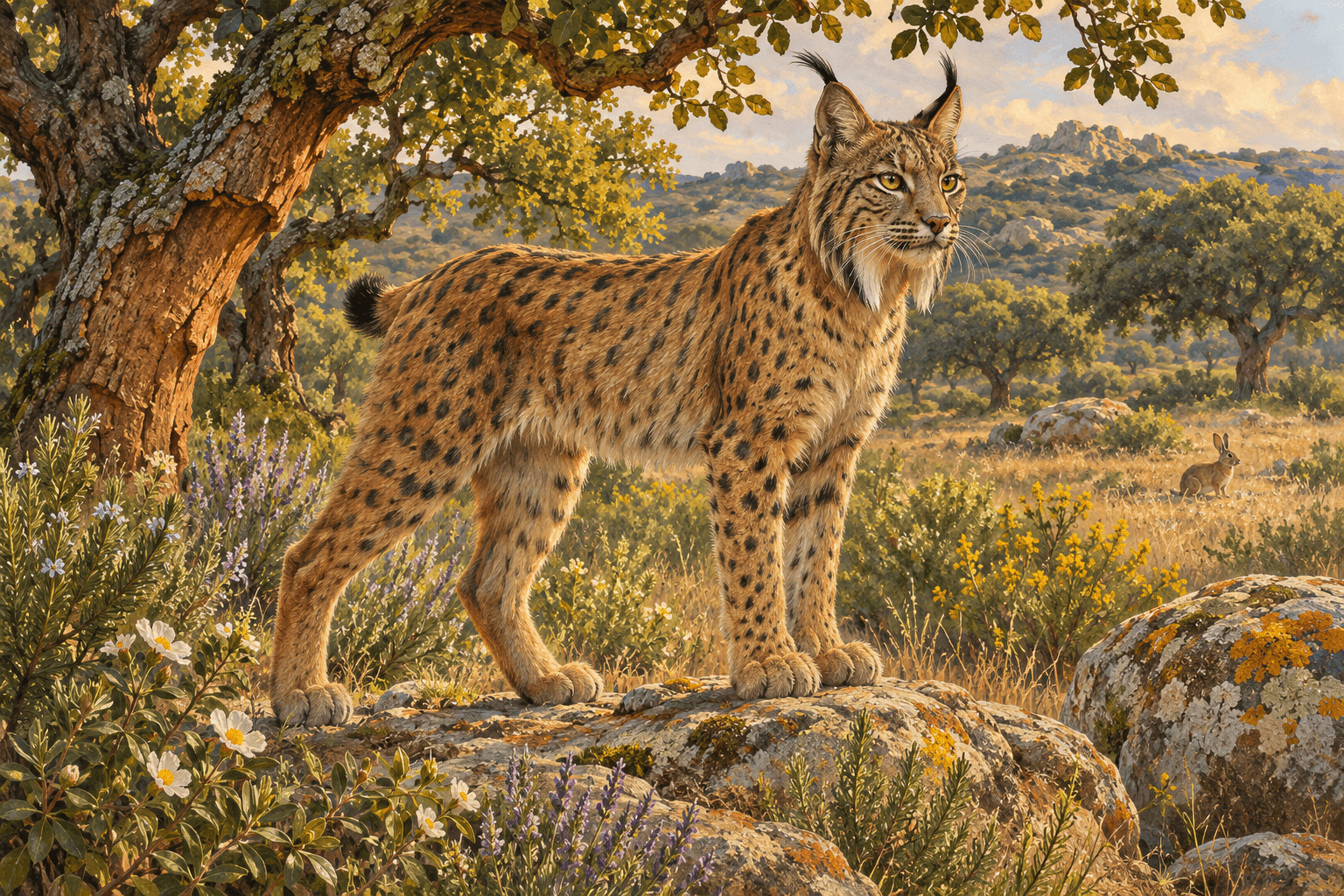
Protecting species also requires caring for their habitats and the connections between them.
Are we entering a sixth mass extinction?
Some researchers consider today’s crisis the beginning of a sixth mass extinction; others question that designation. A frequently used criterion is the loss of about 75% of species over a geologically short interval: this does not mean we have already lost that percentage. The severity of the crisis does not depend on settling that debate. IPBES estimated in 2019 that extinction rates were at least tens to hundreds of times the average over the past ten million years. Population declines and habitat loss also matter, long before a species’ last population disappears.
Cowie, Bouchet & Fontaine · The Sixth Mass Extinction: fact, fiction or speculation? ↓Wiens & Saban · Questioning the sixth mass extinction ↓IPBES · Global Assessment, institutional release via UNEP ↓How it works
Step 1 / 4
A web of life
Diversity exists between species, within each species and between ecosystems. Imagine a landscape where flowers and pollinators meet, and decomposers return nutrients to the soil.
Context illustration, not to scale. Select a step to explore the process.
People are part of the story
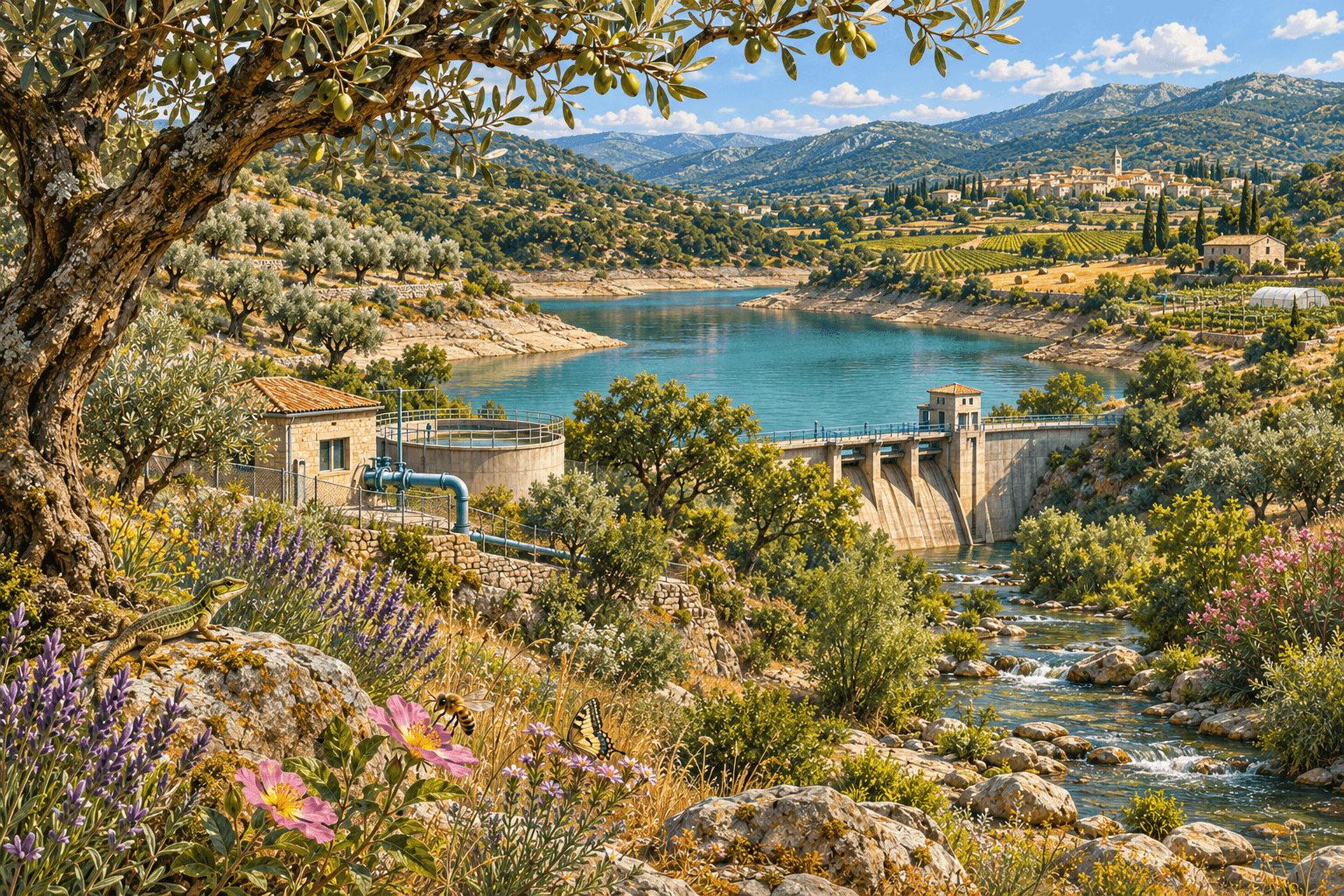
Food, water and many livelihoods depend on functioning ecosystems. Conservation decisions should involve local communities and Indigenous peoples, respect their rights and share costs and benefits fairly.
What the evidence tells us
Loss has several drivers
The 2019 IPBES global assessment identified five main direct pressures: land and sea use change, exploitation of organisms, climate change, pollution and invasive alien species. Their importance varies between places.
IPBES · Global Assessment, institutional release via UNEP ↓Risk is not an inevitable outcome
The IUCN Red List assesses extinction risk using criteria such as population size, trend and distribution. “Threatened” does not mean “extinct”: reducing pressures can change a species’ future.
IUCN · Red List of Threatened Species ↓What can help
Protect and connect
Effective habitat protection and suitable connections mean going beyond drawing boundaries on a map. Outcomes and local participation matter.
Restore and monitor
Ecosystem recovery needs locally appropriate goals, resources and monitoring. Tree planting is not a universal solution or an automatic compensation for destroying existing habitat.
Reduce pressures
Pollution prevention, responsible production and reducing unsustainable extraction complement protection. Ask which specific threat an action addresses and how its effect will be checked.
What to keep in mind
A recovered species is good news, but does not prove that its whole ecosystem has recovered. Abundance, genetic diversity, ecological relationships and habitat quality provide different information.
Sources and further reading
- Cowie, Bouchet & Fontaine · The Sixth Mass Extinction: fact, fiction or speculation? ↗2022
- Wiens & Saban · Questioning the sixth mass extinction ↗2025
- IPBES · Global Assessment, institutional release via UNEP ↗2019-05-06
- CBD · Article 2: biological diversity, ecosystem and habitat ↗1992
- IUCN · Red List of Threatened Species ↗
- CBD · Target 2: ecosystem restoration ↗2022
- CBD · Target 3: connected and equitably governed conservation ↗2022
- CBD · Target 7: pollution pressures ↗2022
- American Museum of Natural History · What is biodiversity? ↗
EkoPulse explanation based on the cited sources. Original AI-generated illustrations for EkoPulse; they are not photographs or research figures, and do not imply endorsement by the cited institutions.
Editorial review: