Evidence of progress
The Iberian lynx: bringing a species back
The Iberian lynx’s recovery shows what decades of coordinated conservation in Spain and Portugal can achieve. Its population has grown, but conserving a species also requires prey, connected habitat and lasting protection.
Visual explainer · 5 min read
A species can move away from extinction when several threats are addressed and efforts are sustained.
How it works
Step 1 / 4
Restore habitat and prey
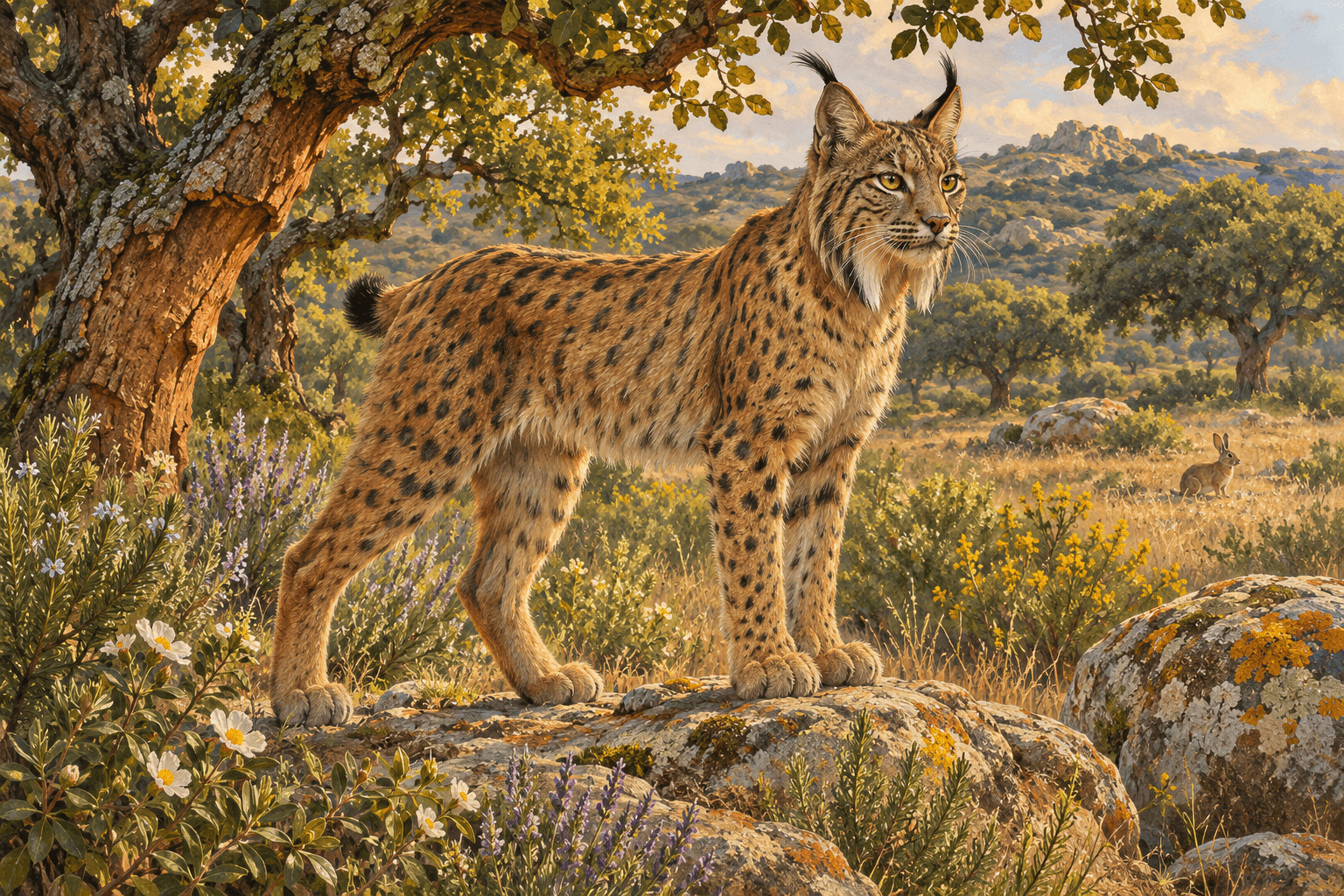
The lynx depends heavily on wild rabbits and sheltered Mediterranean landscapes. Improving the mosaic of scrub and grassland helps provide prey and suitable breeding places.
Context illustration, not to scale. Select a step to explore the process.
People are part of the story
The outcome depends on public bodies, scientists, organisations and local people, including landowners, farmers and hunters. Agreeing on land use and resolving conflicts are part of the work; local support cannot be taken for granted.
What the evidence tells us
2024: lower risk, still threatened
In June 2024, IUCN changed the category from Endangered to Vulnerable. Its assessment cited an increase from 62 mature individuals in 2001 to 648 in 2022. Vulnerable remains a threatened category.
IUCN · Iberian lynx rebounding thanks to conservation action ↓2025: a broader census
The 2025 Iberian census, published in June 2026, recorded at least 2,663 lynxes, including 952 cubs. This total spans different ages: it should not be compared directly with the earlier mature-individual count.
MITECO / ICNF · Iberian lynx census 2025 ↓What can help
Keep landscapes habitable
Protecting shelter and prey requires lasting management agreements, not simply releasing more animals.
Reduce avoidable deaths
Identifying dangerous stretches and adapting roads with crossings and fencing can reduce road deaths; effectiveness must be checked.
Sustain cooperation
Continuing finance and local participation support restoration, monitoring and responses to new threats.
What to keep in mind
Road deaths, habitat loss, disease and rabbit fluctuations persist. A larger population does not mean full recovery of its range or ecological role. Nor does it show biodiversity is improving overall: this is a specific case requiring continued protection.
Sources and further reading
- IUCN · Iberian lynx rebounding thanks to conservation action ↗2024-06-20
- MITECO / ICNF · Iberian lynx census 2025 ↗2026-06-05
- European Commission / CINEA · 20 years of conservation ↗2024-09-10
- European Commission / CINEA · Habitat, crossings and cooperation ↗2021-07-20
- IUCN SSC Cat Specialist Group · Iberian lynx ↗
- ICNF · Habitat ↗
- ICNF · Principais ameaças ↗
- ICNF · Reintrodução no vale do Guadiana ↗
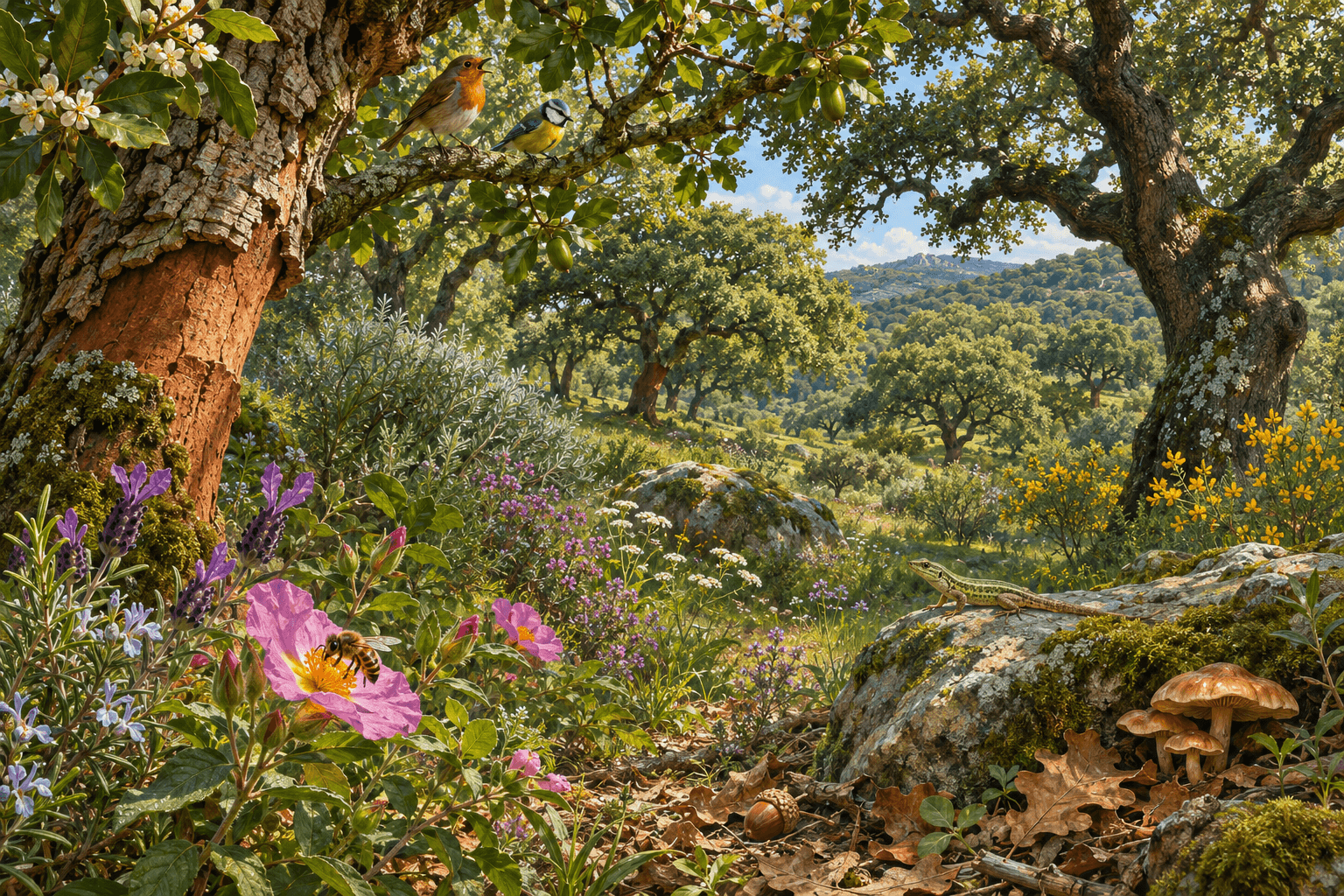
EkoPulse explanation based on the cited sources. Original AI-generated illustrations for EkoPulse; they are not photographs or research figures, and do not imply endorsement by the cited institutions.
Editorial review: