Understand a challenge
Ocean acidification: CO₂ also changes the water
The ocean absorbs some of the carbon dioxide we emit. This reduces the amount remaining in the air, but changes water chemistry. For some organisms, building a shell or skeleton becomes harder.
Visual explainer · 5 min read
The ocean does not need to become acidic to experience the effects of a falling pH.
How it works

Step 1 / 4
More CO₂ in the air
Burning coal, oil and gas, together with land-use changes, increases atmospheric CO₂. This gas contributes to both warming and acidification through different processes.
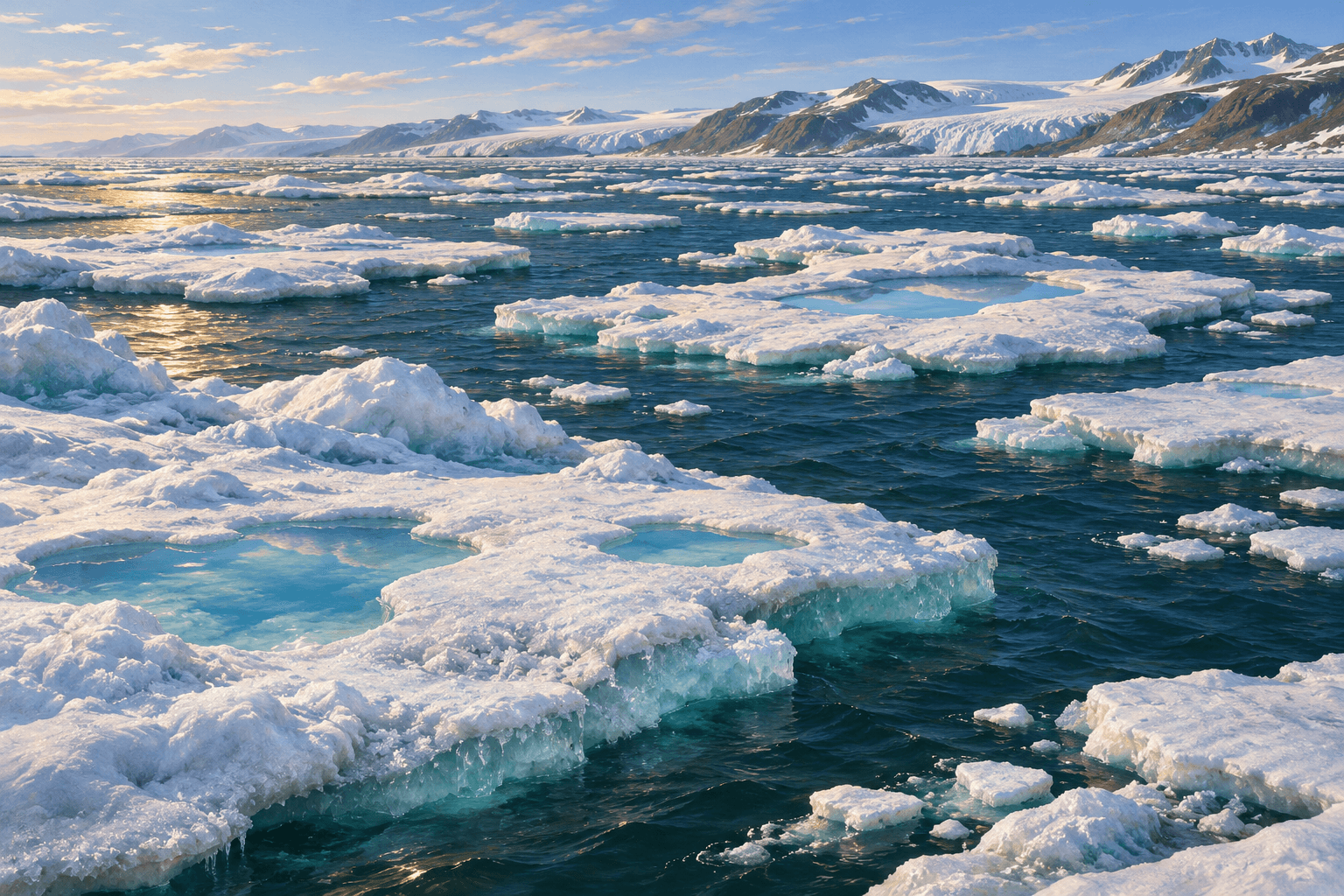
Context illustration, not to scale. Select a step to explore the process.
People are part of the story
Consequences can reach fisheries, aquaculture and communities that depend on the sea for food and income. Risk combines biological changes with economic and social capacity to adapt; it is not evenly distributed.
What the evidence tells us
A signal measured in the water
Long-running NOAA observations show increasing dissolved CO₂ and declining pH at ocean stations. Acidification does not have to be inferred solely from air temperature.
NOAA Ocean Acidification Program · Chemistry and observations ↓Biological responses vary
Experiments identify sensitive organisms, but do not justify assigning an identical response to all marine life. Species, life stage and other pressures matter when moving from laboratory to ecosystem.
NOAA · Ocean acidification biological response ↓US EPA · Effects on marine life ↓What can help
Address the global cause
Reducing CO₂ emissions addresses the main cause. Climate and ocean action can support each other, although protecting a marine area cannot by itself stop this chemical change.
Reduce coastal pressures
Limiting excess nutrients and improving wastewater treatment can reduce local processes that worsen acidification. Priorities depend on the particular watershed and coast.
Monitor and adapt
Water chemistry monitoring can help shellfish hatcheries manage water intakes and growing conditions. This is a local adaptation; it does not restore the ocean by itself.
What to keep in mind
Acidification, warming and oxygen loss are different processes that can interact. A bleached reef alone does not demonstrate acidification. Nor can one measurement describe the trend across the whole ocean.
Sources and further reading
- NOAA · What is ocean acidification? ↗
- NOAA Ocean Acidification Program · Chemistry and observations ↗
- NOAA · Ocean acidification biological response ↗
- US EPA · Effects on marine life ↗
- US EPA · Ocean and coastal acidification science ↗
- US Climate Resilience Toolkit · Shellfish hatchery monitoring in Alaska ↗2017
- Woods Hole Oceanographic Institution · Ocean acidification FAQs ↗
EkoPulse explanation based on the cited sources. Original AI-generated illustrations for EkoPulse; they are not photographs or research figures, and do not imply endorsement by the cited institutions.
Editorial review: