
Soils and ecosystems · Biological process
Wetland expansion
What does it mean?
Changes in wetland flooded area or water levels caused by changing rainfall.
In regions receiving more rain, expanding wetlands can increase methane emissions.
How the loop works
- 1
Warming changes rainfall
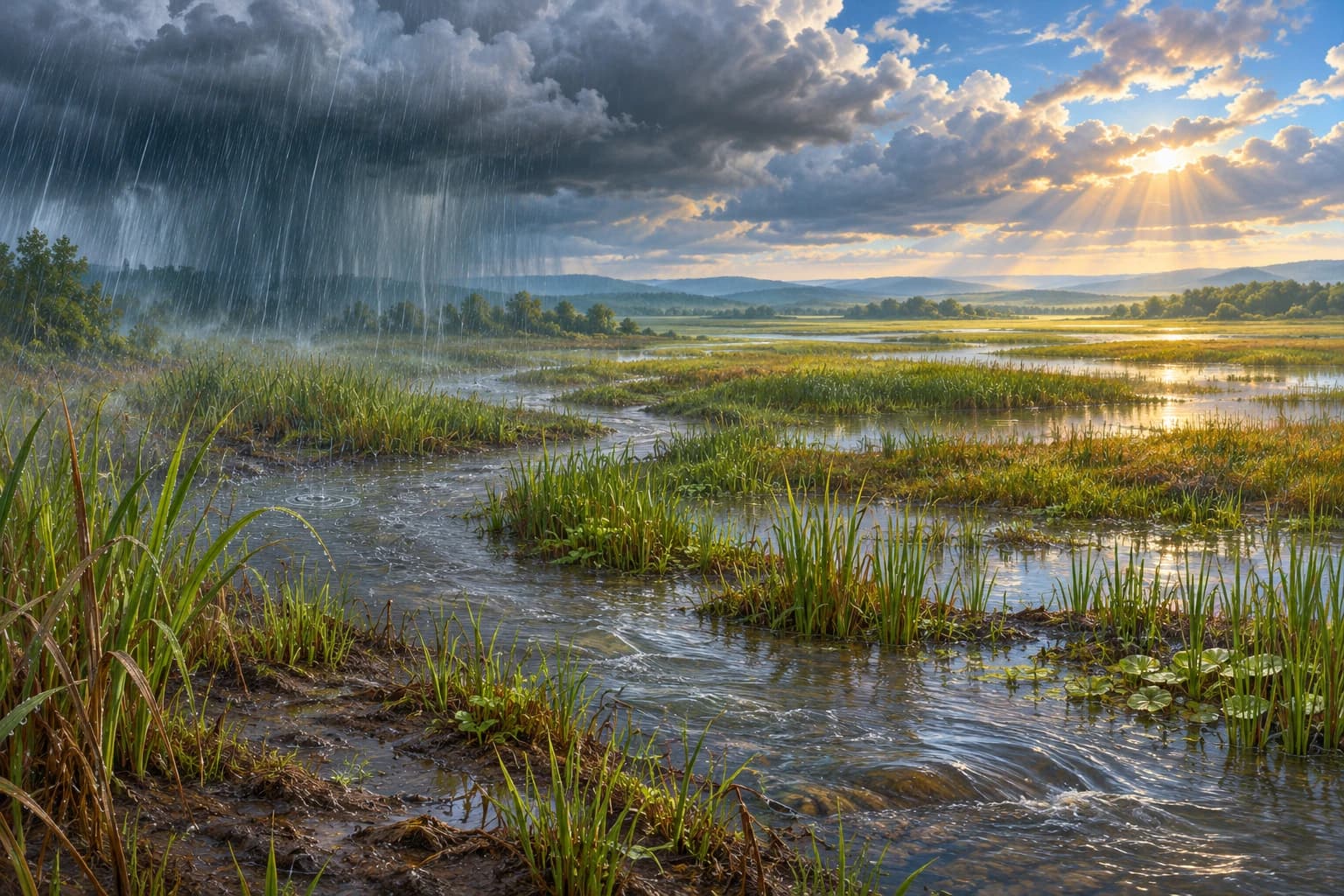
- 2
More water in some regions
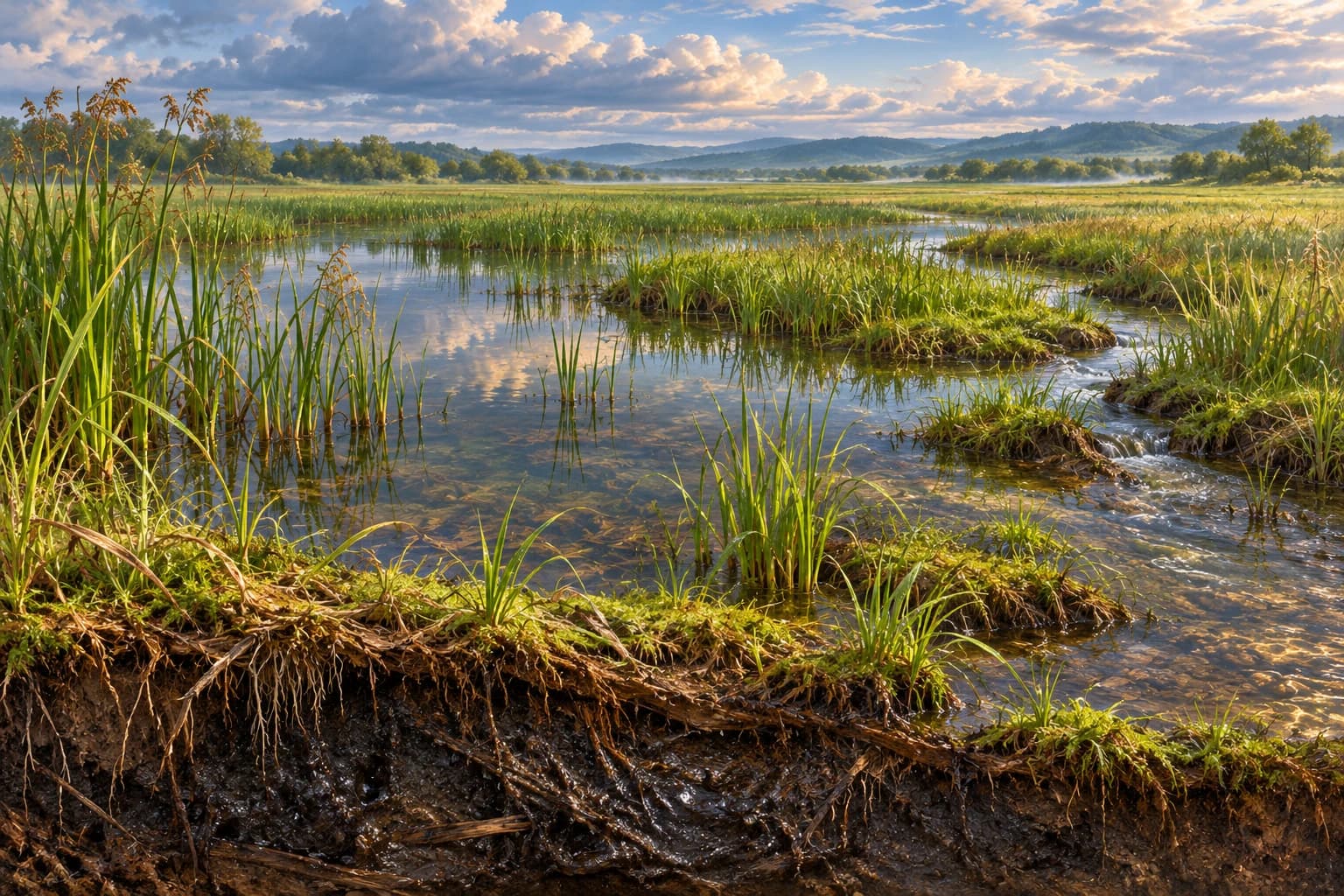
- 3
Methane emissions can increase
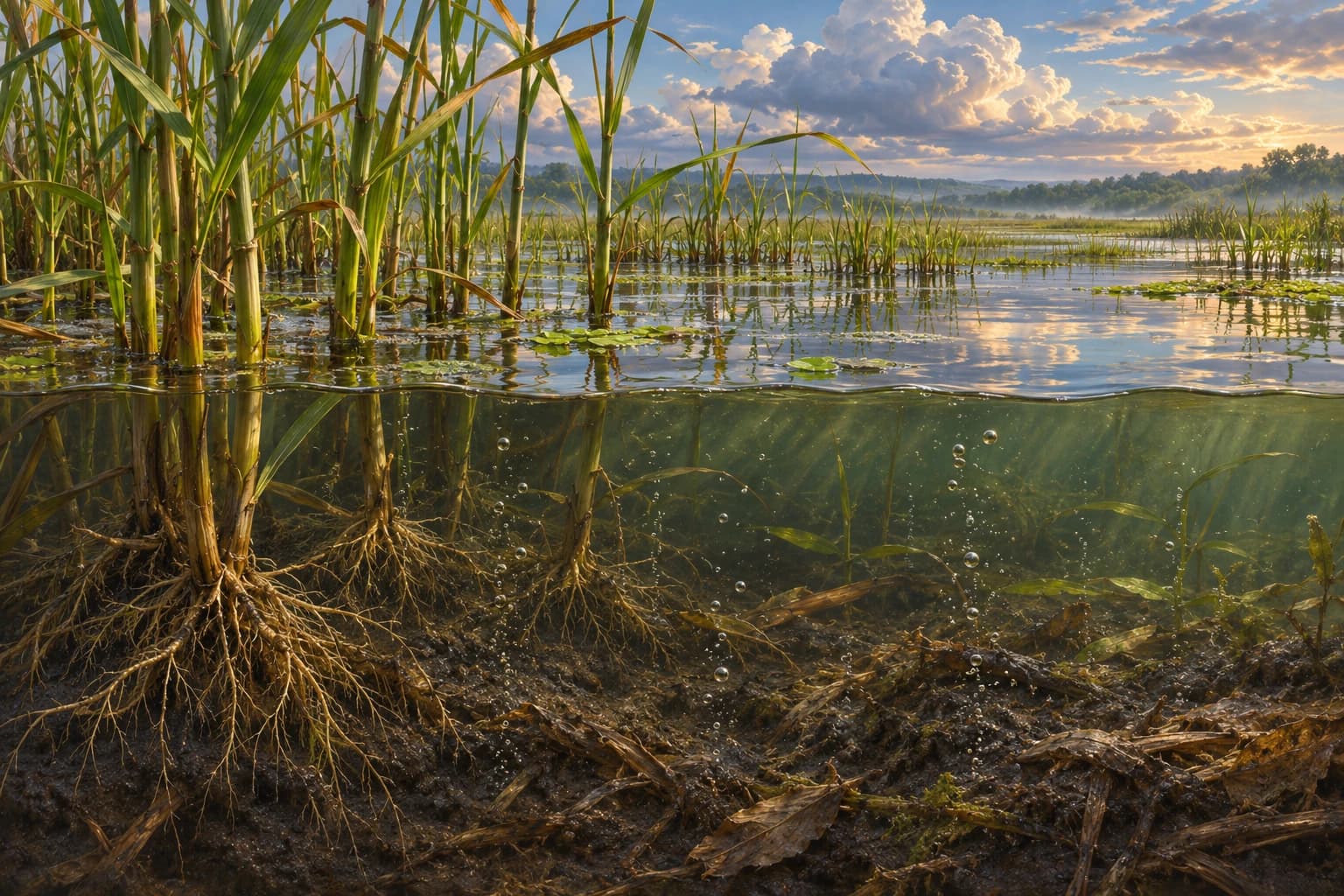
- 4
Warming is reinforced
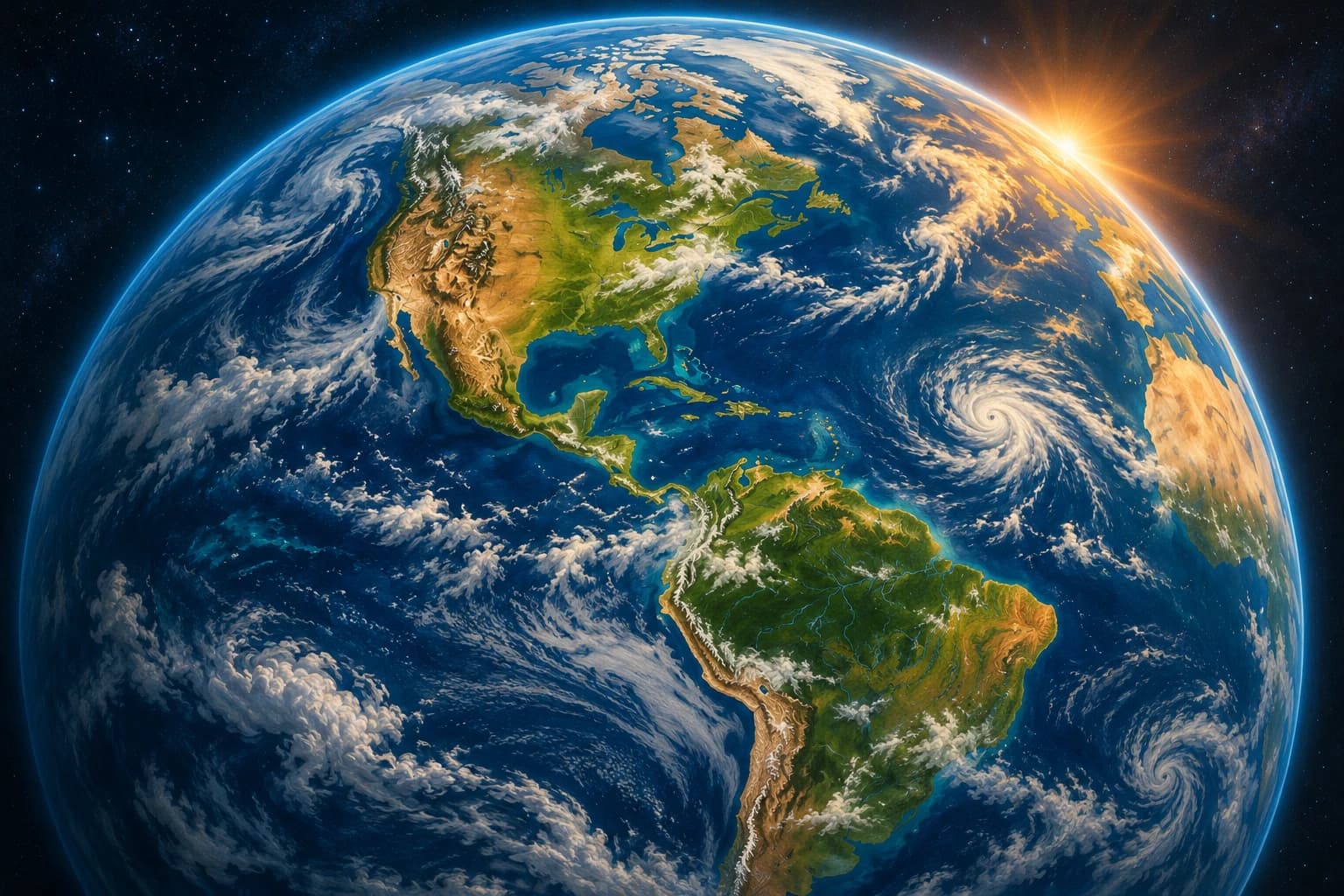
↻ + The effect reinforces the initial change.
What we know
Flooded soils favour methane-producing microbes; they can also store carbon.
What remains uncertain
The balance between methane and CO₂ uptake depends on place and time; the classification follows the study.
Timescale
Seasonal changes; expansion and carbon stocks over longer periods.
Sources and credits
Based on Ripple et al. (2023), One Earth. Study loop: 22.
- Dean, J. F. et al. (2018). Methane feedbacks to the global climate system in a warmer world. Reviews of Geophysics 56, 207–250.
Educational adaptation and AI-assisted illustrations: EkoPulse.