
Soils and ecosystems · Biological process
Soil nitrous oxide
What does it mean?
N₂O emissions produced by soil microbes as they transform nitrogen compounds.
Warming can favour microbial processes that release this greenhouse gas.
How the loop works
- 1
Soil warms
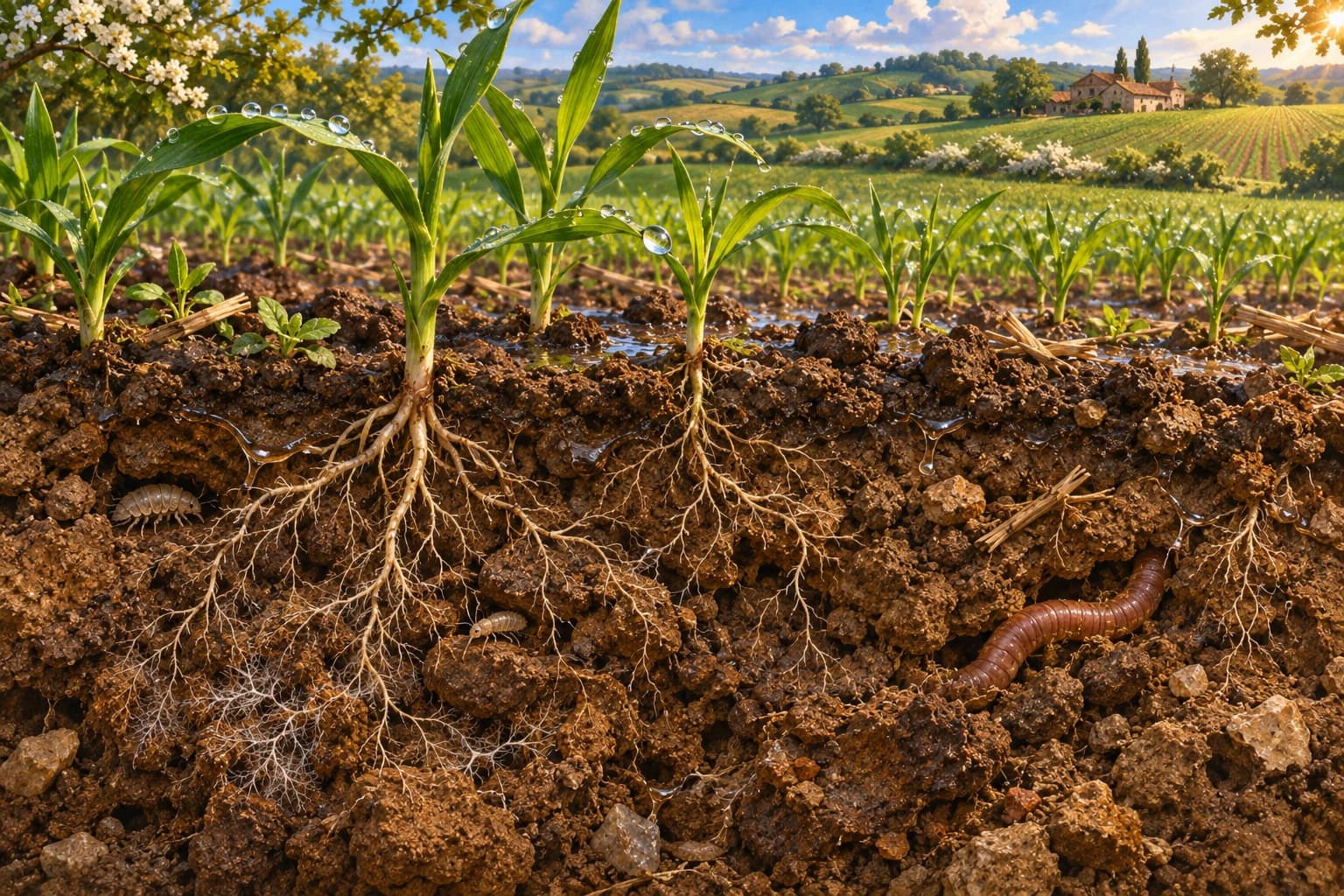
- 2
Nitrogen processes change
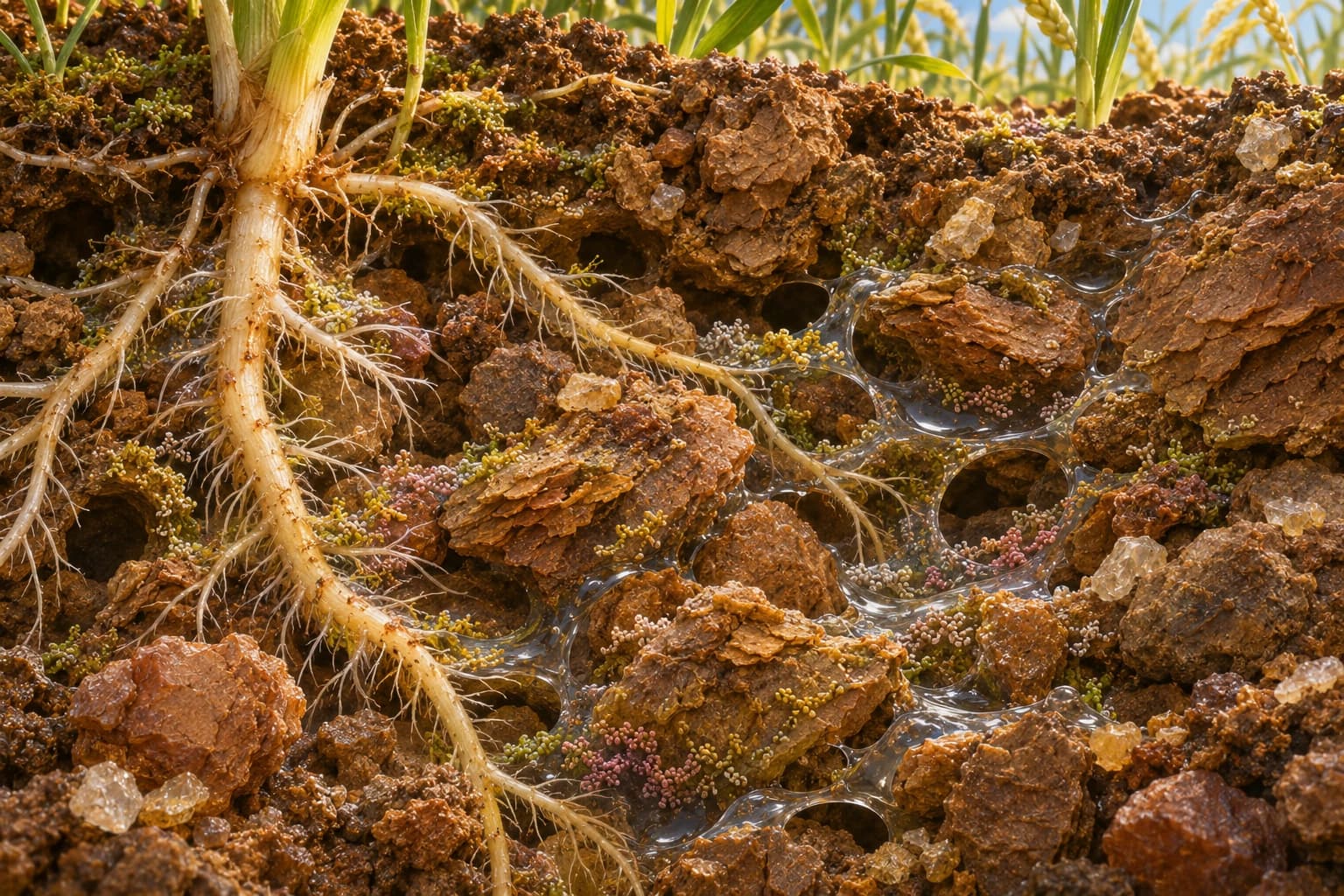
- 3
More N₂O can be emitted
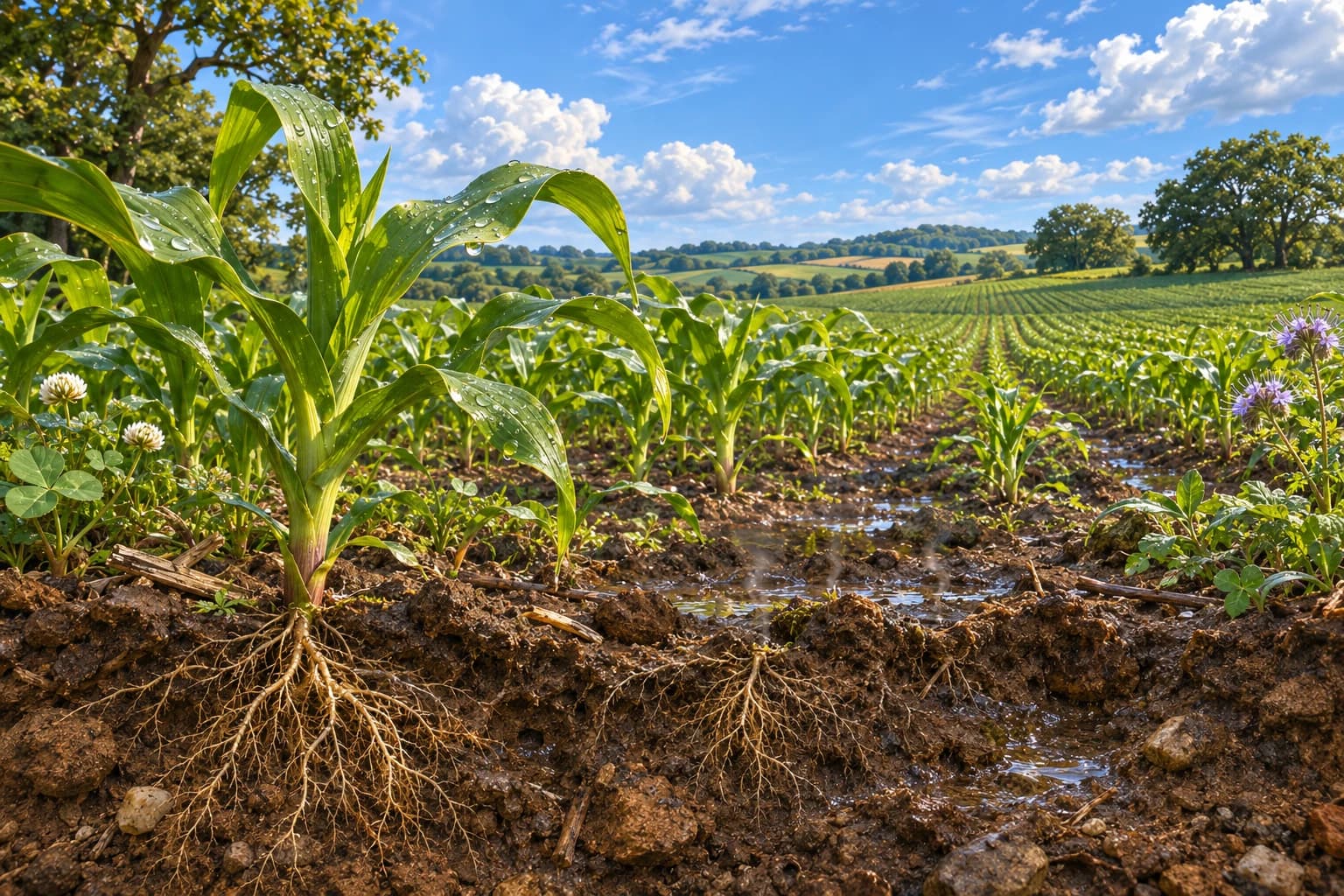
- 4
Warming is reinforced

↻ + The effect reinforces the initial change.
What we know
Temperature, water and available nitrogen regulate microbial N₂O production.
What remains uncertain
The effect varies across soils and farming practices; fertilisers add an important human influence.
Timescale
Pulses after moisture changes; trends over decades.
Sources and credits
Based on Ripple et al. (2023), One Earth. Study loop: 30.
- Xu-Ri, Prentice, I. C., Spahni, R. and Niu, H. S. (2012). Modelling terrestrial nitrous oxide emissions and implications for climate feedback. New Phytologist 196, 472–488.
Educational adaptation and AI-assisted illustrations: EkoPulse.