
Ice and snow · Physical process
Snow cover
What does it mean?
Less snow exposes darker ground that absorbs more solar energy.
Snow reflects much of the incoming light. When it melts earlier or covers less ground, exposed vegetation and soil gain more solar heat.
How the loop works
- 1
Earth warms

- 2
Snow melts earlier or retreats
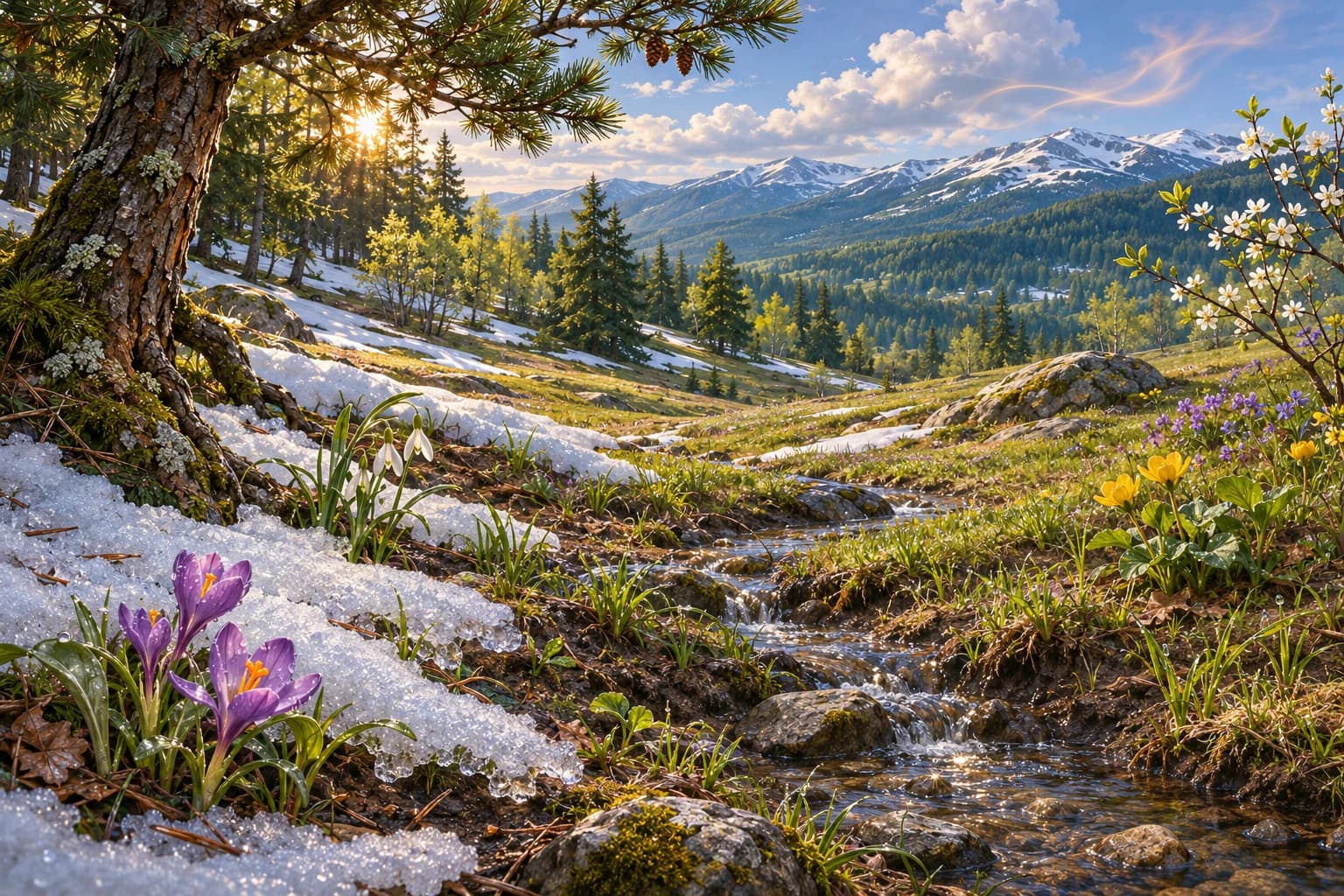
- 3
The ground absorbs more sunlight
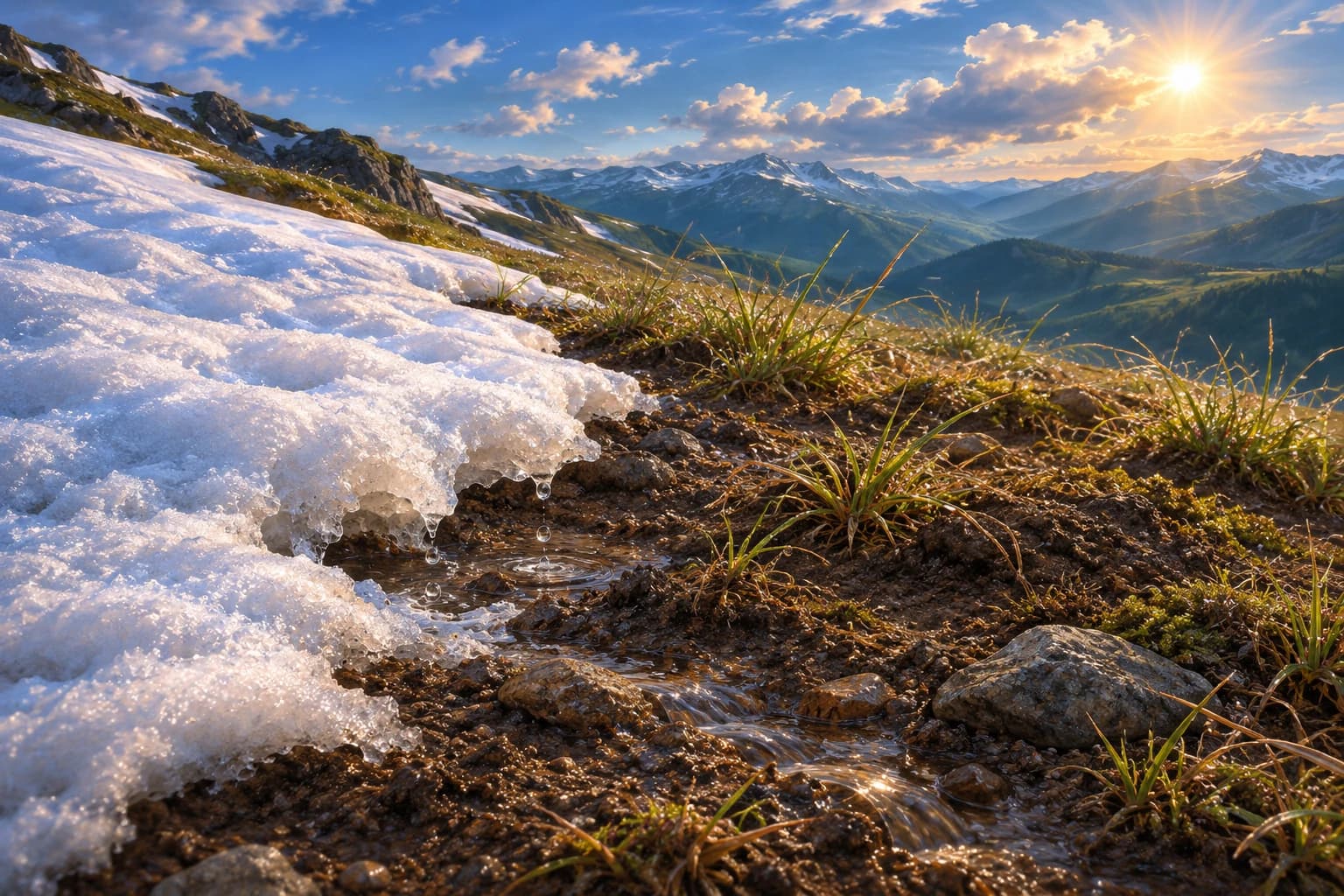
- 4
Warming increases
↻ + The effect reinforces the initial change.
What we know
The contrast between bright snow and darker ground explains this feedback.
What remains uncertain
Forests, snow ageing and regional differences alter its strength.
Timescale
Days to seasons; snow-cover trends evolve over decades.
Sources and credits
Based on Ripple et al. (2023), One Earth. Study loop: 6.
- Qu, X. and Hall, A. (2007). What controls the strength of snow-albedo feedback? Journal of Climate 20, 3971–3981.
- Qu, X. and Hall, A. (2014). On the persistent spread in snow-albedo feedback. Climate Dynamics 42, 69–81.
Educational adaptation and AI-assisted illustrations: EkoPulse.