
Oceans · Physical process
Sea level and albedo
What does it mean?
Seawater covering more reflective land can increase the absorption of solar energy.
Warming raises sea level through seawater expansion and melting land ice. Coastal inundation can replace land with darker water.
How the loop works
- 1
Earth warms
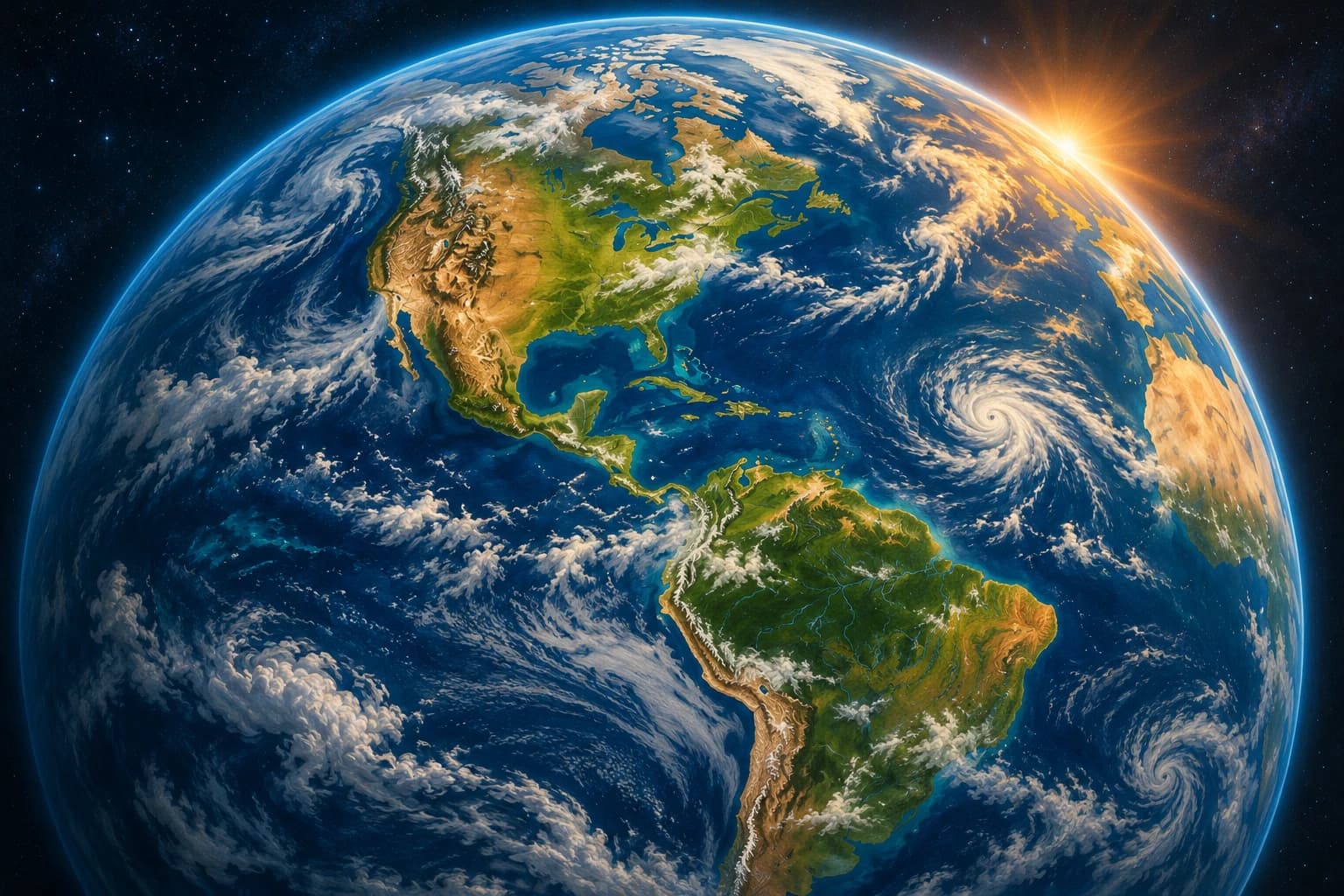
- 2
Rising seas cover land
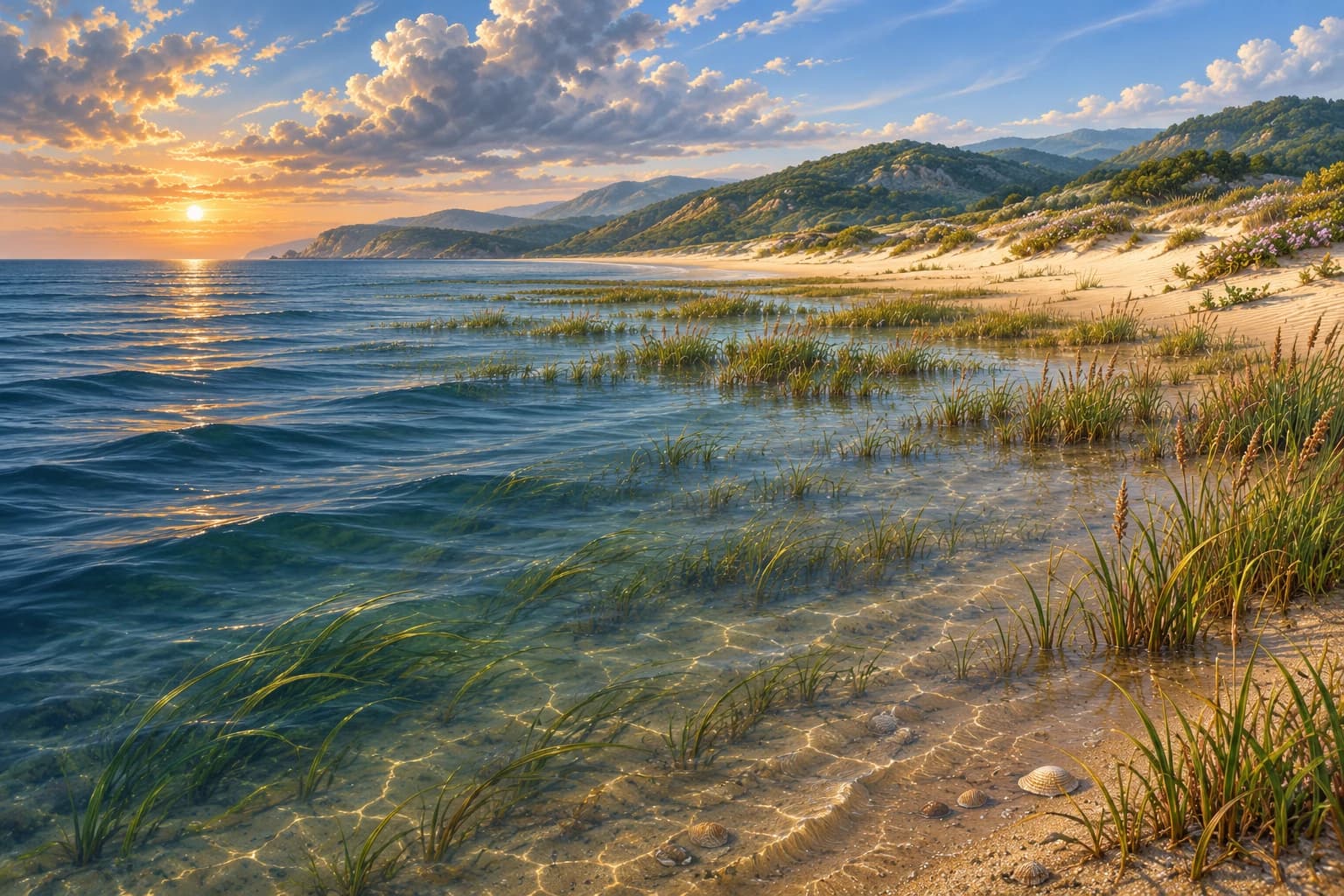
- 3
Darker water can absorb more sunlight
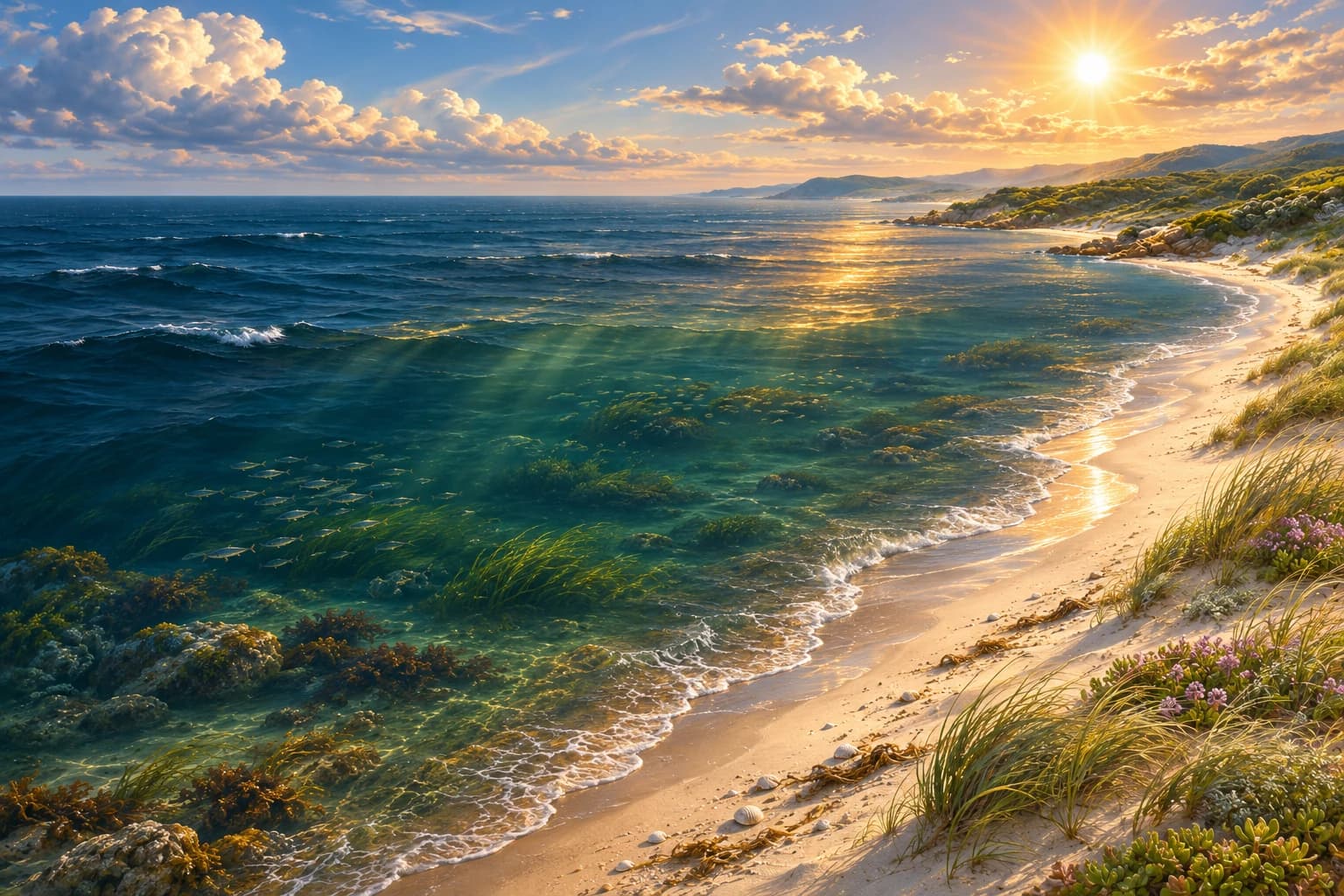
- 4
Warming increases
↻ + The effect reinforces the initial change.
What we know
The distribution of oceans and continents affects planetary reflectivity.
What remains uncertain
It is a slow, poorly quantified mechanism; its effect depends on the flooded surface and is not the total impact of sea-level rise.
Timescale
Centuries to millennia for extensive coastline and sea-level changes.
Sources and credits
Based on Ripple et al. (2023), One Earth. Study loop: 5.
- Barron, E.J., Sloan II, J. and Harrison, C. (1980). Potential significance of land–sea distribution and surface albedo variations as a climatic forcing factor; 180 my to the present. Palaeogeography, Palaeoclimatology, Palaeoecology 30, 17–40.
Educational adaptation and AI-assisted illustrations: EkoPulse.