
Sea-ice growth
What does it mean?
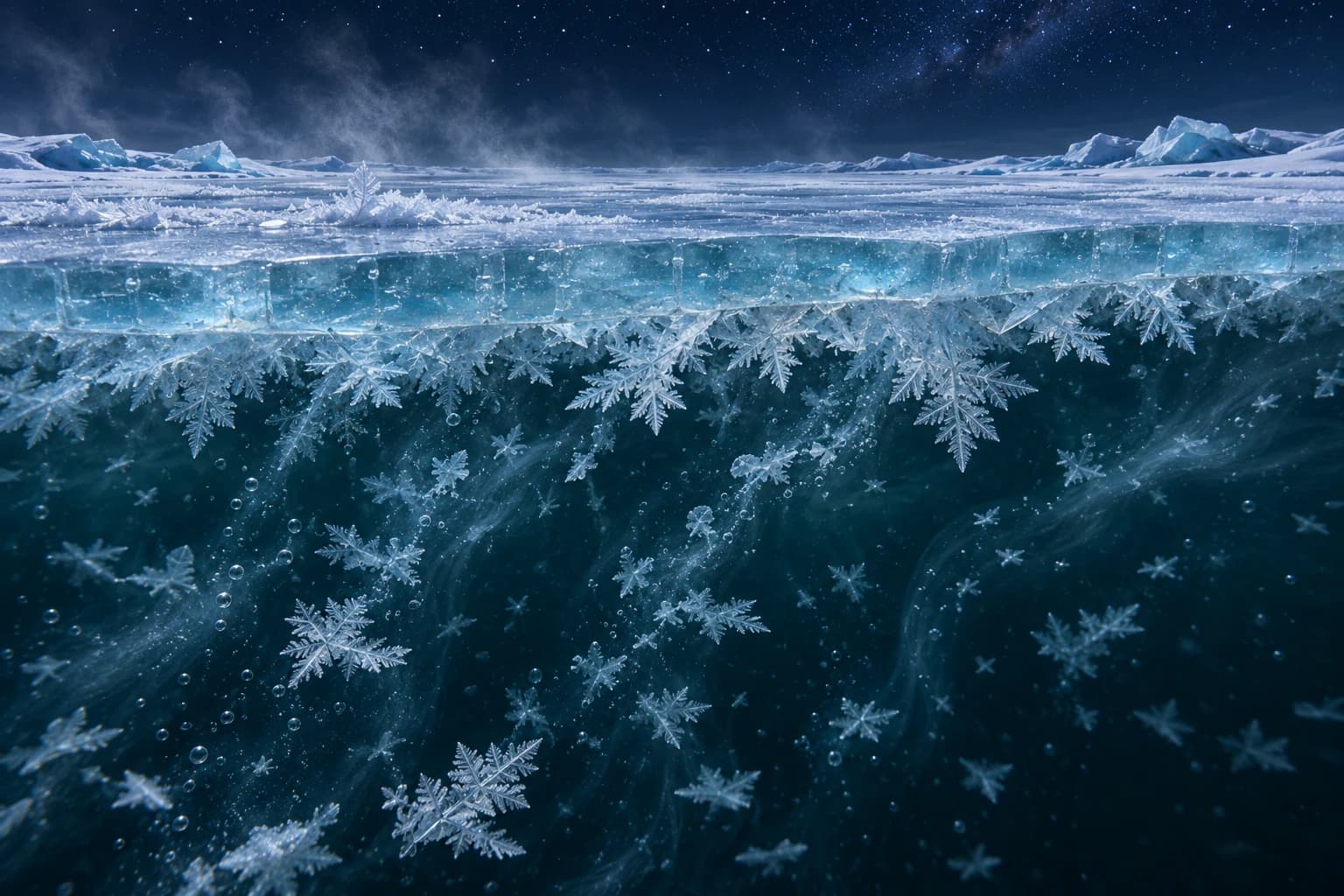
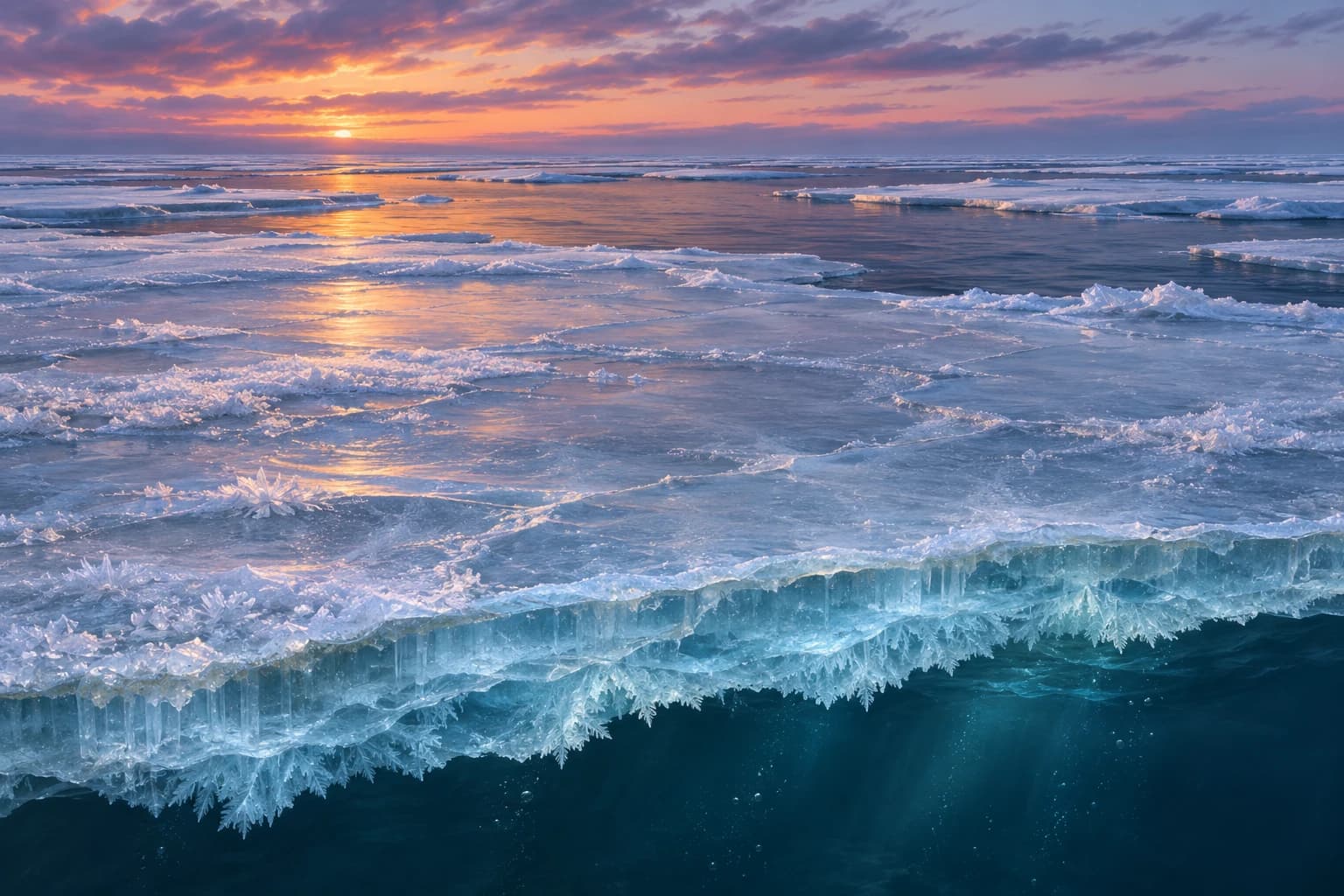
Thin ice loses heat more easily and can grow faster during winter.
Ice acts as insulation. When it thins, heat escapes more readily to cold air, favouring freezing and opposing part of the initial ice loss.
How the loop works
- 1
Sea ice becomes thinner

- 2
Insulation decreases

- 3
Water loses heat and freezes faster
- 4
Some of the thickness loss is counteracted
↻ − The effect opposes the initial change; it does not guarantee a return to the previous temperature.
What we know
Faster growth of thin ice is a well-known stabilising mechanism.
What remains uncertain
It depends on cold conditions, snow and ocean heat. It does not guarantee recovery of lost ice in a warming climate.
Timescale
Mainly during the cold season.
Sources and credits
Based on Ripple et al. (2023), One Earth. Study loop: 17.
- Heinze, C. et al. (2019). ESD Reviews: Climate feedbacks in the Earth system and prospects for their evaluation. Earth System Dynamics 10, 379–452.
- Bitz, C. and Roe, G. (2004). A mechanism for the high rate of sea ice thinning in the Arctic Ocean. Journal of Climate 17, 3623–3632.
Educational adaptation and AI-assisted illustrations: EkoPulse.