
Ice and snow · Physical process
Sea-ice albedo
What does it mean?
When reflective sea ice disappears, the darker ocean absorbs more sunlight.
Warming reduces ice cover. During sunlit seasons, exposed water gains more heat and favours further ice loss.
How the loop works
- 1
Earth warms
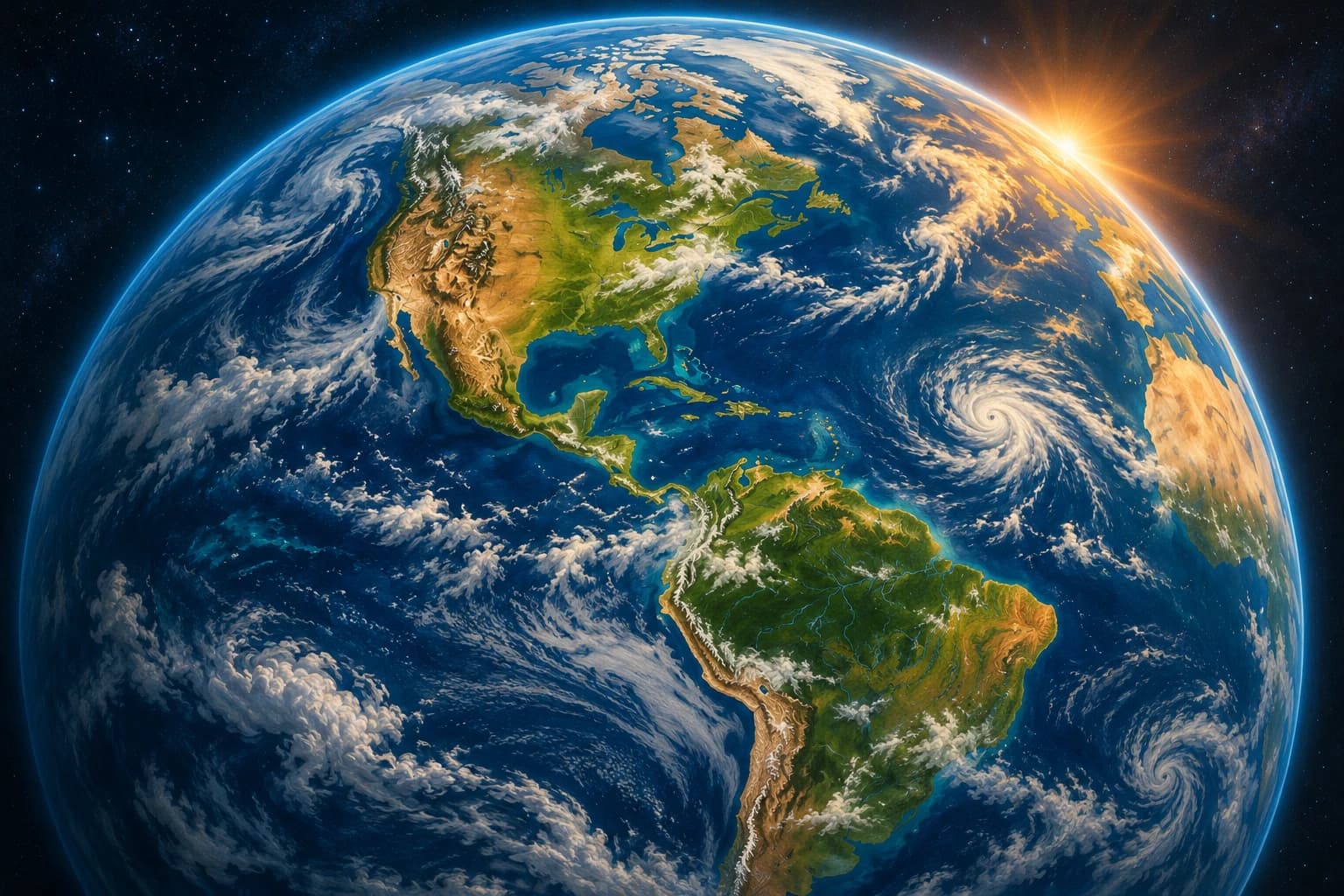
- 2
Sea-ice cover shrinks
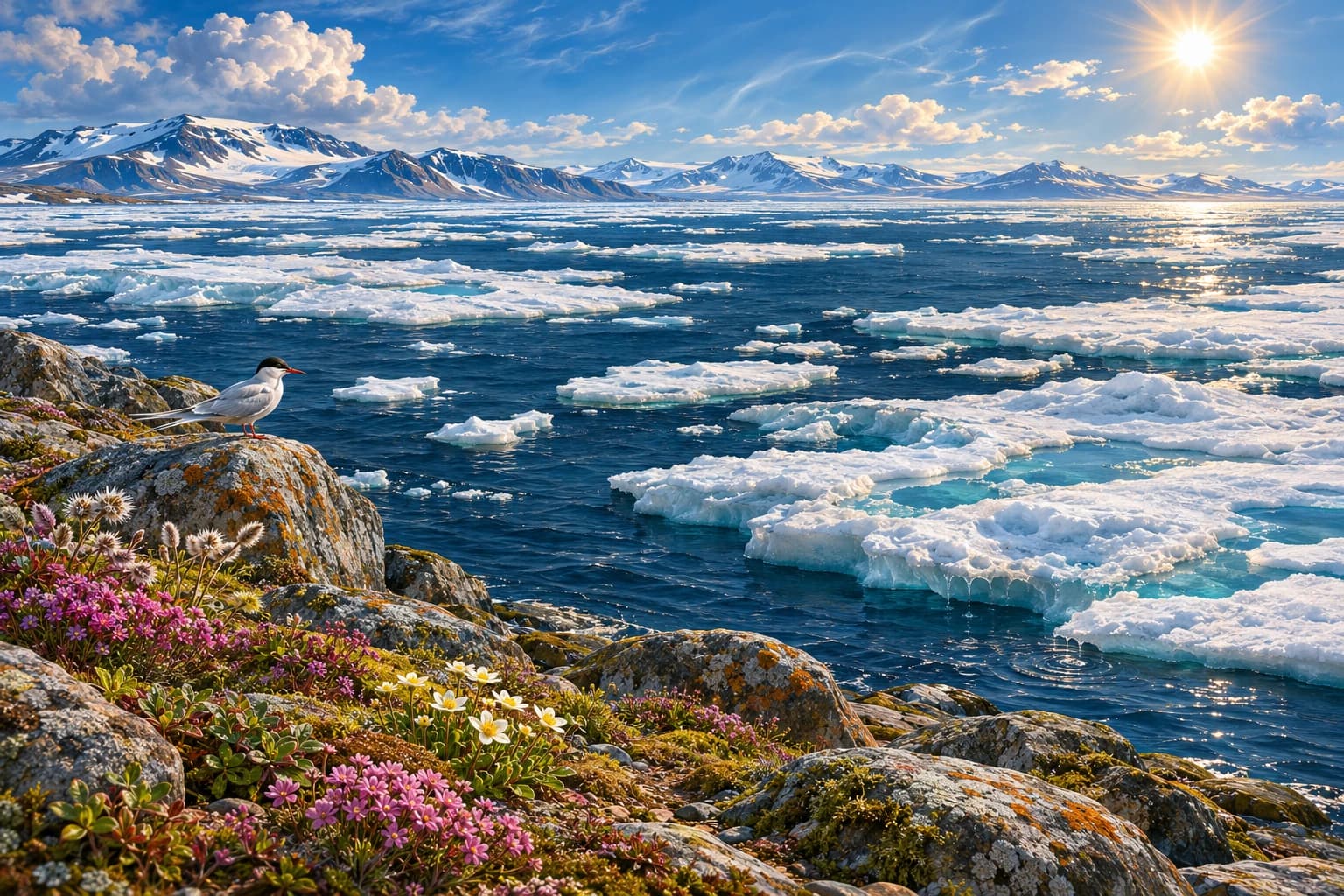
- 3
The ocean absorbs more sunlight
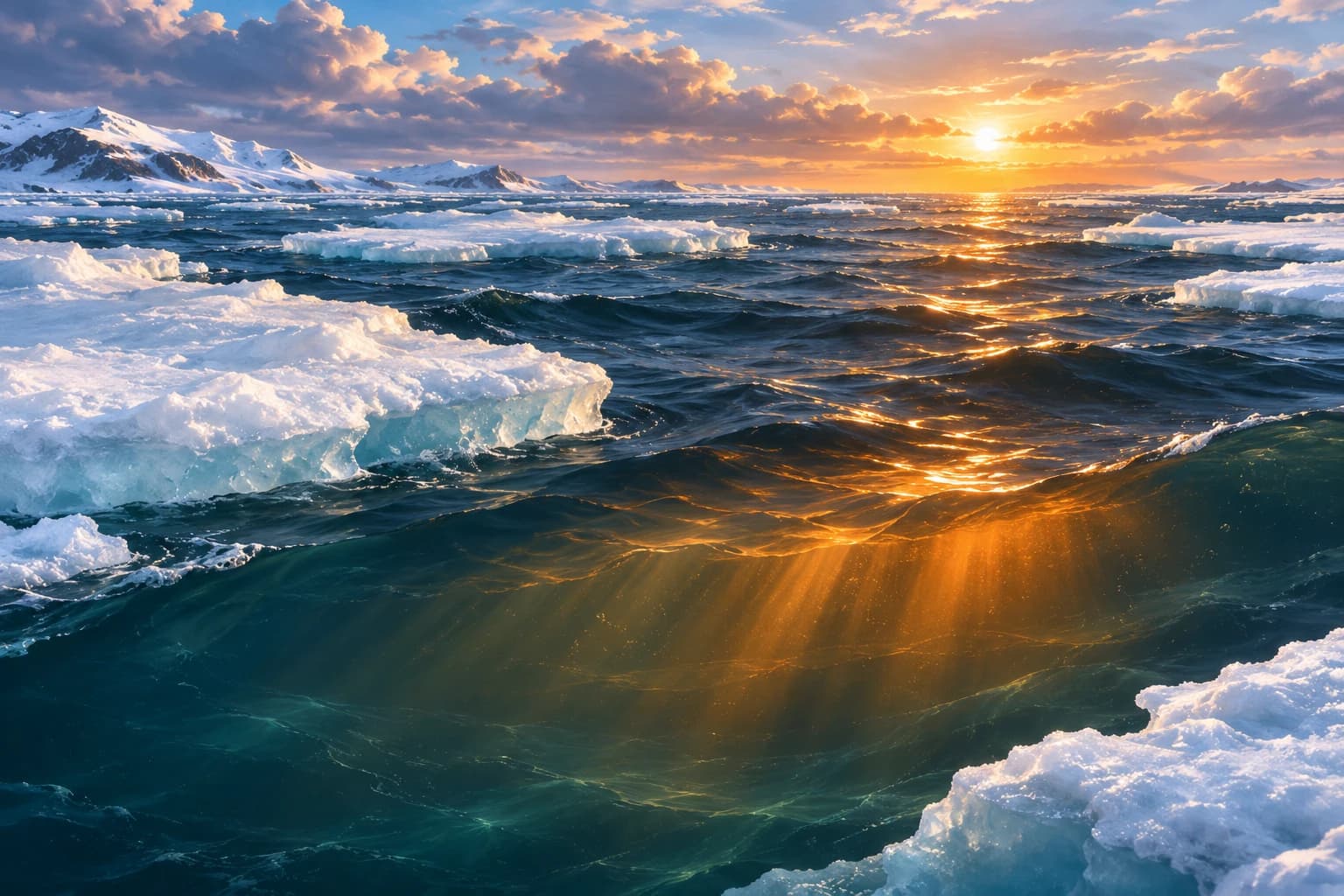
- 4
Warming increases
↻ + The effect reinforces the initial change.
What we know
The loss of reflectivity as sea ice retreats is observed by satellites.
What remains uncertain
Its strength depends on clouds, snow and season. It coexists with mechanisms favouring winter ice growth.
Timescale
Seasonal; develops with ice changes over years and decades.
Sources and credits
Based on Ripple et al. (2023), One Earth. Study loop: 3.
- Pistone, K., Eisenman, I. and Ramanathan, V. (2014). Observational determination of albedo decrease caused by vanishing Arctic sea ice. Proceedings of the National Academy of Sciences 111, 3322–3326.
Educational adaptation and AI-assisted illustrations: EkoPulse.