
Soils and ecosystems · Biological process
Plant stress
What does it mean?
Difficulty growing or surviving because of heat, water shortages or other adverse conditions.
Heat- or drought-stressed plants can absorb less CO₂; if they die, some carbon returns to the air.
How the loop works
- 1
Climate stress increases
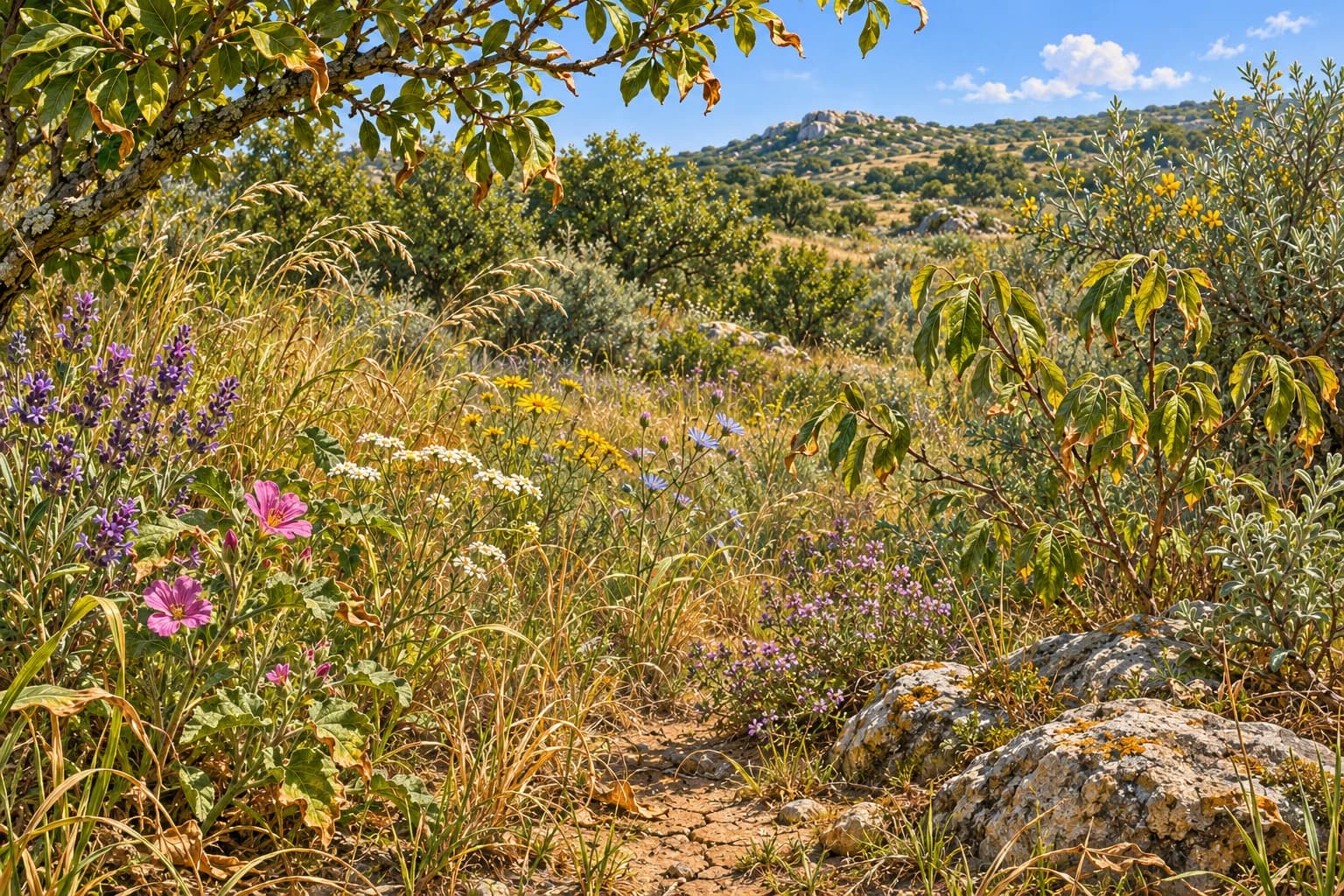
- 2
Growth declines or plants die
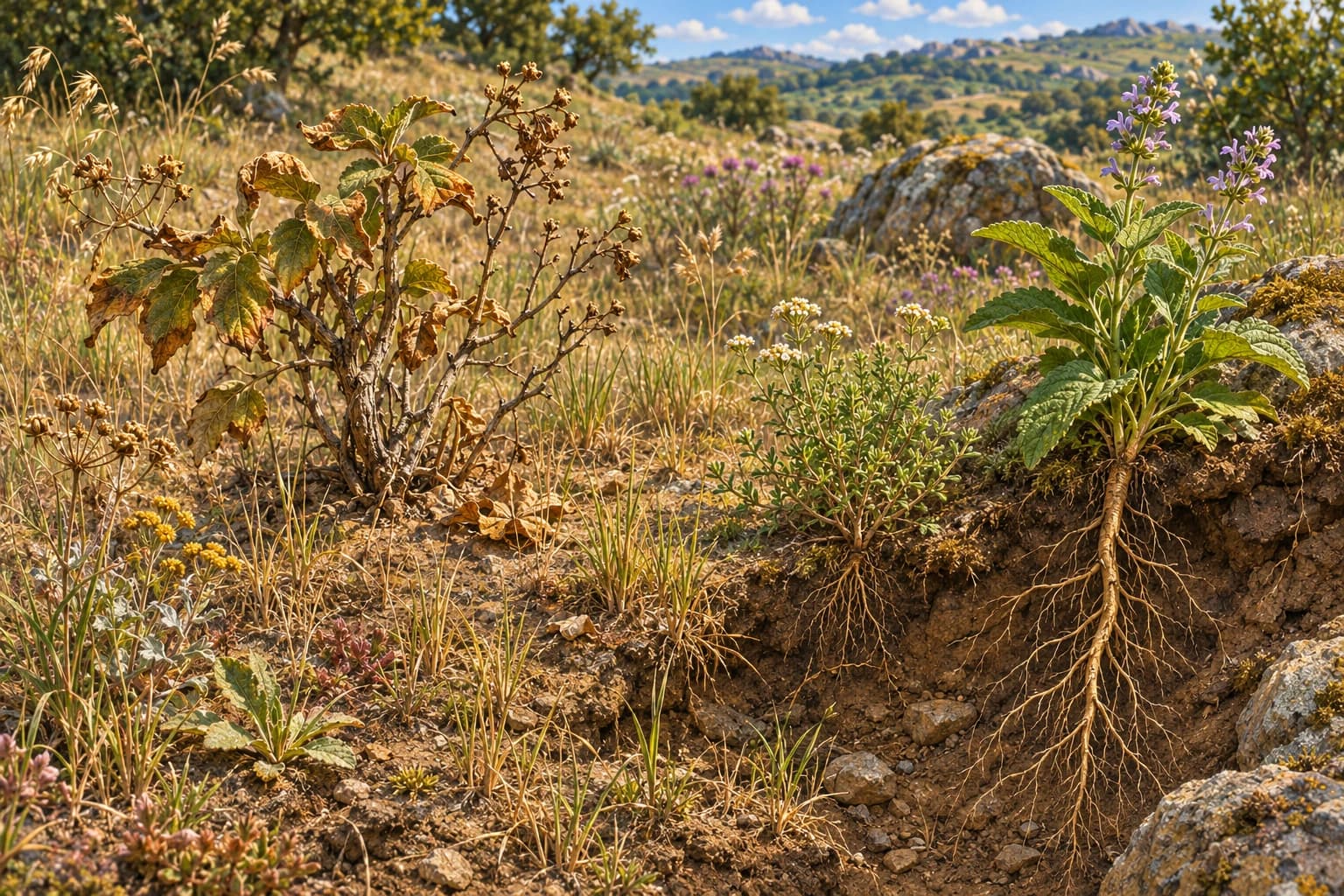
- 3
More CO₂ remains in the atmosphere
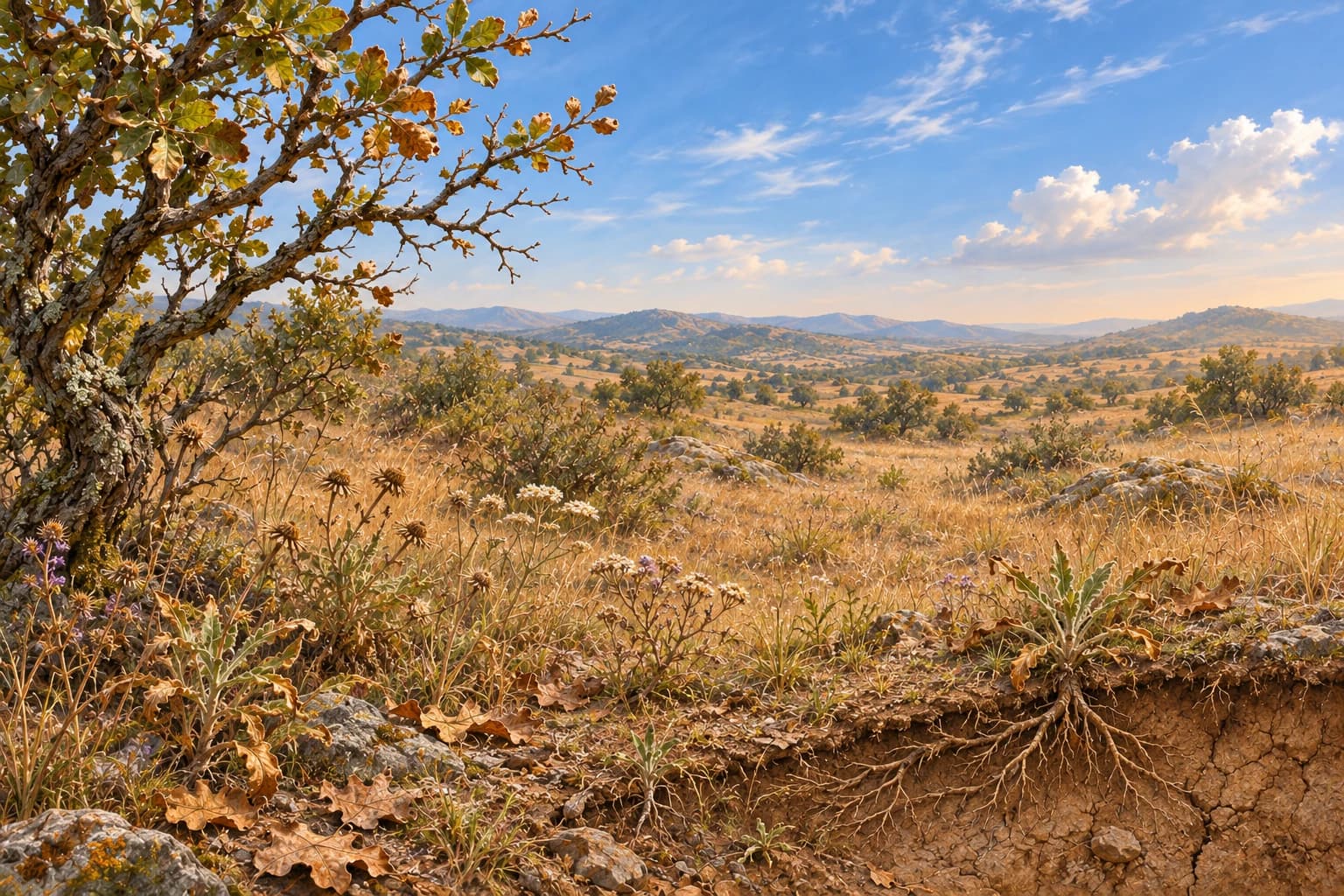
- 4
Warming is reinforced

↻ + The effect reinforces the initial change.
What we know
This mechanism affects many plant types, not only forests.
What remains uncertain
Species, roots, nutrients and recovery determine how much carbon uptake changes.
Timescale
Stress over days or seasons; recovery over years.
Sources and credits
Based on Ripple et al. (2023), One Earth. Study loop: 34.
- Swann, A. L. (2018). Plants and drought in a changing climate. Current Climate Change Reports 4, 192–201.
Educational adaptation and AI-assisted illustrations: EkoPulse.