
Soils and ecosystems · Biological process
Permafrost thaw
What does it mean?
Permafrost is ground that remains at or below 0 °C for at least two consecutive years.
As it thaws, microbes can decompose its organic remains and release greenhouse gases.
How the loop works
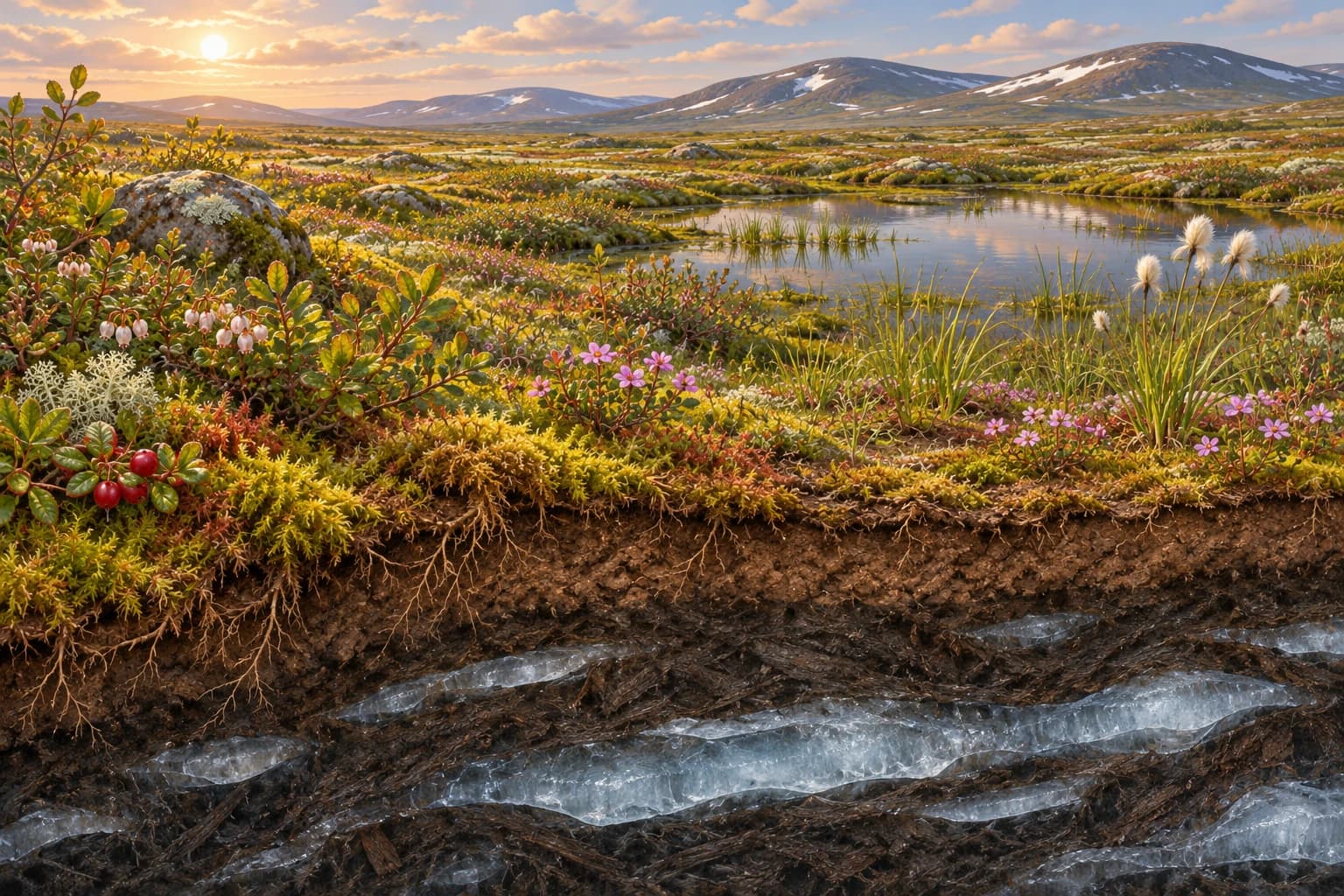
- 1
Ground temperature rises
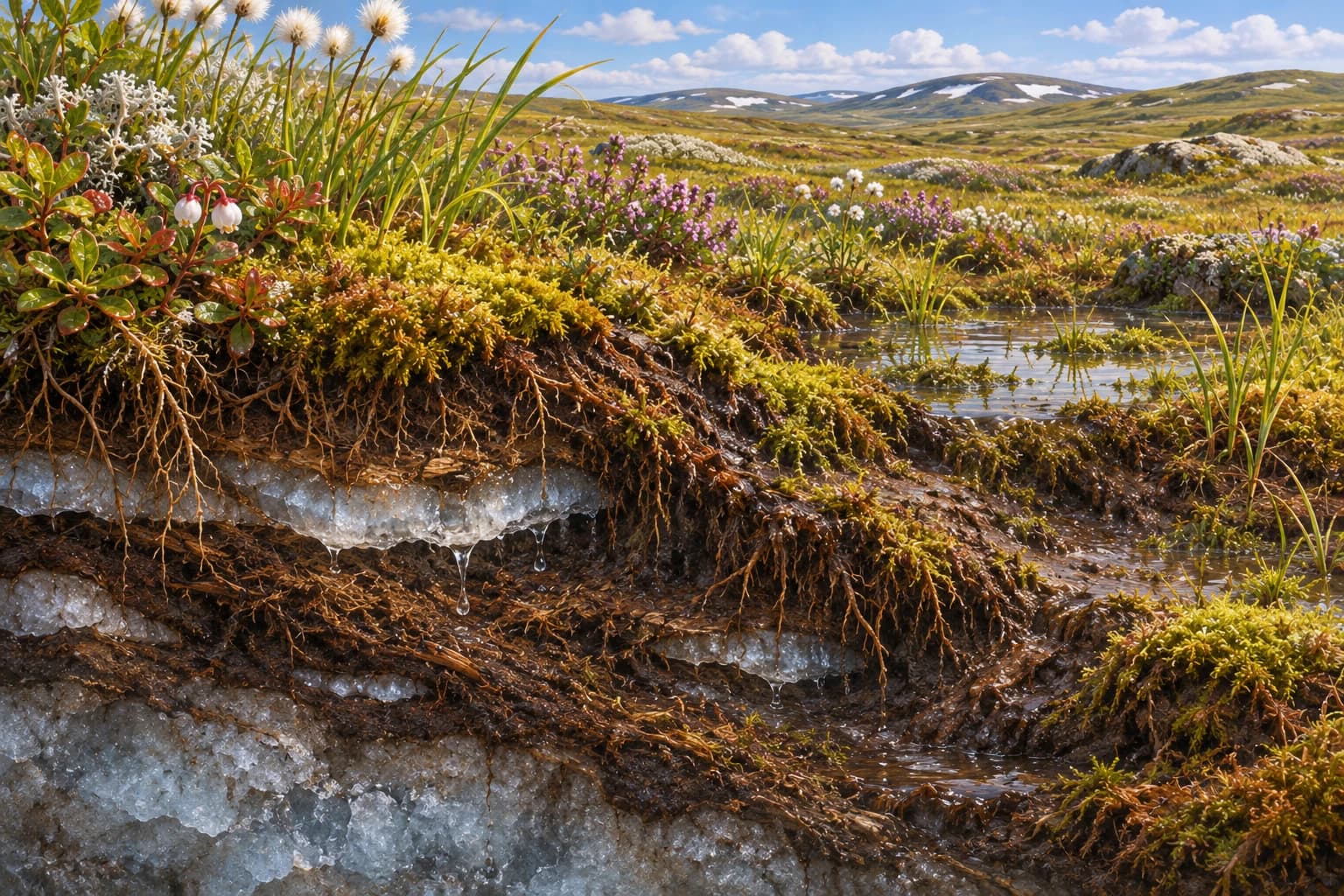
- 2
Frozen ground thaws
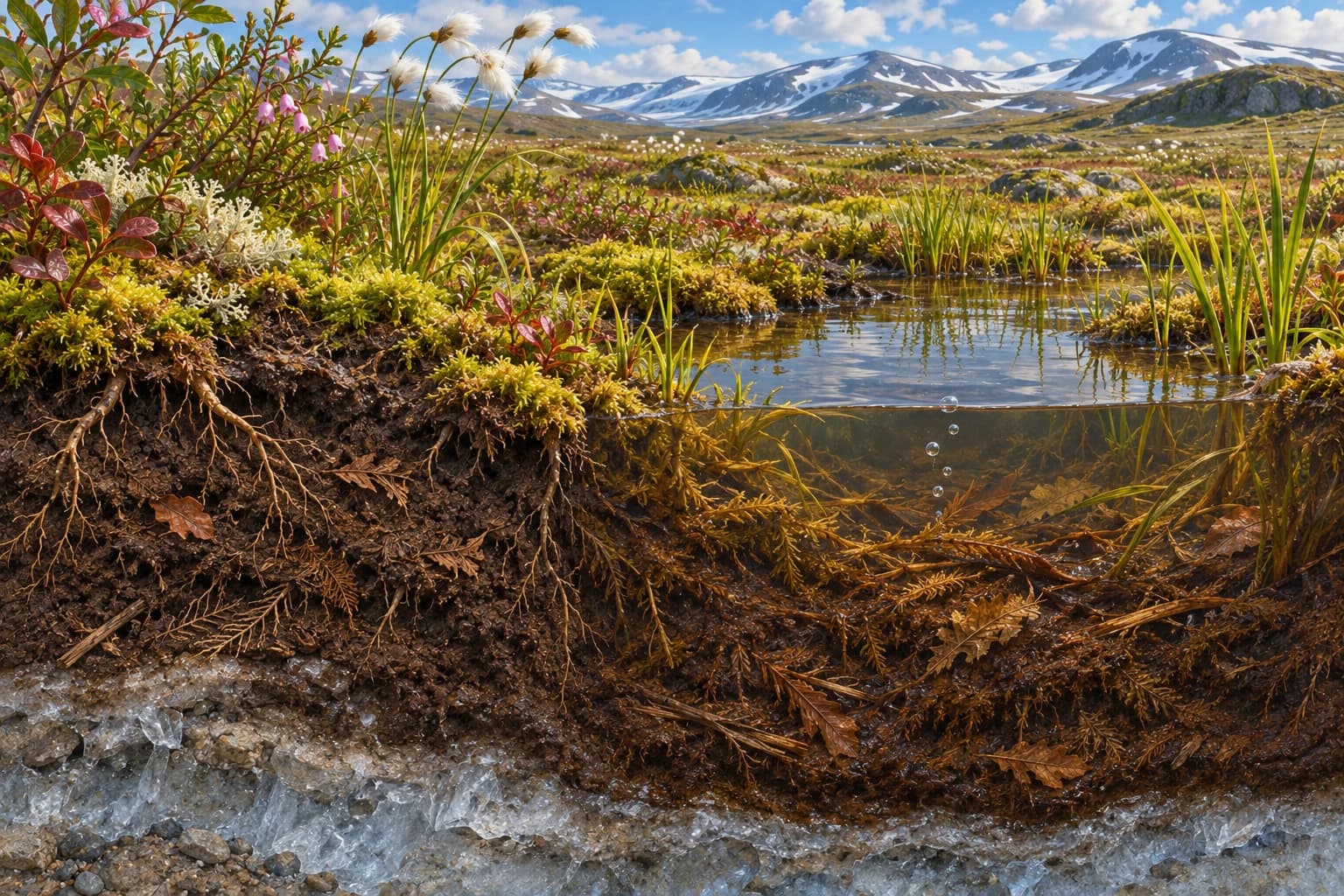
- 3
Decomposition releases CO₂ and methane
- 4
Warming is reinforced

↻ + The effect reinforces the initial change.
What we know
Frozen soils store large amounts of organic carbon that can become available to microbes.
What remains uncertain
Amount, timing and the CO₂–methane balance are uncertain; this does not imply an immediate total release.
Timescale
Seasonal thaw within changes continuing over decades or centuries.
Sources and credits
Based on Ripple et al. (2023), One Earth. Study loop: 31.
- Schuur, E. A. et al. (2015). Climate change and the permafrost carbon feedback. Nature 520, 171–179.
Educational adaptation and AI-assisted illustrations: EkoPulse.