
Soils and ecosystems · Biological process
Peatlands
What does it mean?
Wetlands whose soils accumulate partly decomposed plant remains, called peat.
When a peatland dries, its stored carbon becomes more exposed to decomposition and fire.
How the loop works
- 1
Heat can dry the peatland
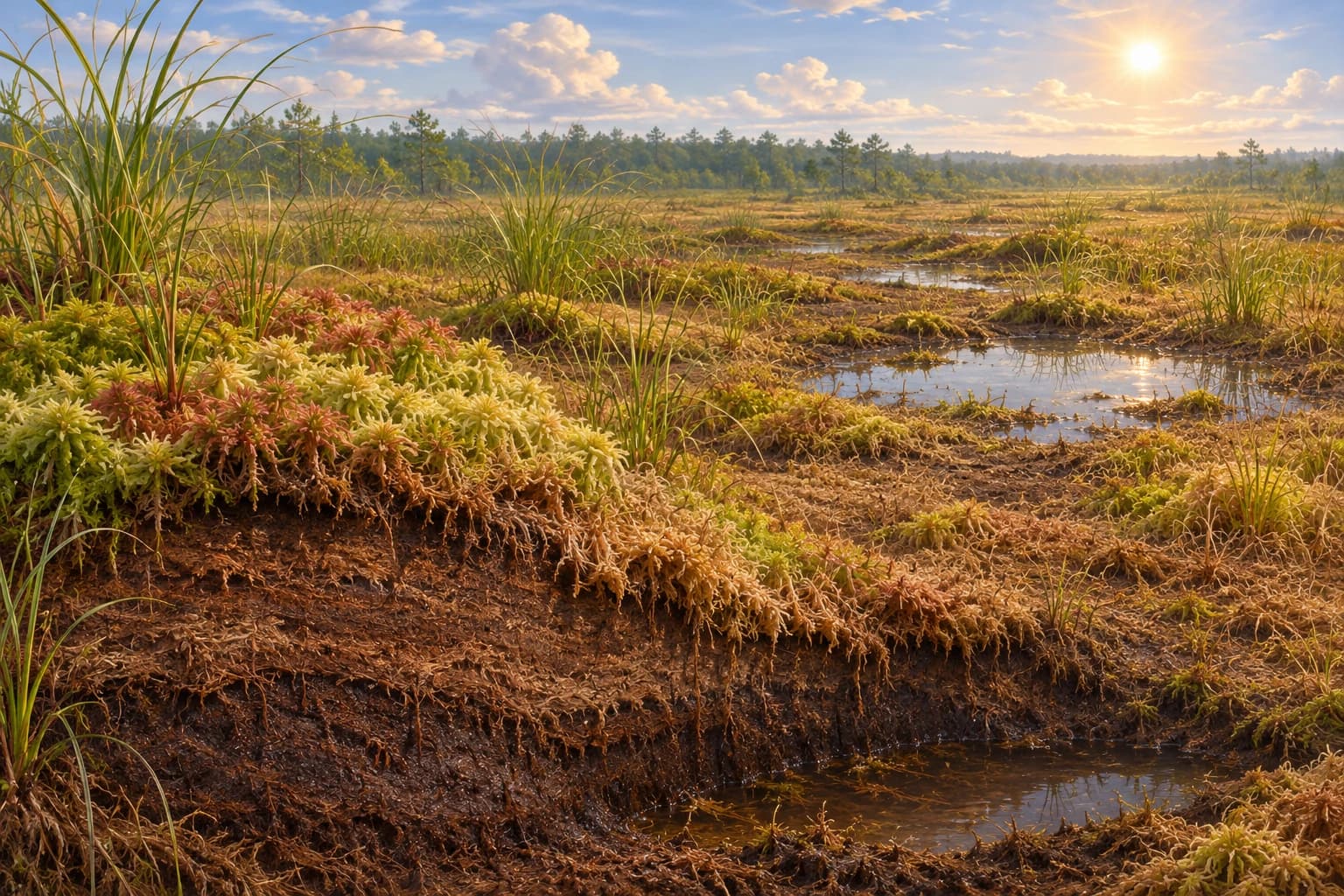
- 2
Peat decomposes or burns
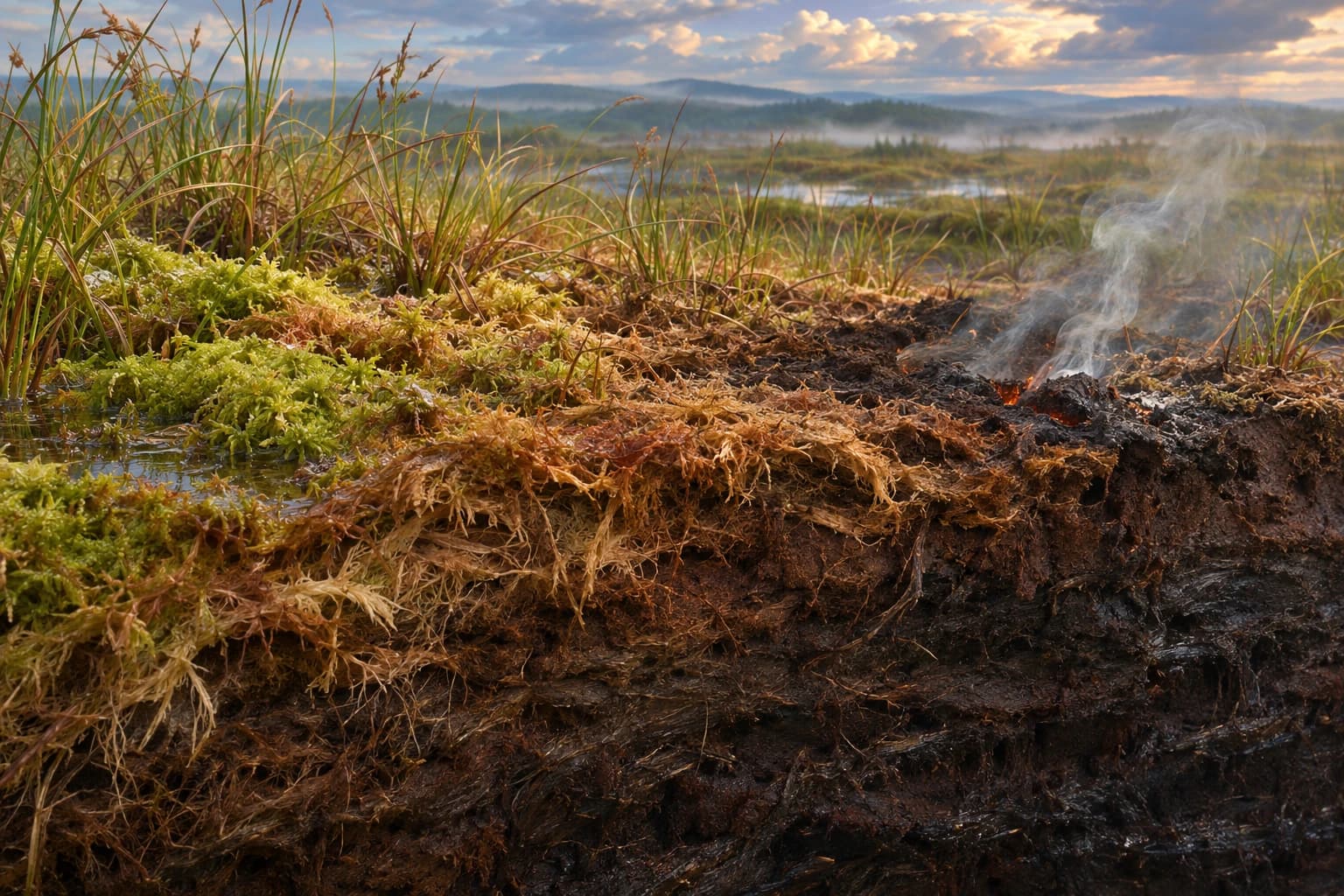
- 3
Carbon is released to the atmosphere
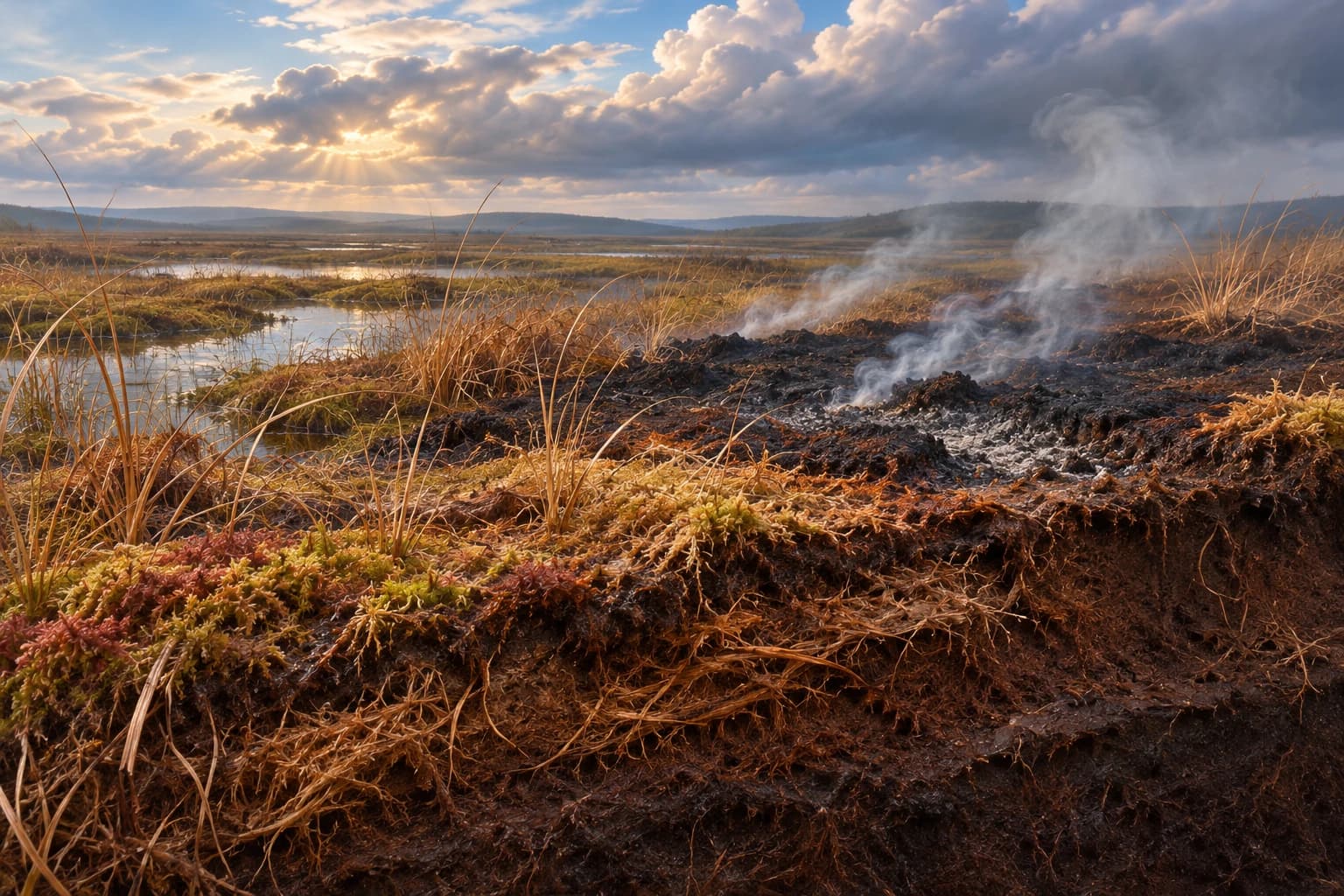
- 4
Warming is reinforced

↻ + The effect reinforces the initial change.
What we know
Wet conditions protect carbon stocks accumulated over centuries or millennia.
What remains uncertain
Rainfall, human drainage and fire determine carbon losses; not every peatland dries.
Timescale
Rapid fires; carbon changes over decades or longer.
Sources and credits
Based on Ripple et al. (2023), One Earth. Study loop: 21.
- Turetsky, M. R. et al. (2015). Global vulnerability of peatlands to fire and carbon loss. Nature Geoscience 8, 11–14.
Educational adaptation and AI-assisted illustrations: EkoPulse.