
Ozone
What does it mean?
Climate change alters atmospheric ozone, which in turn changes the energy balance.
Circulation, humidity and chemical reactions change ozone by altitude and region. Their radiative effects can reinforce or offset each other.
How the loop works
- 1
Earth warms
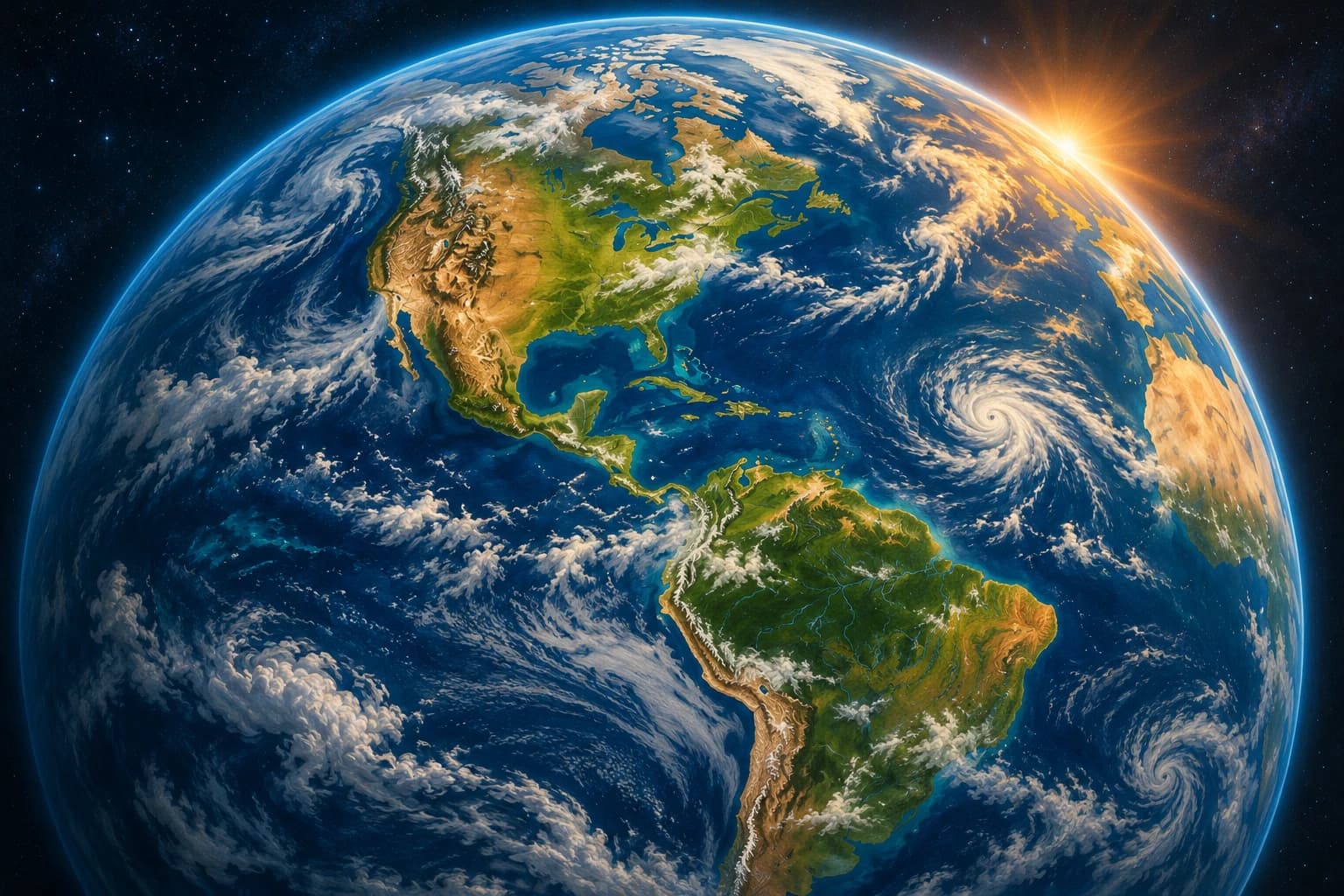
- 2
Air circulation and chemistry change
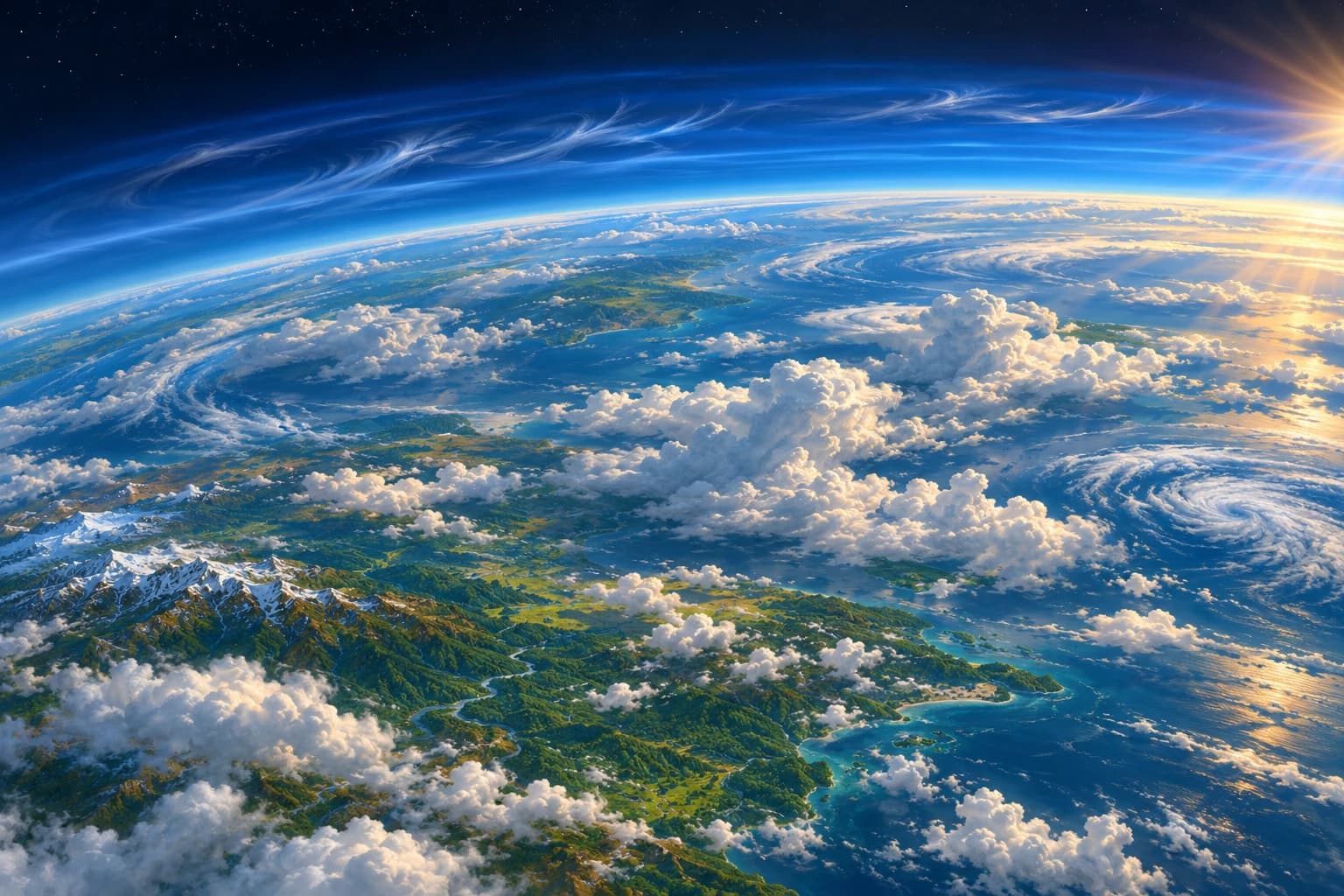
- 3
Ozone is redistributed
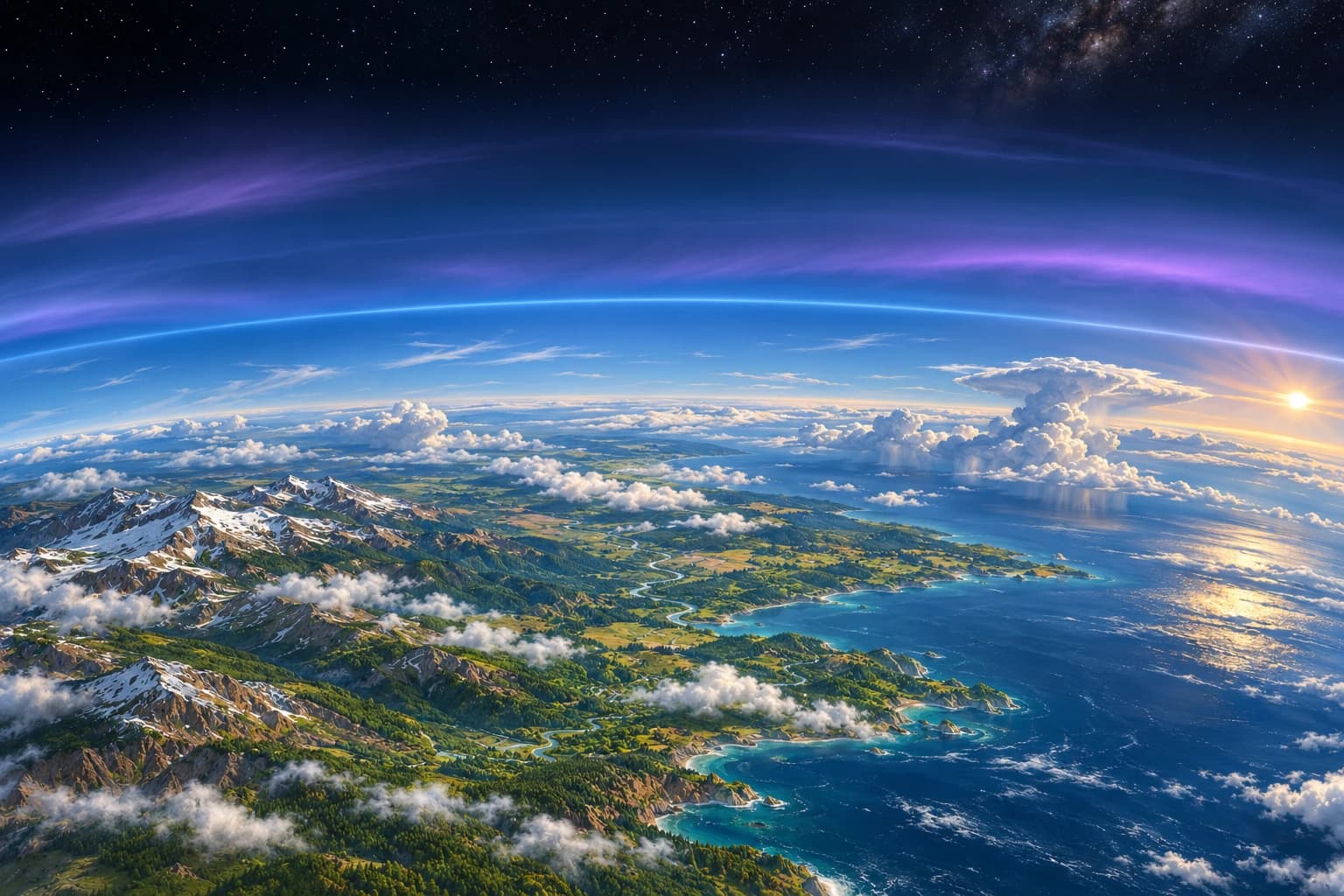
- 4
The warming balance is uncertain
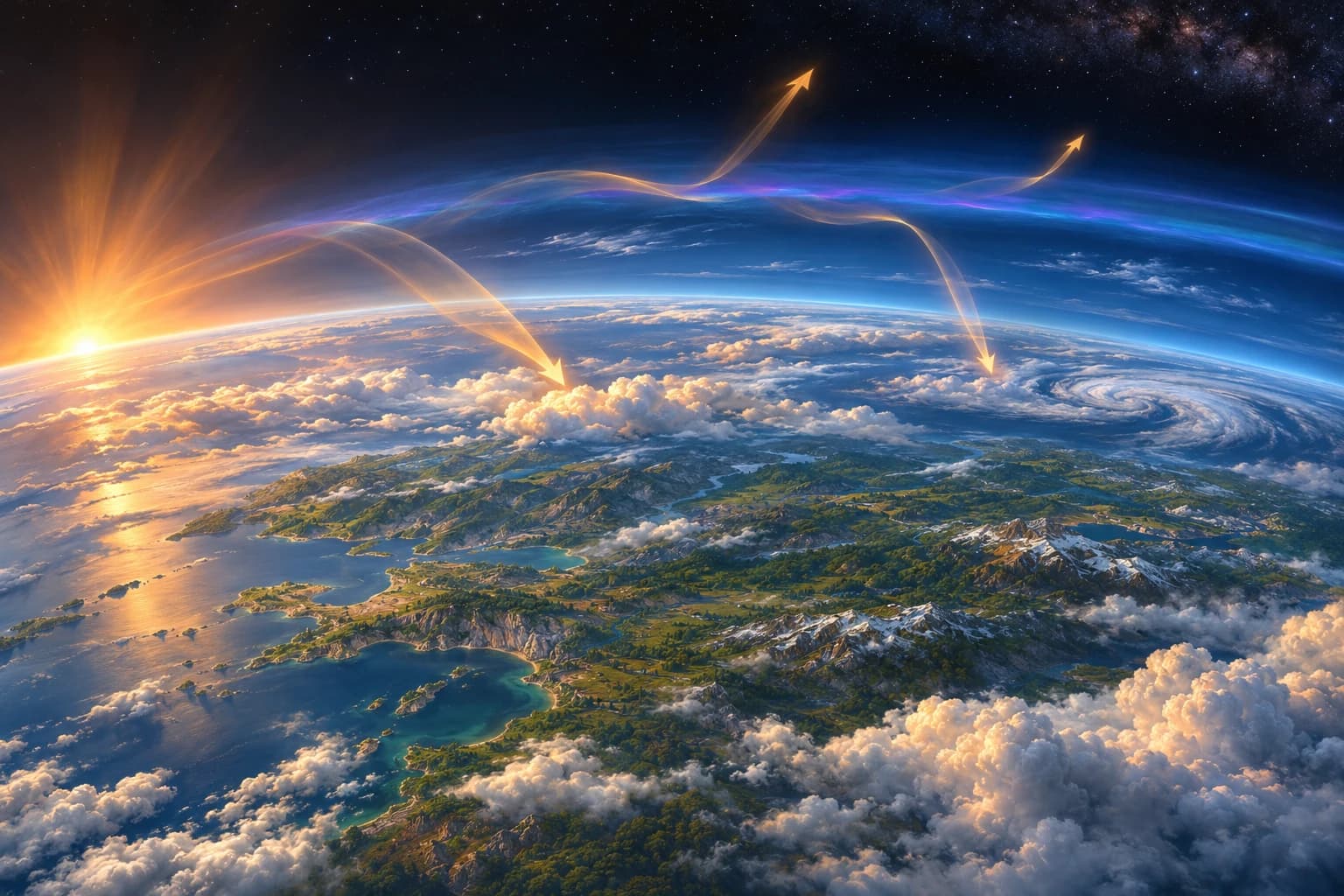
↻ ? The net effect may reinforce or dampen the change: its sign remains uncertain.
What we know
Ozone absorbs radiation; its climate response varies between atmospheric layers.
What remains uncertain
The cited models differ over magnitude and net sign. This mechanism is not the same as the ozone hole.
Timescale
Fast chemical changes and circulation adjustments over years to decades.
Sources and credits
Based on Ripple et al. (2023), One Earth. Study loop: 18.
- Naik, V. et al. (2021). Short-Lived Climate Forcers. IPCC AR6, Working Group I, Chapter 6.
- Nowack, P.J. et al. (2015). A large ozone-circulation feedback and its implications for global warming assessments. Nature Climate Change 5, 41–45.
Educational adaptation and AI-assisted illustrations: EkoPulse.