
Other aerosols
What does it mean?
Atmospheric particles other than dust also respond to climate and alter Earth’s energy balance.
Climate changes the production, transport and removal of particles such as sea salt. These interact with radiation and cloud formation.
How the loop works
- 1
Earth warms
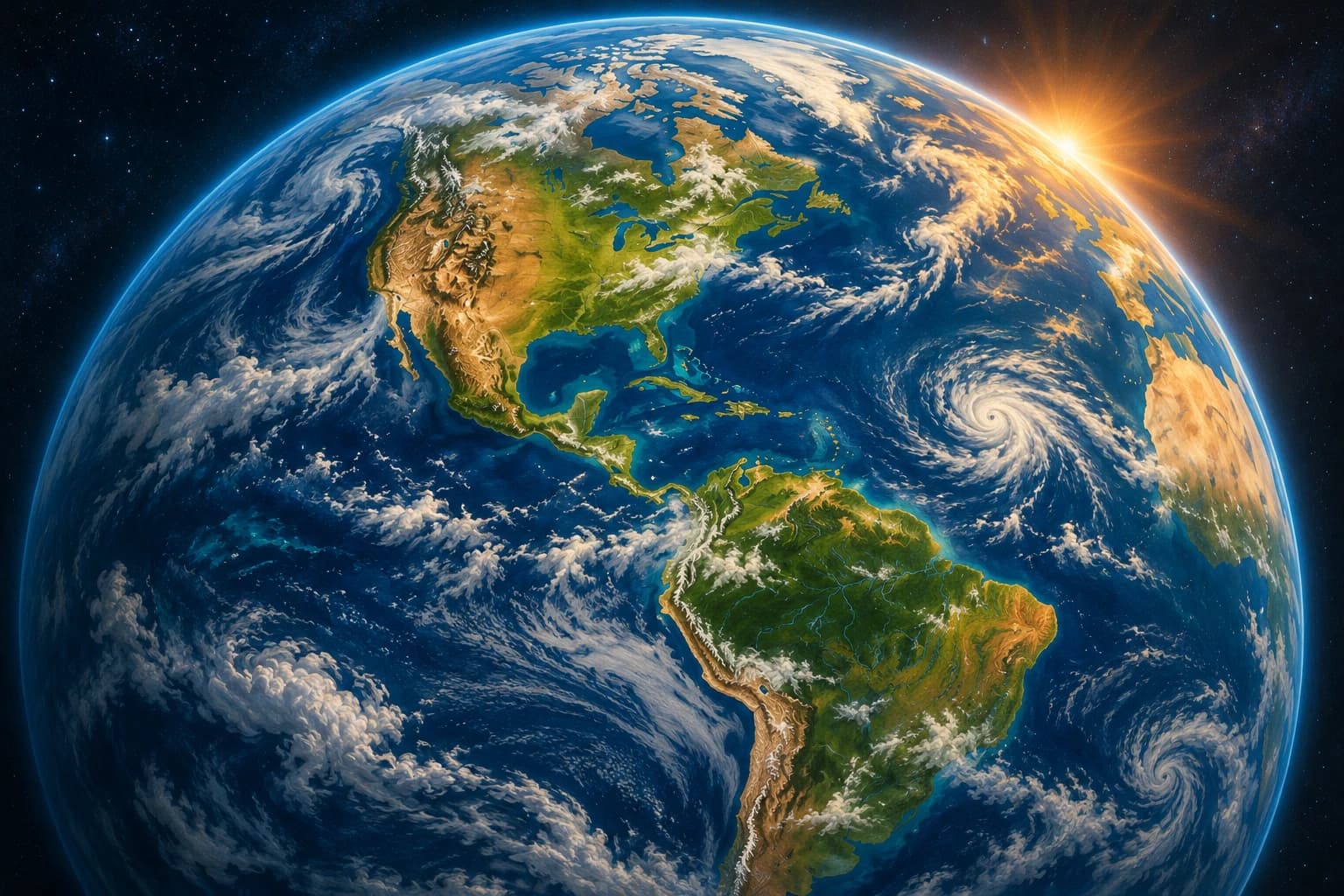
- 2
Particle sources and lifetimes change
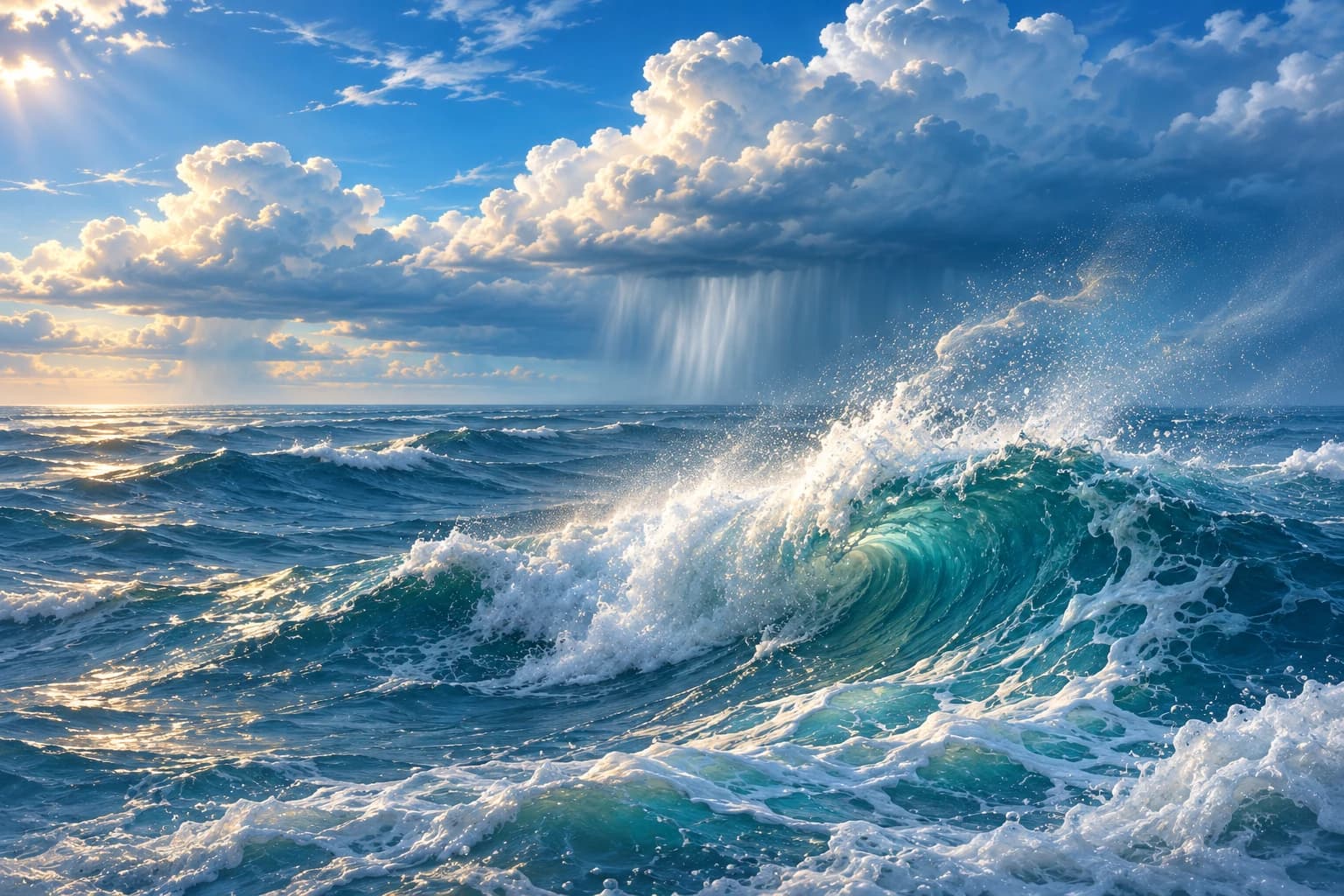
- 3
Radiation and clouds change

- 4
The balance may amplify or dampen warming

↻ ? The net effect may reinforce or dampen the change: its sign remains uncertain.
What we know
Aerosols scatter or absorb radiation, and some help cloud droplets form.
What remains uncertain
The combined effect depends on particle type and regional responses. Direct human emissions are a separate factor.
Timescale
Short-lived particles; lasting changes as climate evolves.
Sources and credits
Based on Ripple et al. (2023), One Earth. Study loop: 9.
- Carslaw, K. et al. (2010). A review of natural aerosol interactions and feedbacks within the Earth system. Atmospheric Chemistry and Physics 10.
- Paulot, F. et al. (2020). Revisiting the impact of sea salt on climate sensitivity. Geophysical Research Letters 47, e2019GL085601.
Educational adaptation and AI-assisted illustrations: EkoPulse.