
Ocean methane hydrates
What does it mean?
Warming can destabilise solid water structures holding methane in marine sediments.
Hydrates require low temperatures and sufficient pressure. If they break down, released carbon could reinforce warming if it reaches the atmosphere.
How the loop works
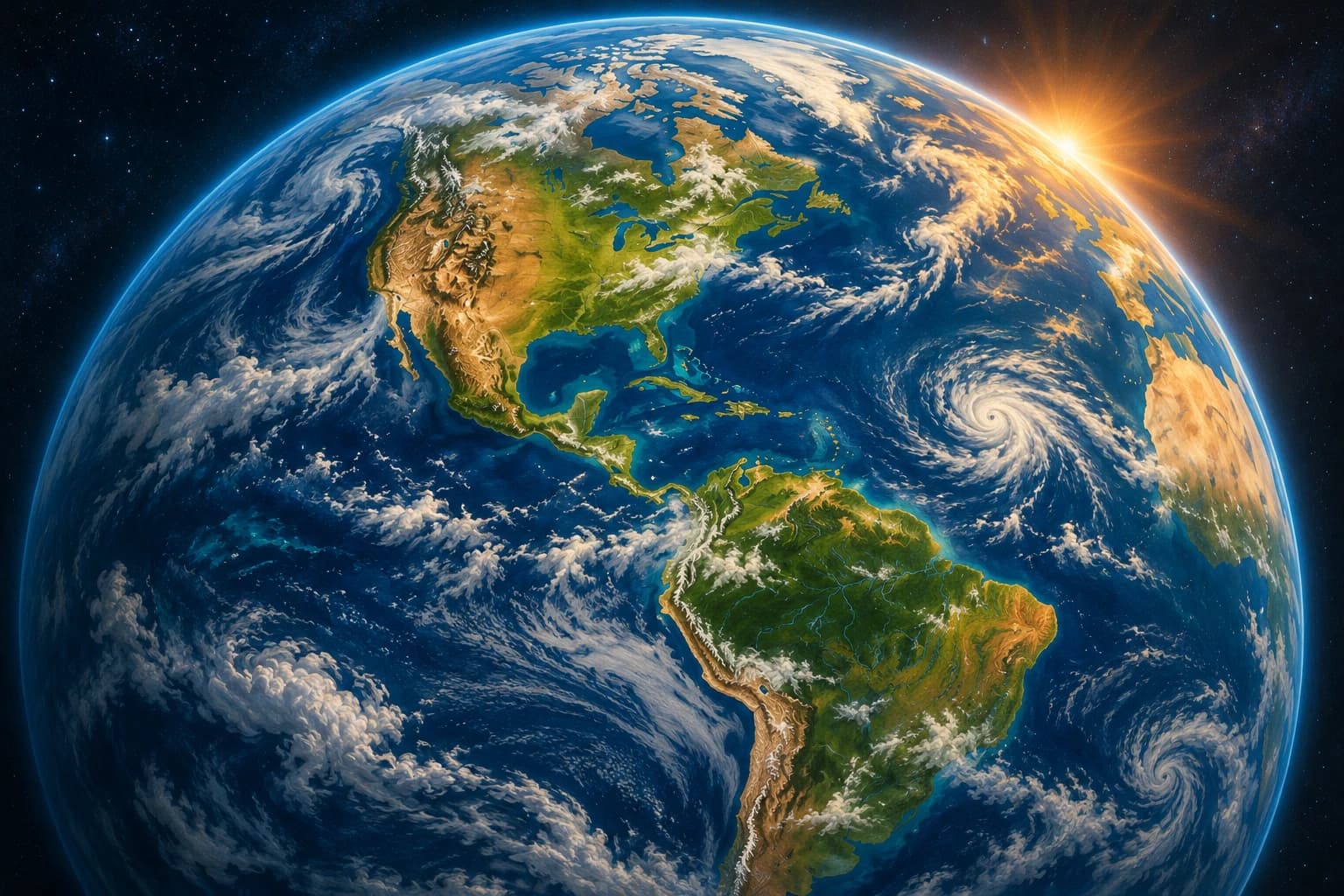
- 1
Earth warms
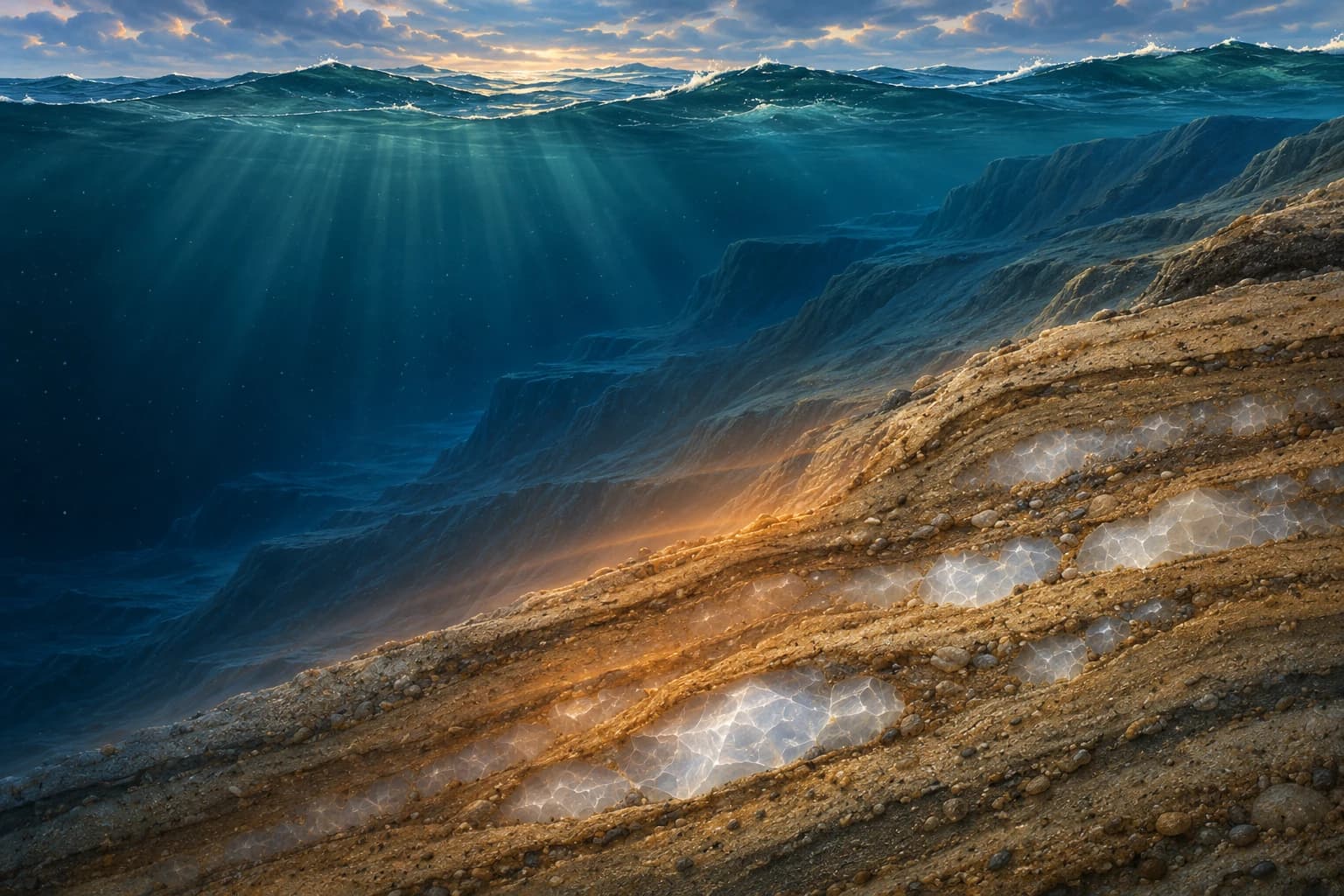
- 2
Heat reaches hydrate-bearing sediments
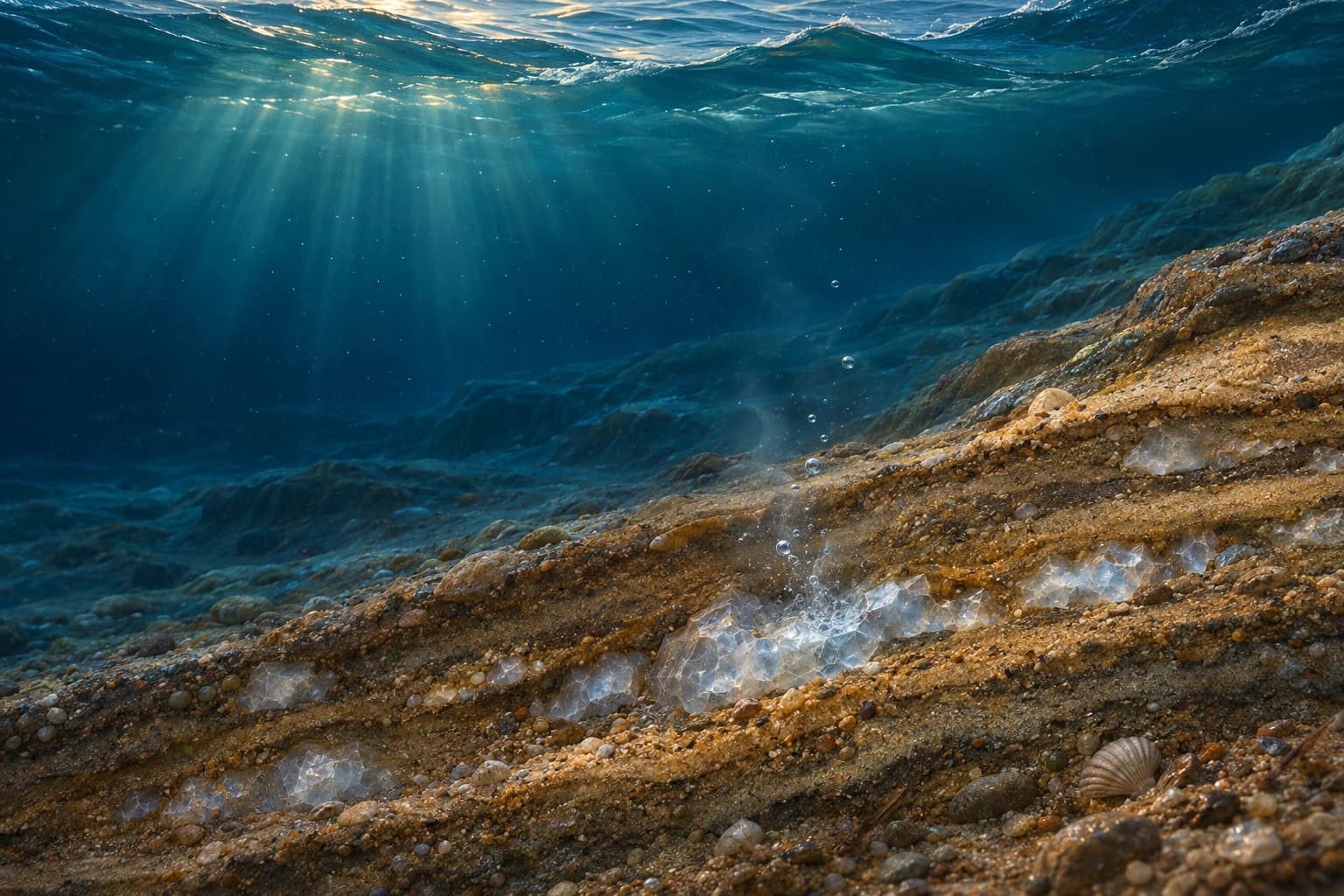
- 3
Methane and methane-derived carbon may be released
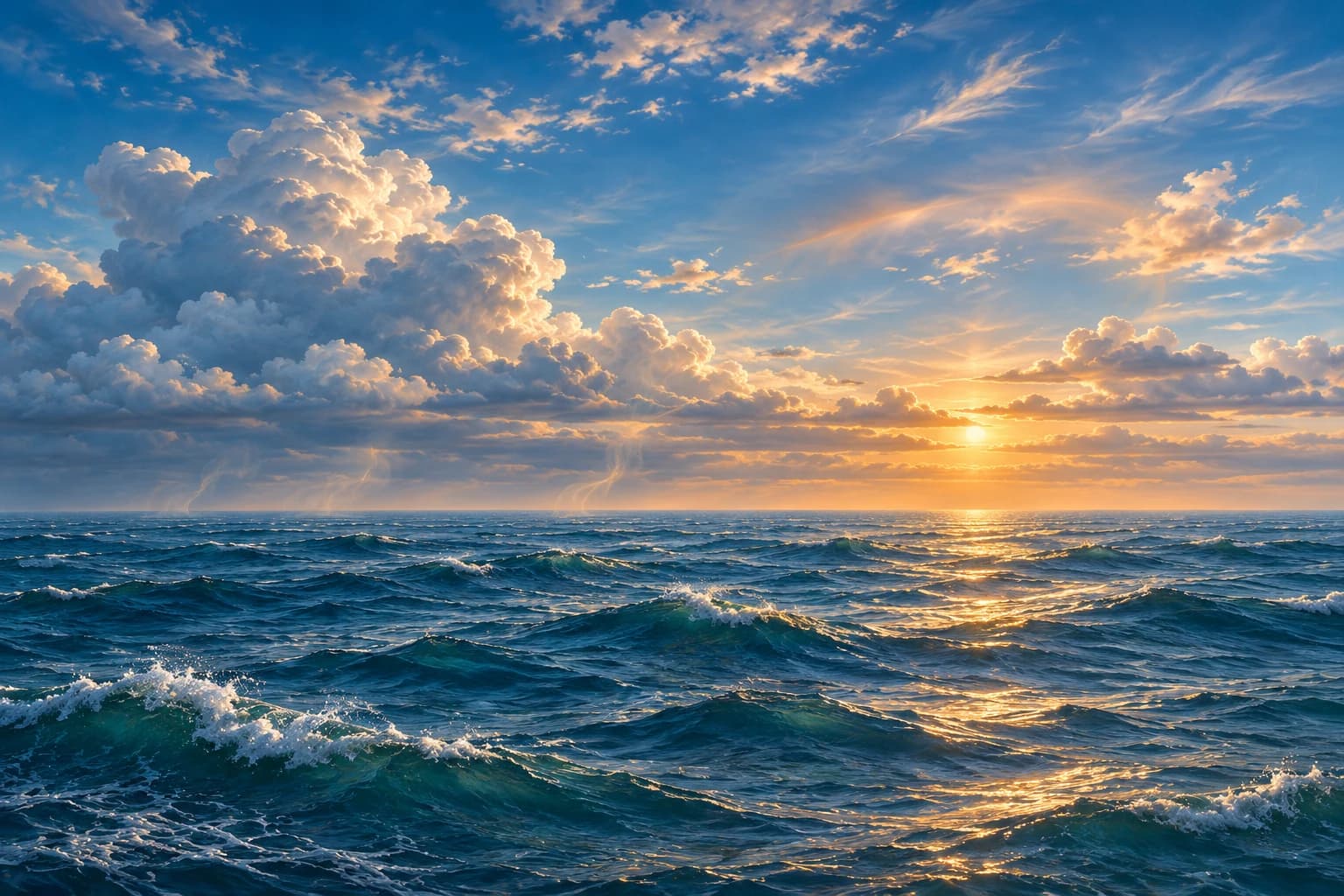
- 4
If they reach the air, they add warming
↻ + The effect reinforces the initial change.
What we know
Hydrate stability depends on temperature and pressure; sediments and seawater can consume much of the released methane.
What remains uncertain
How much carbon reaches the atmosphere, and when, is highly uncertain. This classification does not demonstrate an imminent catastrophic release.
Timescale
Generally slow: decades to millennia depending on depth and heat transport.
Sources and credits
Based on Ripple et al. (2023), One Earth. Study loop: 13.
- Ruppel, C.D. and Kessler, J.D. (2017). The interaction of climate change and methane hydrates. Reviews of Geophysics 55, 126–168.
Educational adaptation and AI-assisted illustrations: EkoPulse.