
Ice and snow · Physical process
Glacier and ice-sheet elevation
What does it mean?
As ice thins, its surface sits at lower elevations where air is generally warmer.
Initial ice loss lowers the surface. Exposure to warmer air favours further melting: this loop reinforces ice loss.
How the loop works
- 1
Ice loses mass
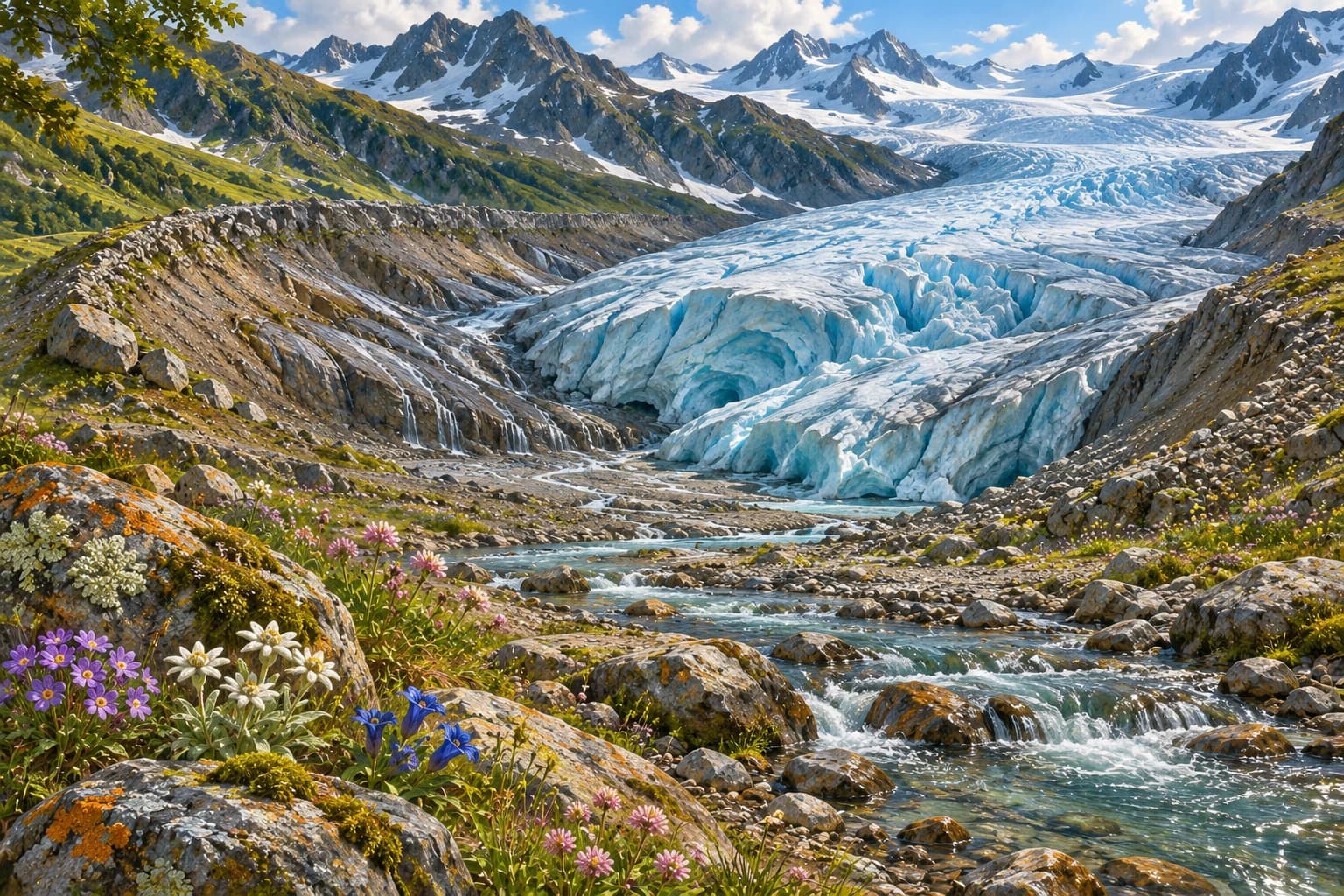
- 2
Its surface drops
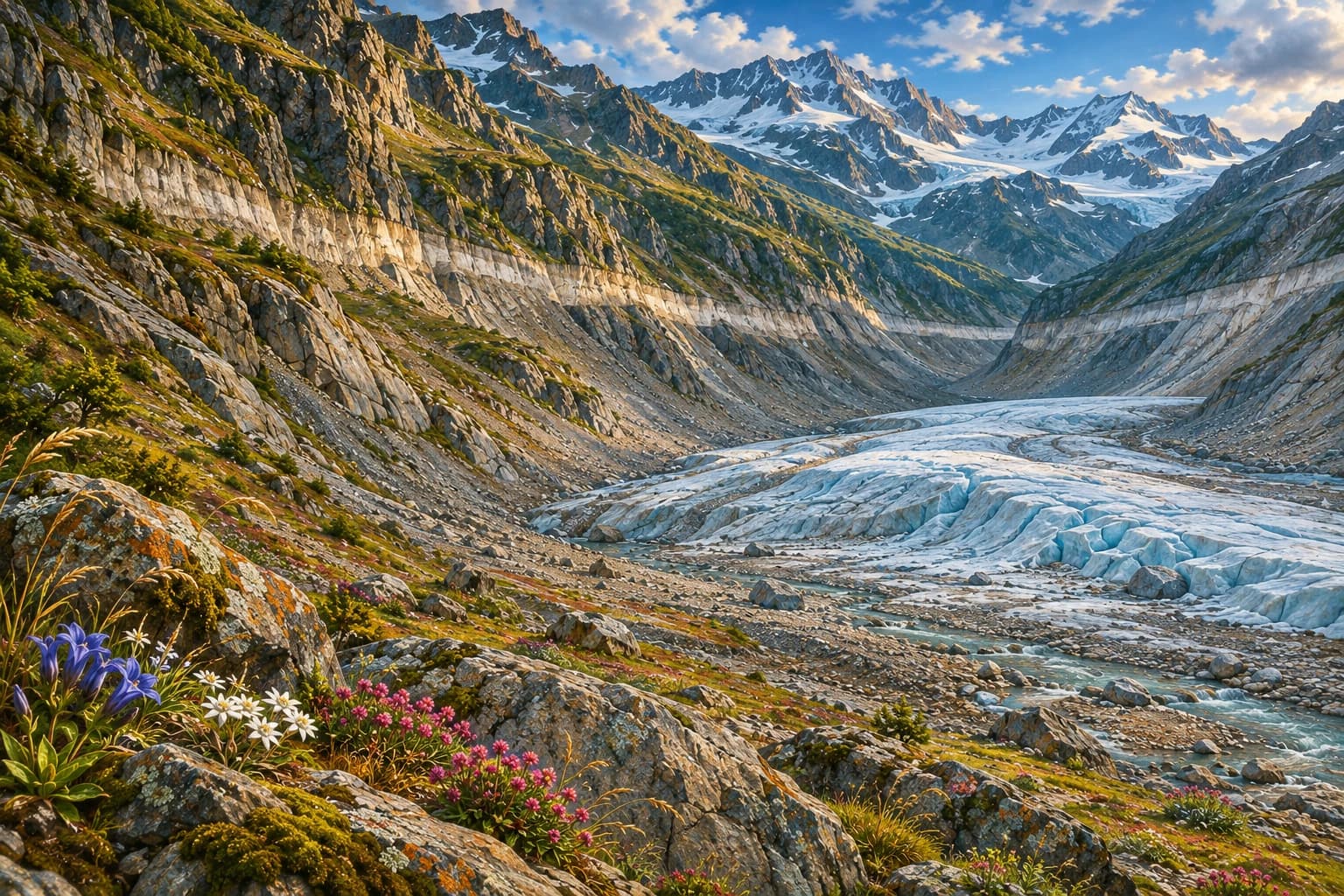
- 3
It is exposed to warmer air
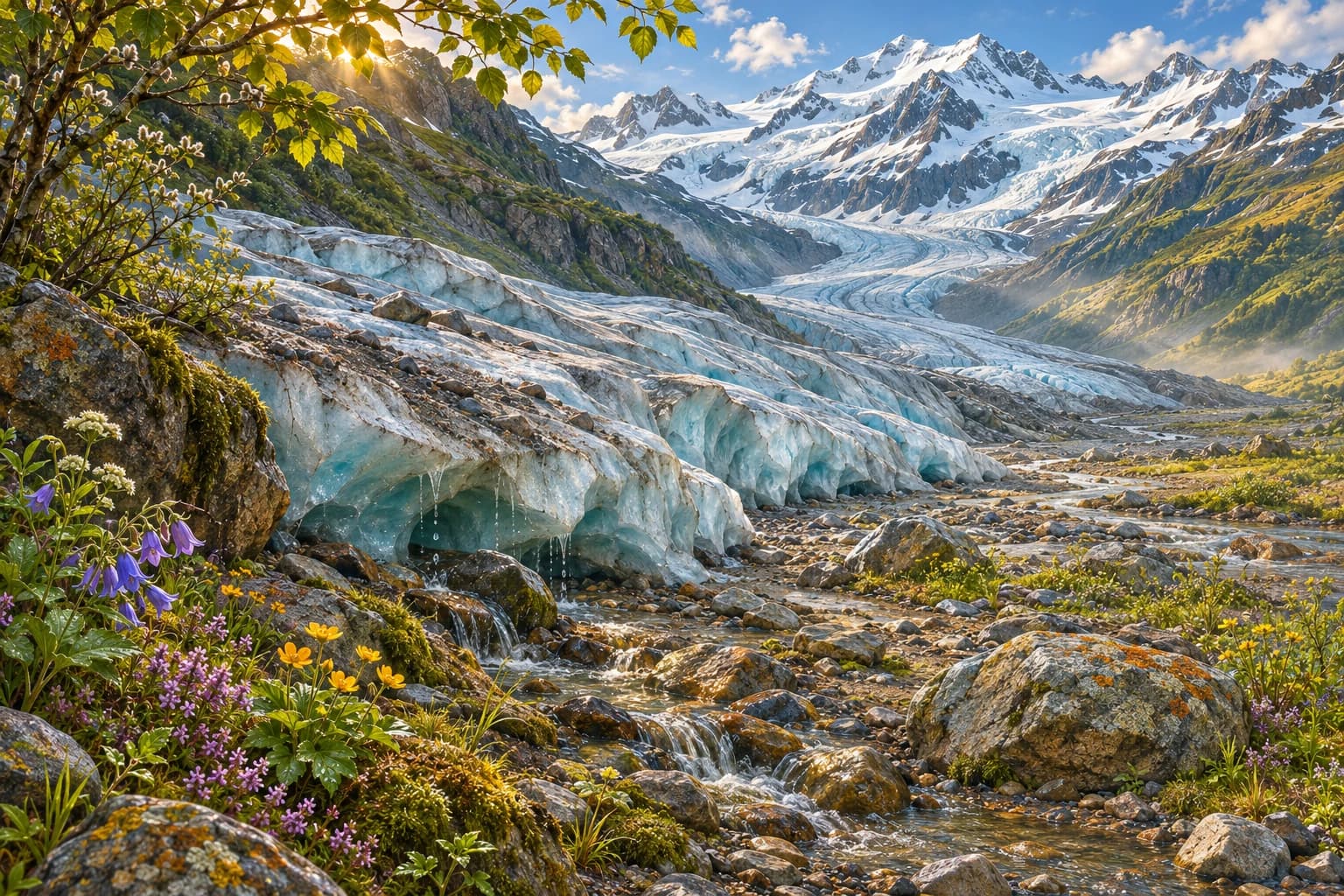
- 4
Ice loss intensifies
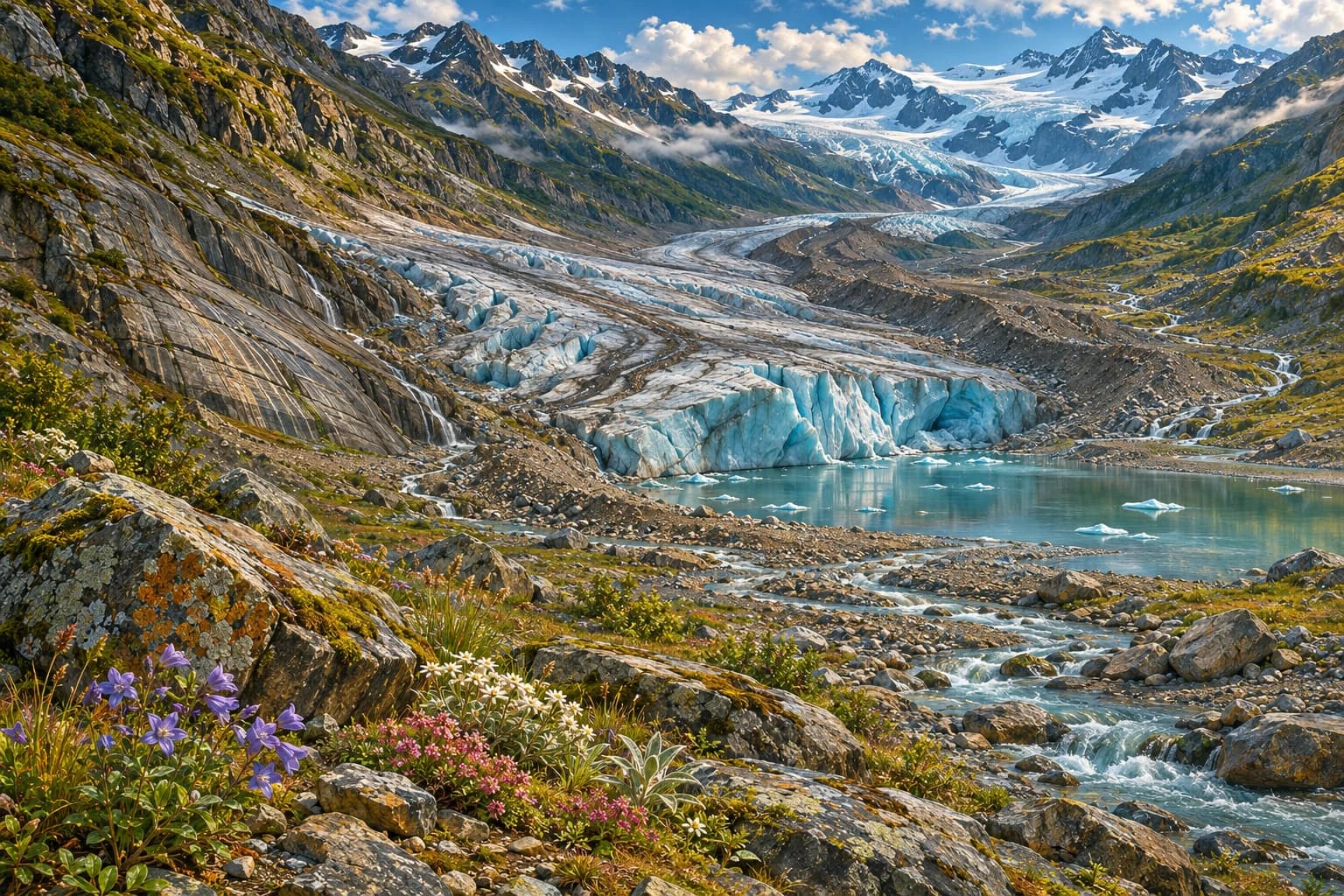
↻ + The effect reinforces the initial change.
What we know
The effect of elevation on melting is well identified and distinct from the albedo change.
What remains uncertain
Its importance depends on geometry, melting areas, and changes in snowfall and circulation.
Timescale
Decades to millennia, depending on ice size and rate of change.
Sources and credits
Based on Ripple et al. (2023), One Earth. Study loop: 15.
- Fyke, J., Sergienko, O., Löfverström, M., Price, S. and Lenaerts, J.T. (2018). An overview of interactions and feedbacks between ice sheets and the Earth system. Reviews of Geophysics 56, 361–408.
Educational adaptation and AI-assisted illustrations: EkoPulse.