
Soils and ecosystems · Biological process
Forest dieback
What does it mean?
Forest loss that can lead to another ecosystem, such as grassland, rather than rapid forest recovery.
Heat and drought can weaken forests and reduce the carbon they store.
How the loop works
- 1
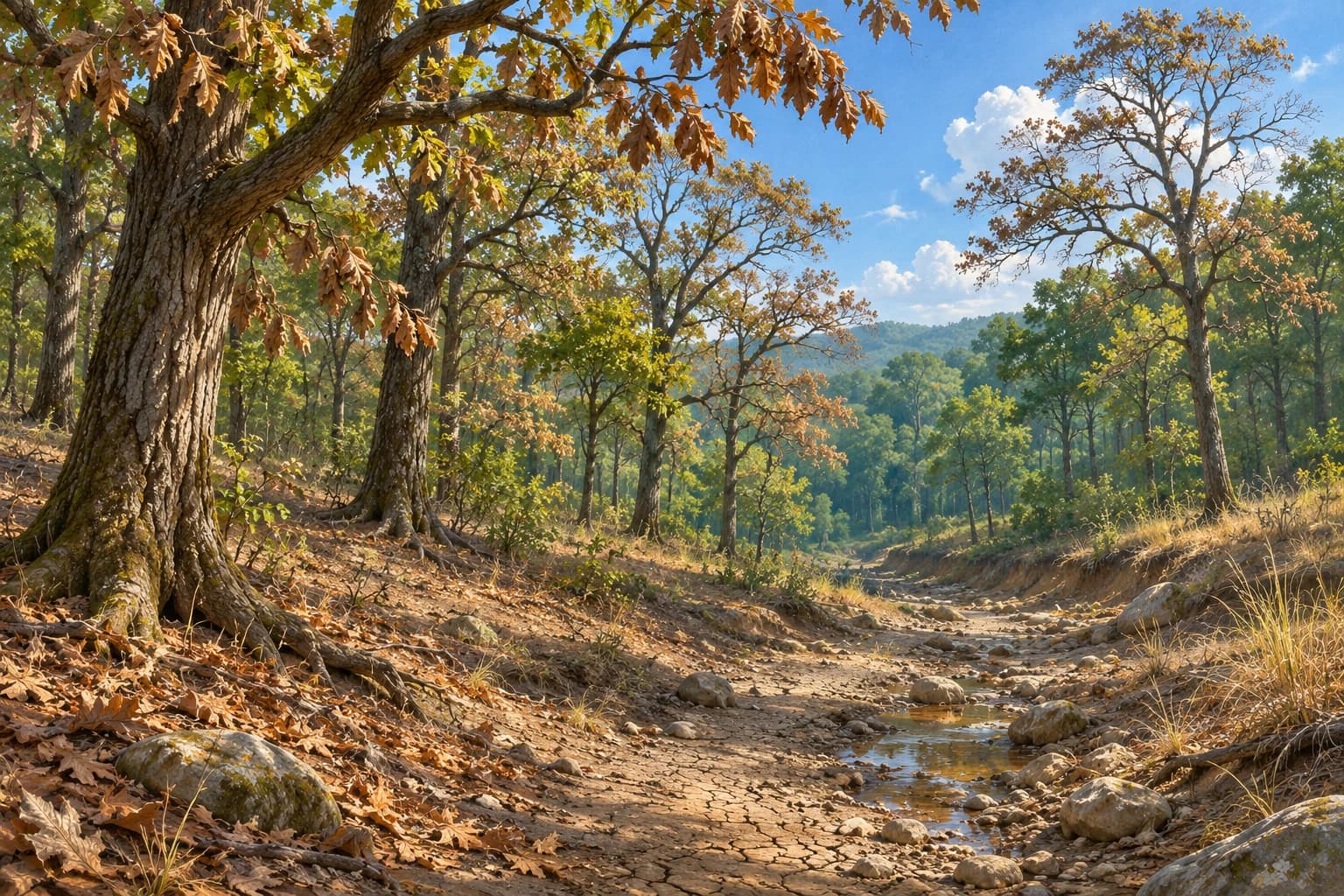
Heat and drought stress increase
- 2
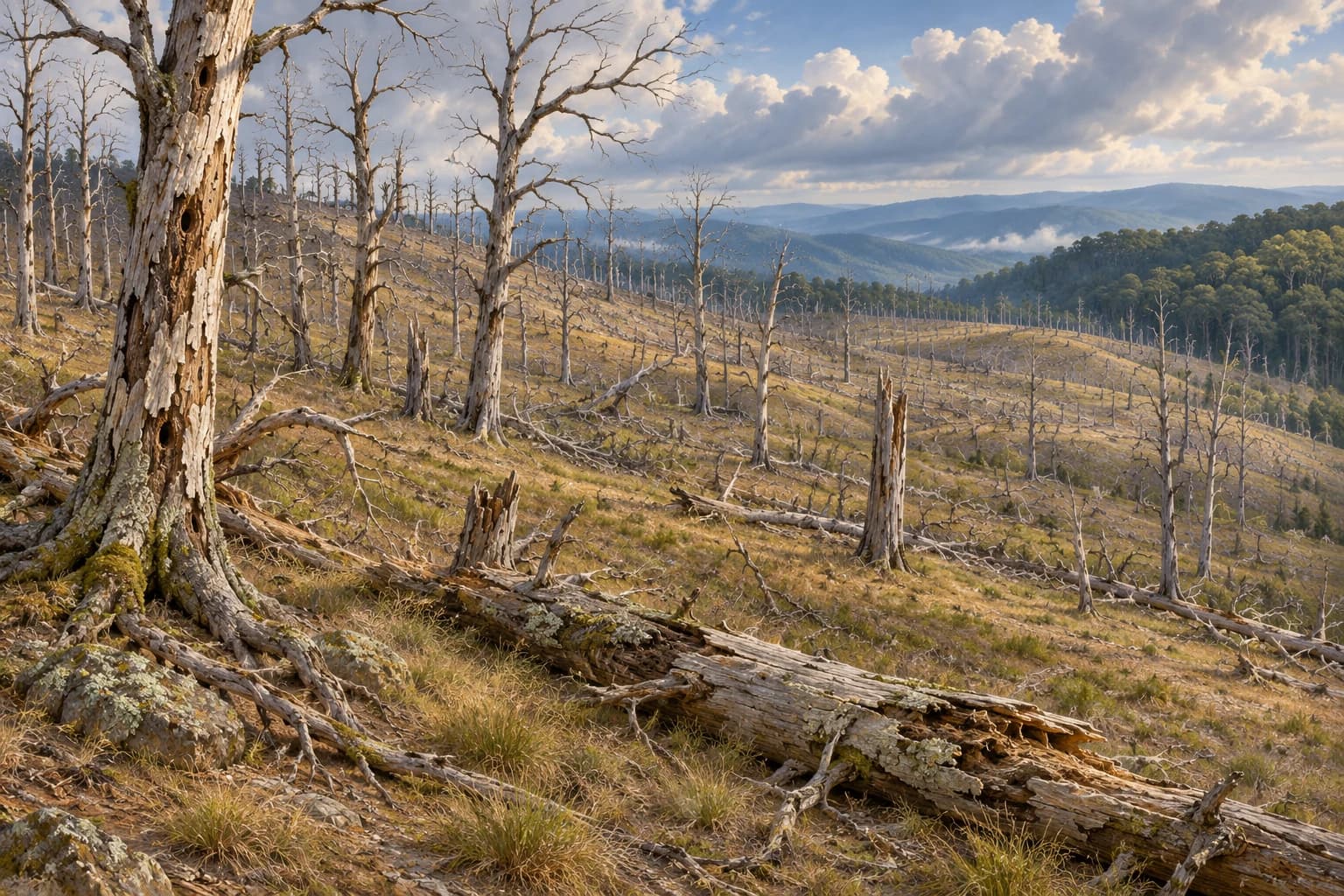
Forest cover is persistently lost
- 3
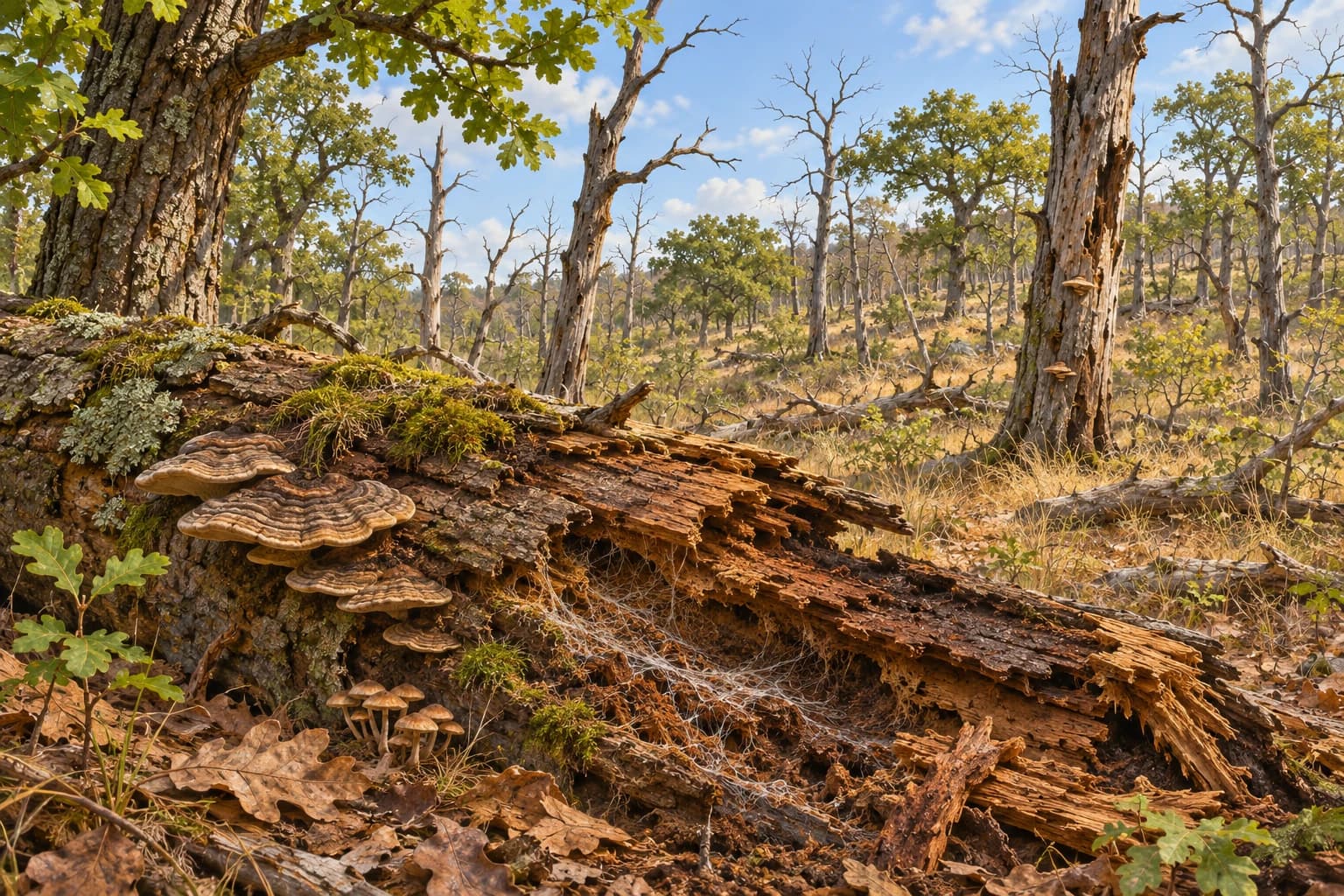
Less storage and more carbon released
- 4
Warming is reinforced

↻ + The effect reinforces the initial change.
What we know
Tree mortality can reduce CO₂ uptake and release carbon through decomposition.
What remains uncertain
Resilience, rainfall and land use vary; not every forest crosses an irreversible threshold.
Timescale
Damage during droughts; ecosystem changes over decades or longer.
Sources and credits
Based on Ripple et al. (2023), One Earth. Study loop: 24.
- Allen, C. D. et al. (2010). A global overview of drought and heat-induced tree mortality reveals emerging climate change risks for forests. Forest Ecology and Management 259, 660–684.
Educational adaptation and AI-assisted illustrations: EkoPulse.