
Soils and ecosystems · Biological process
Evapotranspiration
What does it mean?
Water entering the atmosphere through soil evaporation and plant transpiration, cooling the surface.
If heat depletes soil moisture, evaporative cooling declines and the surface warms further.
How the loop works
- 1
Heat increases water demand
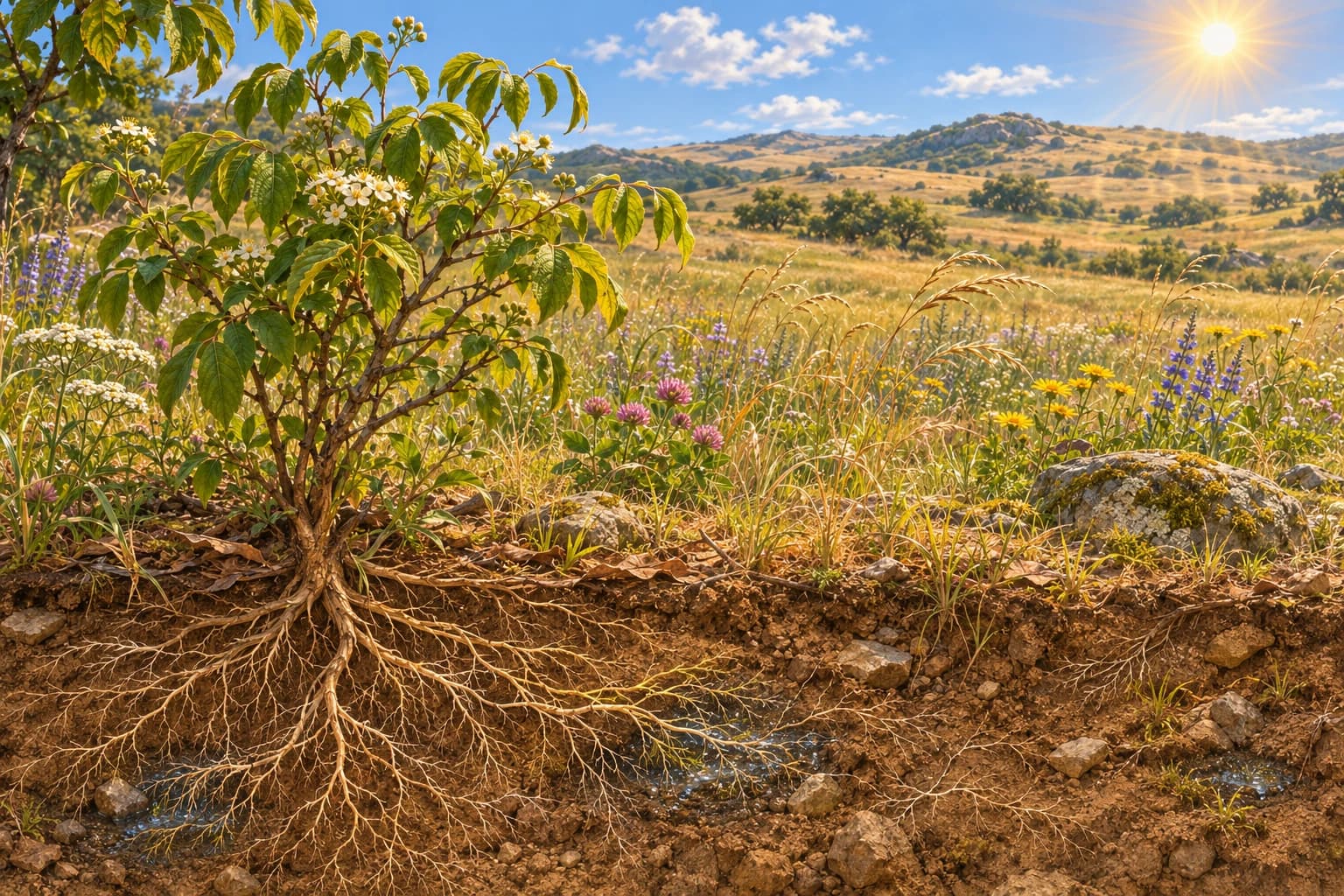
- 2
Soil moisture is depleted
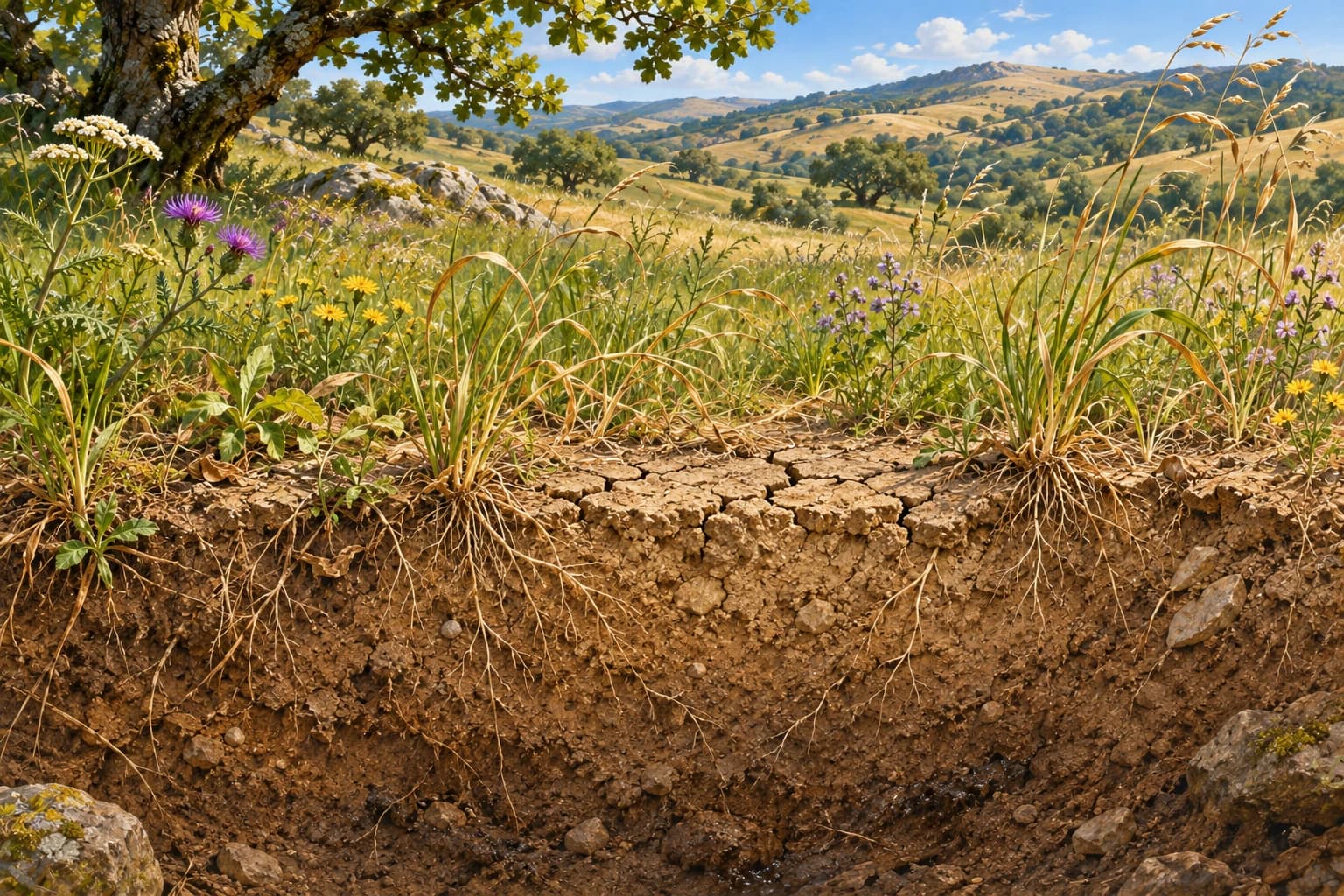
- 3
Evaporative cooling declines
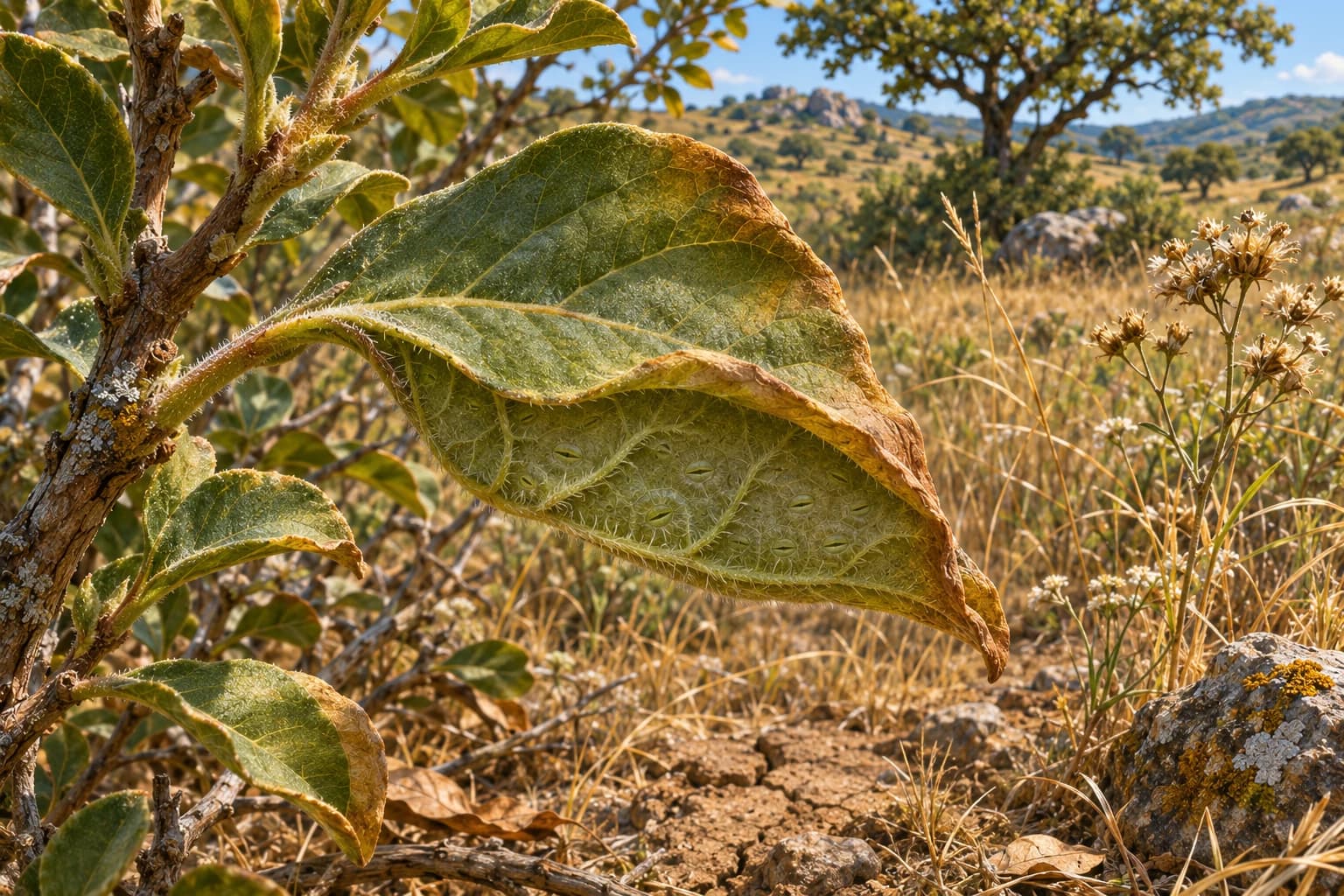
- 4
The surface warms further
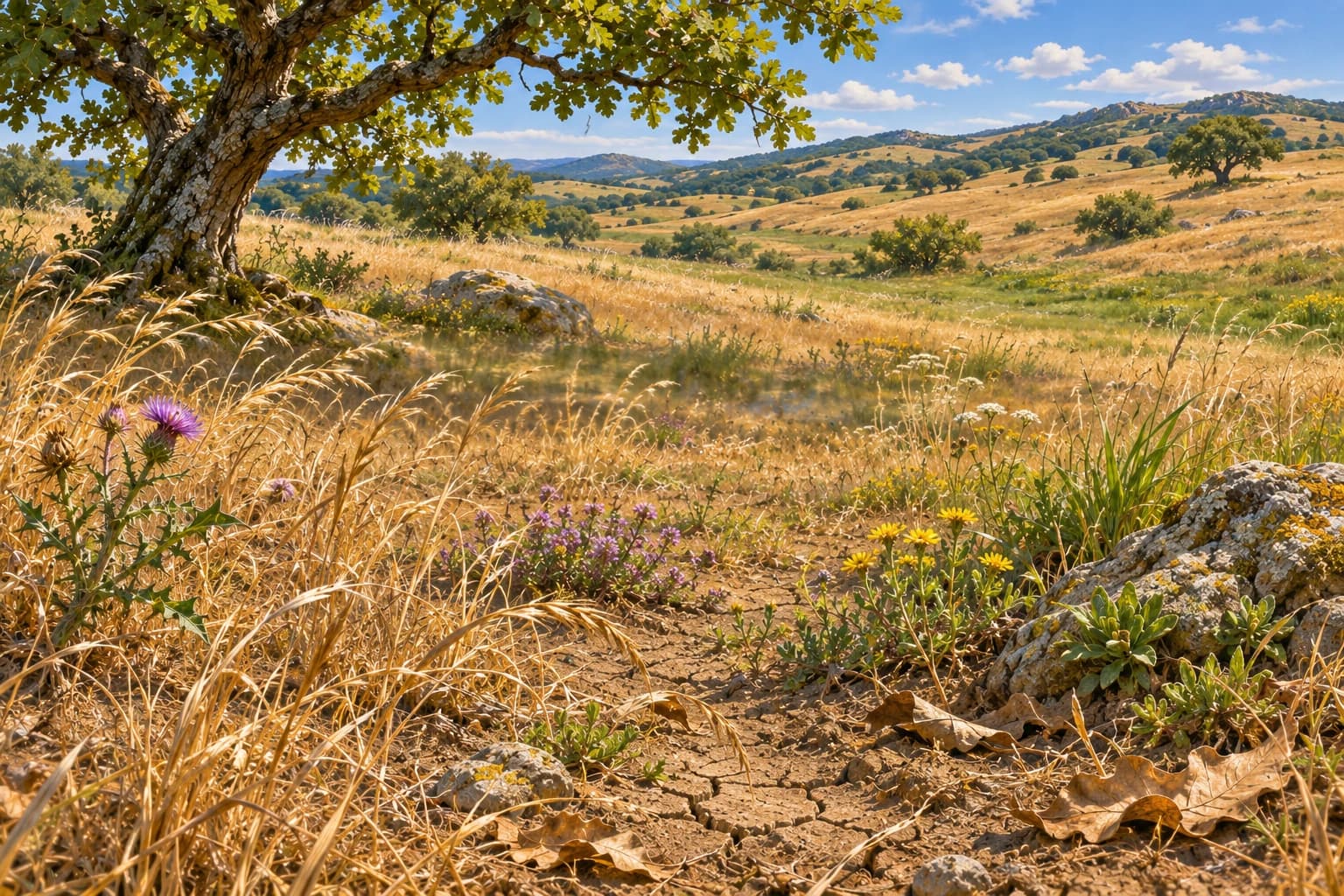
↻ + The effect reinforces the initial change.
What we know
Higher CO₂ can also partly close leaf pores and reduce transpiration.
What remains uncertain
Rainfall, vegetation type and new leaf growth can offset part of the effect.
Timescale
Days or seasons for moisture; years for vegetation changes.
Sources and credits
Based on Ripple et al. (2023), One Earth. Study loop: 32.
- Heinze, C. et al. (2019). ESD Reviews: Climate feedbacks in the Earth system and prospects for their evaluation. Earth System Dynamics 10, 379–452.
- Seneviratne, S. I. et al. (2010). Investigating soil moisture–climate interactions in a changing climate: A review. Earth-Science Reviews 99, 125–161.
Educational adaptation and AI-assisted illustrations: EkoPulse.