
Soils and ecosystems · Biological process
Desertification
What does it mean?
Degradation of drylands that reduces vegetation and ecosystem functioning through climatic and human factors.
Vegetation loss in areas becoming more arid can reduce carbon storage.
How the loop works
- 1
Climate favours aridity in some areas
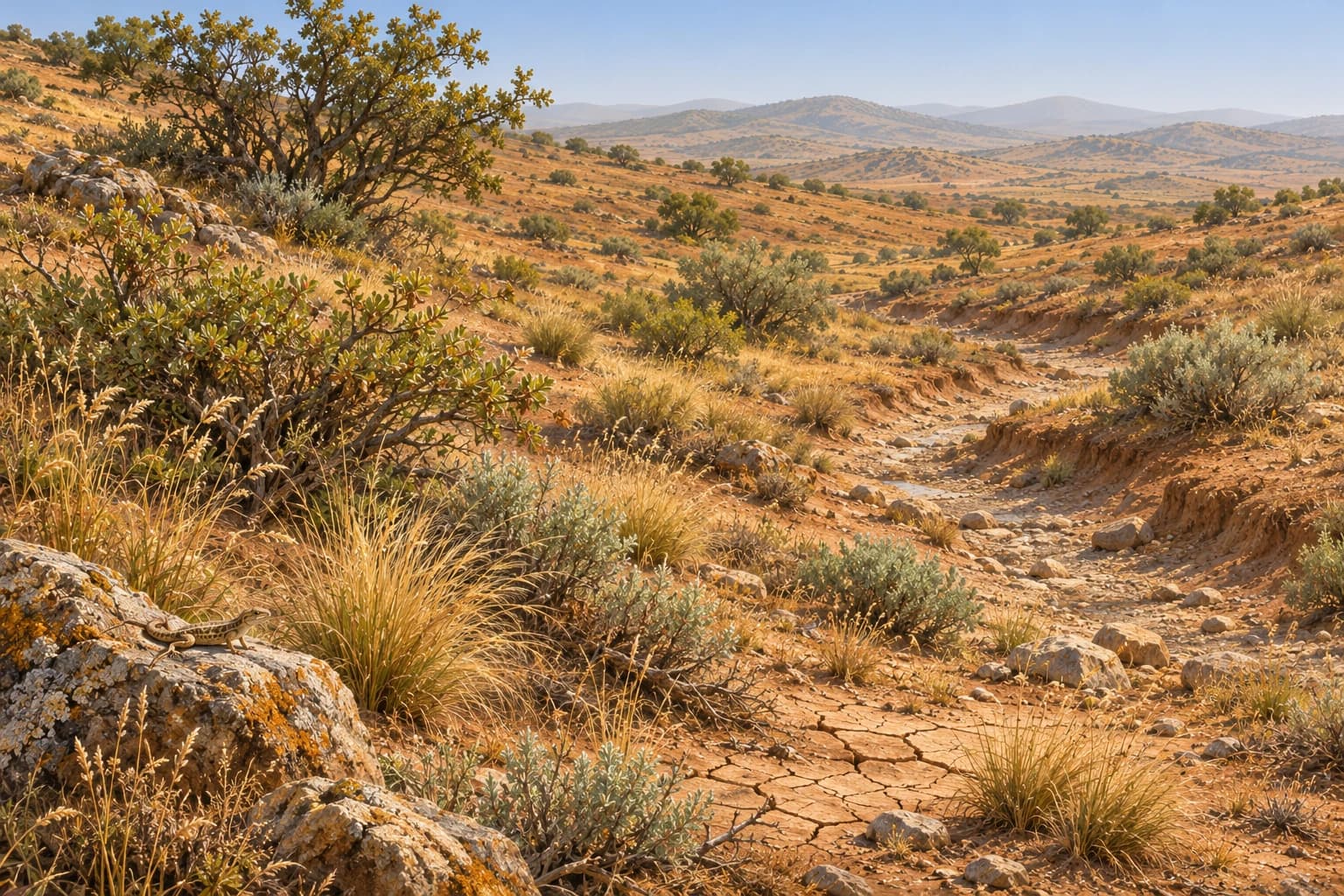
- 2
Soils and vegetation degrade
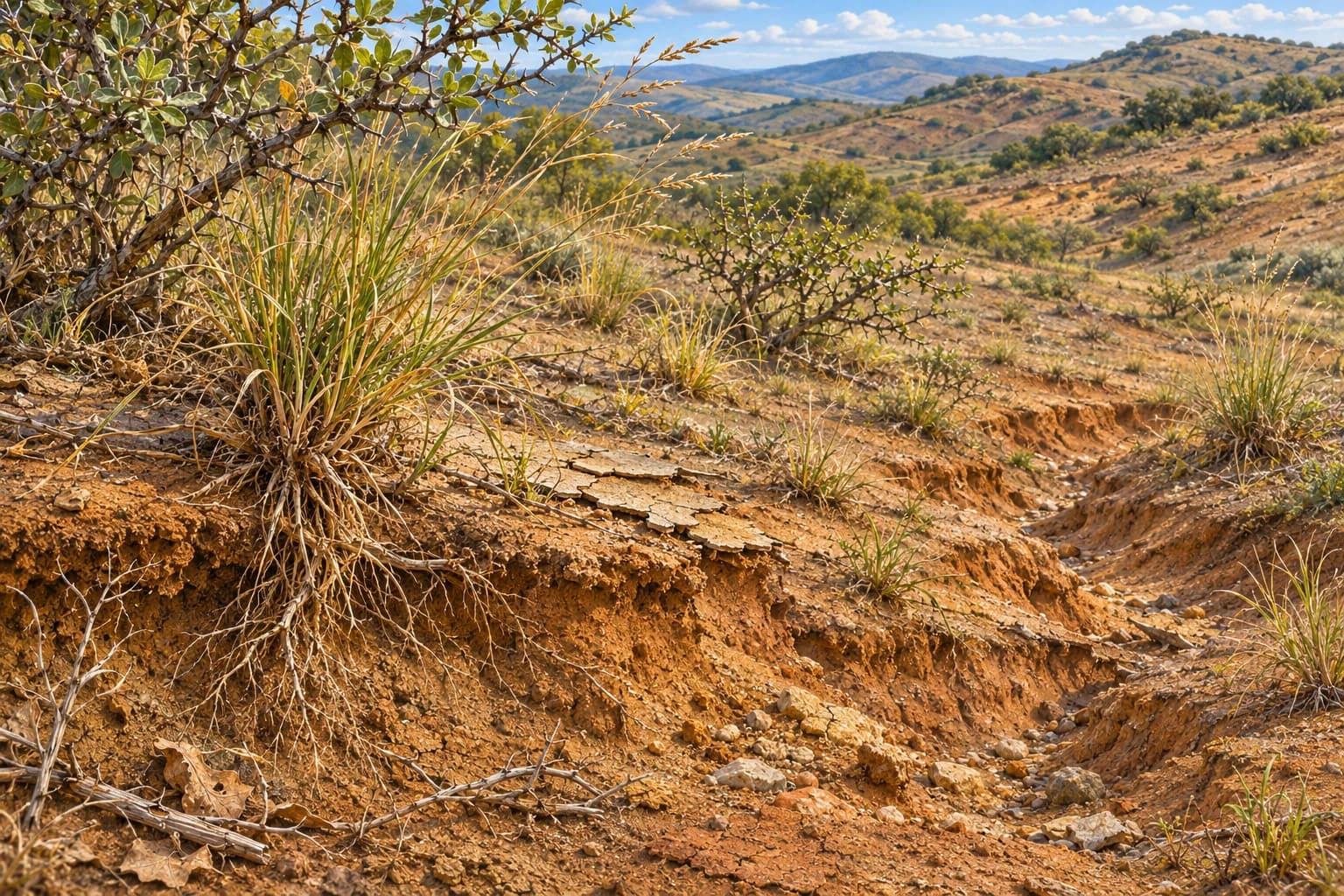
- 3
Carbon storage declines
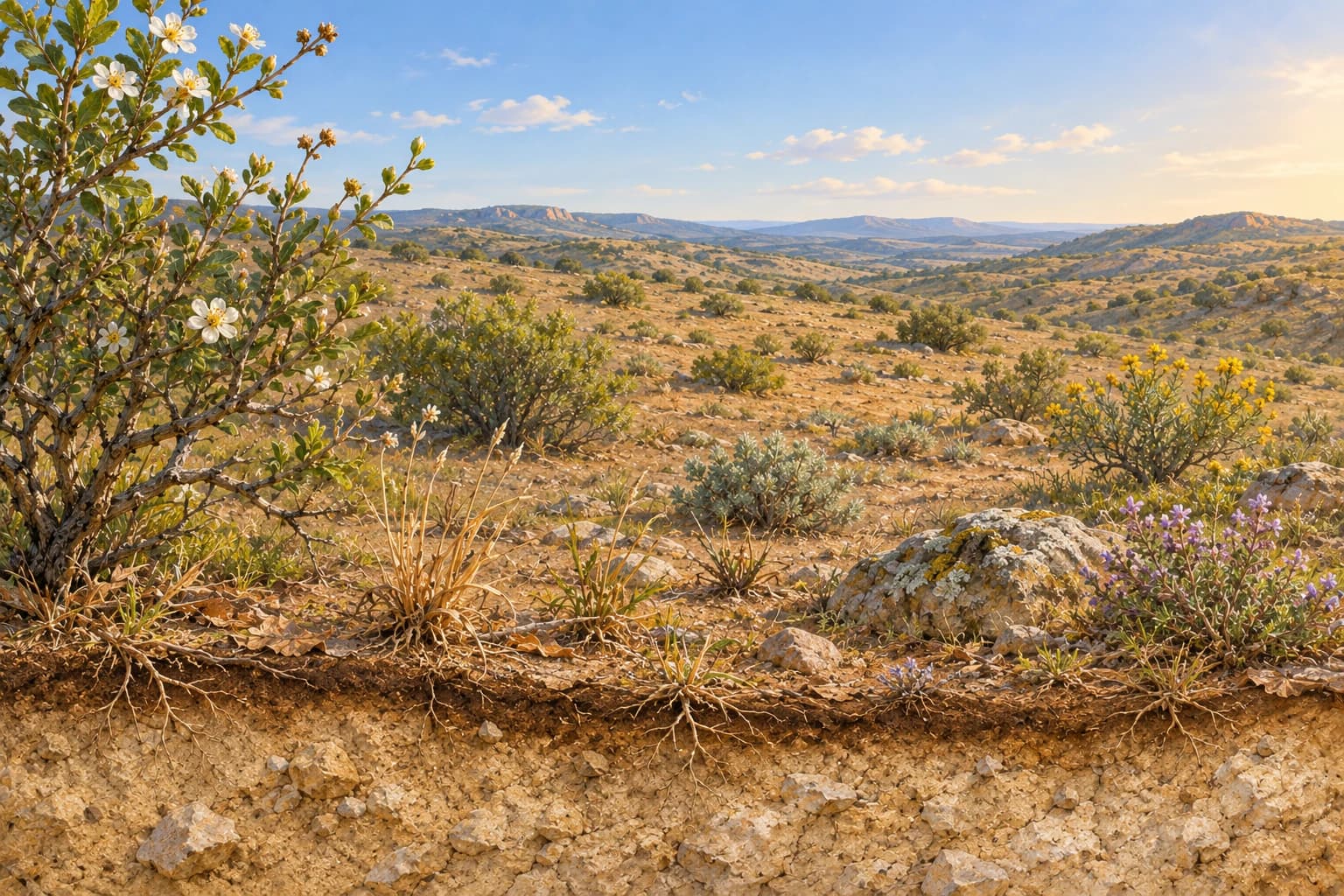
- 4
Warming is reinforced
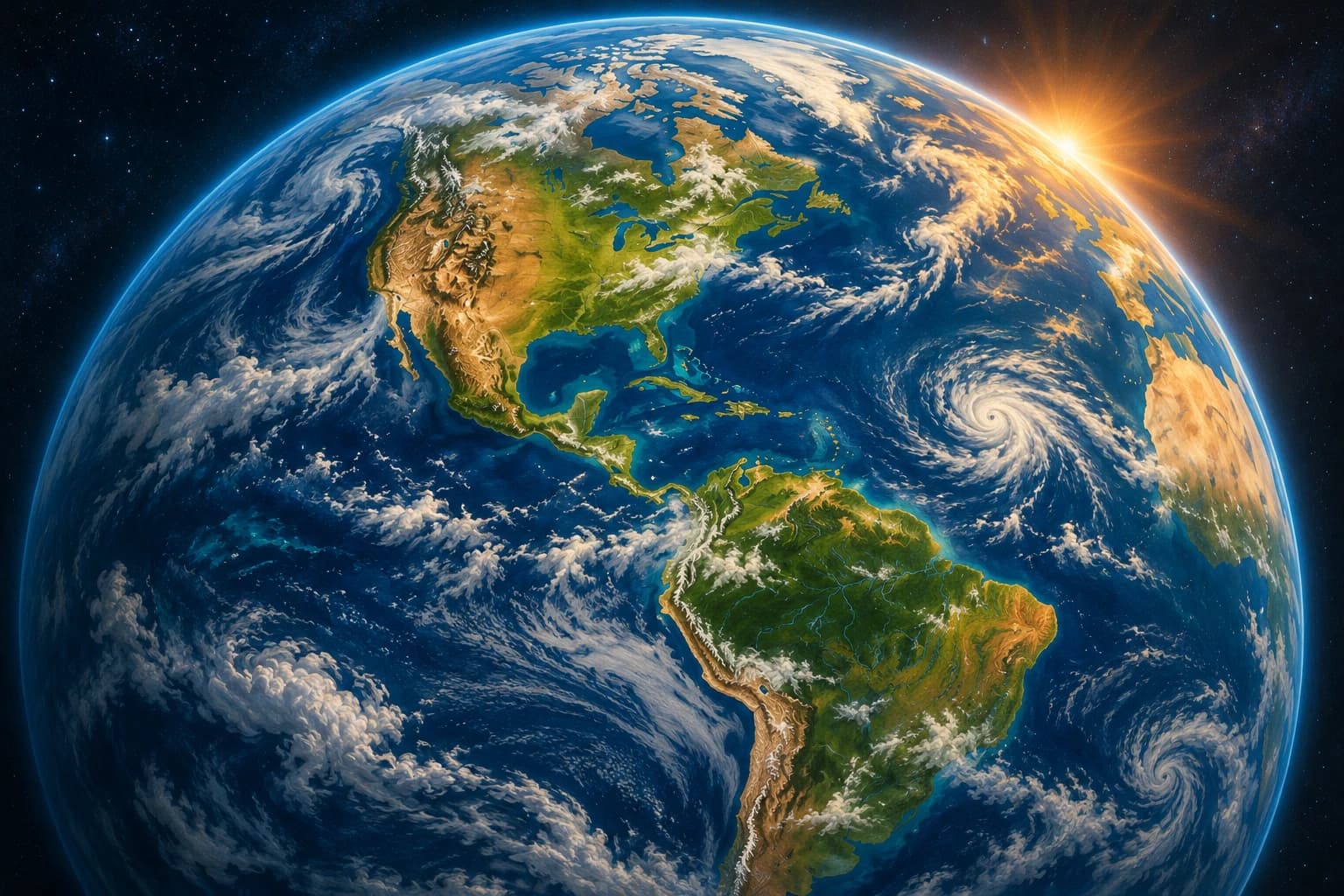
↻ + The effect reinforces the initial change.
What we know
Loss of plants and soil carbon can weaken sinks and increase atmospheric CO₂.
What remains uncertain
Brighter soils can reflect more light and offset some warming; management and rainfall matter.
Timescale
Degradation over years or decades; variable recovery.
Sources and credits
Based on Ripple et al. (2023), One Earth. Study loop: 35.
- D’Odorico, P. et al. (2013). Global desertification: drivers and feedbacks. Advances in Water Resources 51, 326–344.
Educational adaptation and AI-assisted illustrations: EkoPulse.