
Oceans · Biological process
Coastal ecosystem productivity
What does it mean?
Carbon uptake and storage by coastal habitats such as mangroves, salt marshes and seagrass meadows.
Degradation of these ecosystems can reduce their ability to remove CO₂ and protect buried carbon.
How the loop works
- 1
Coastal climate pressures increase
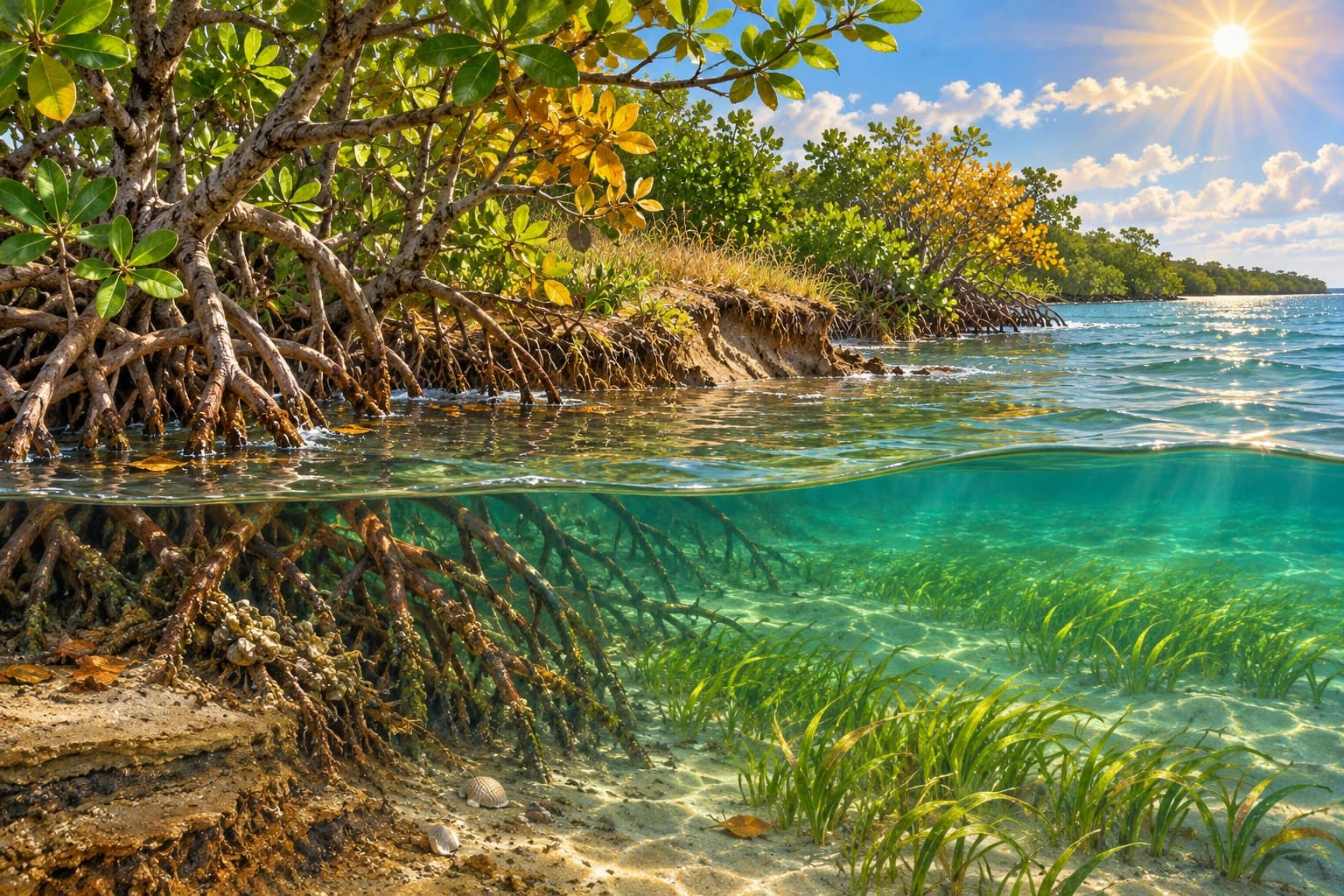
- 2
Coastal habitats degrade
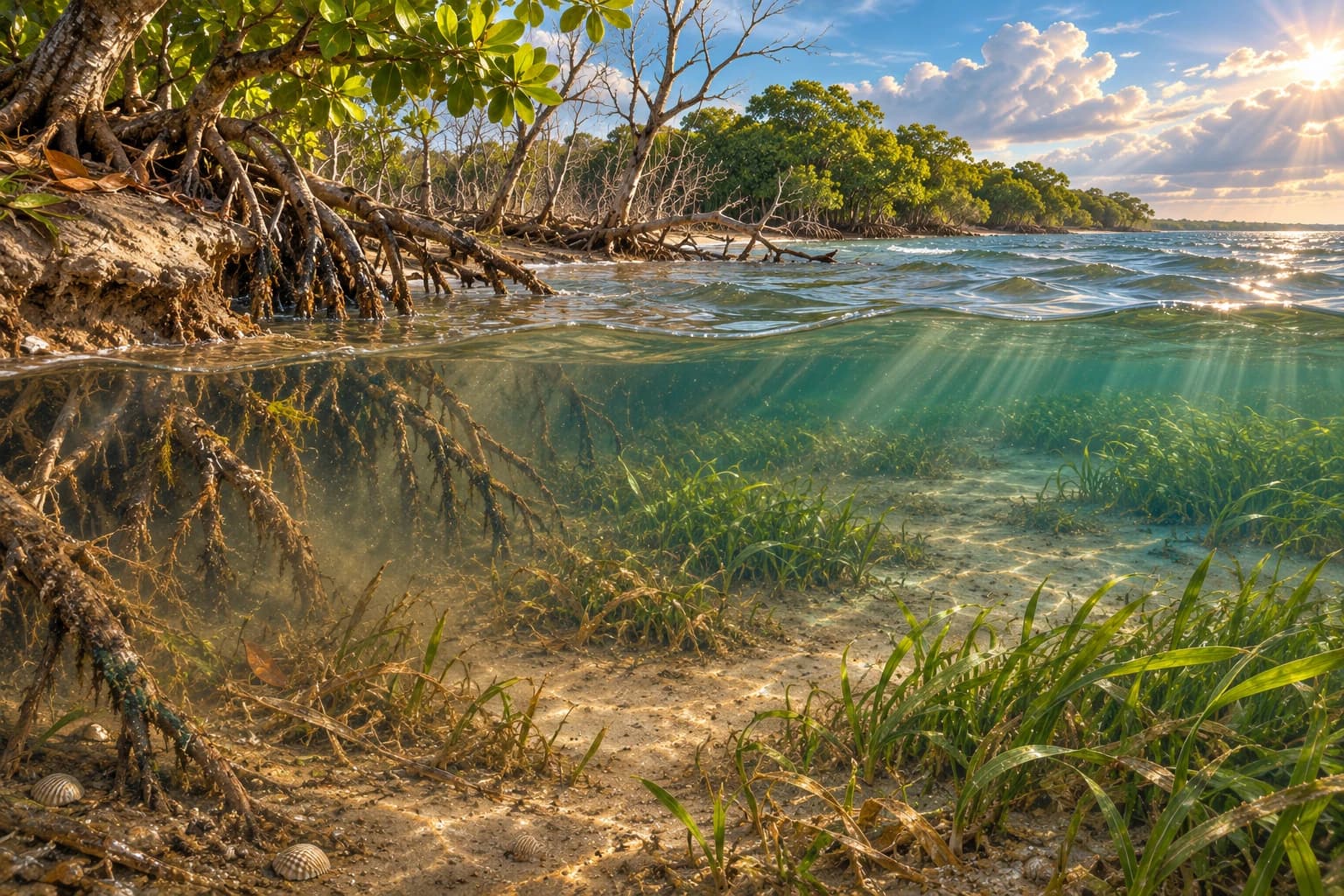
- 3
Less carbon is stored
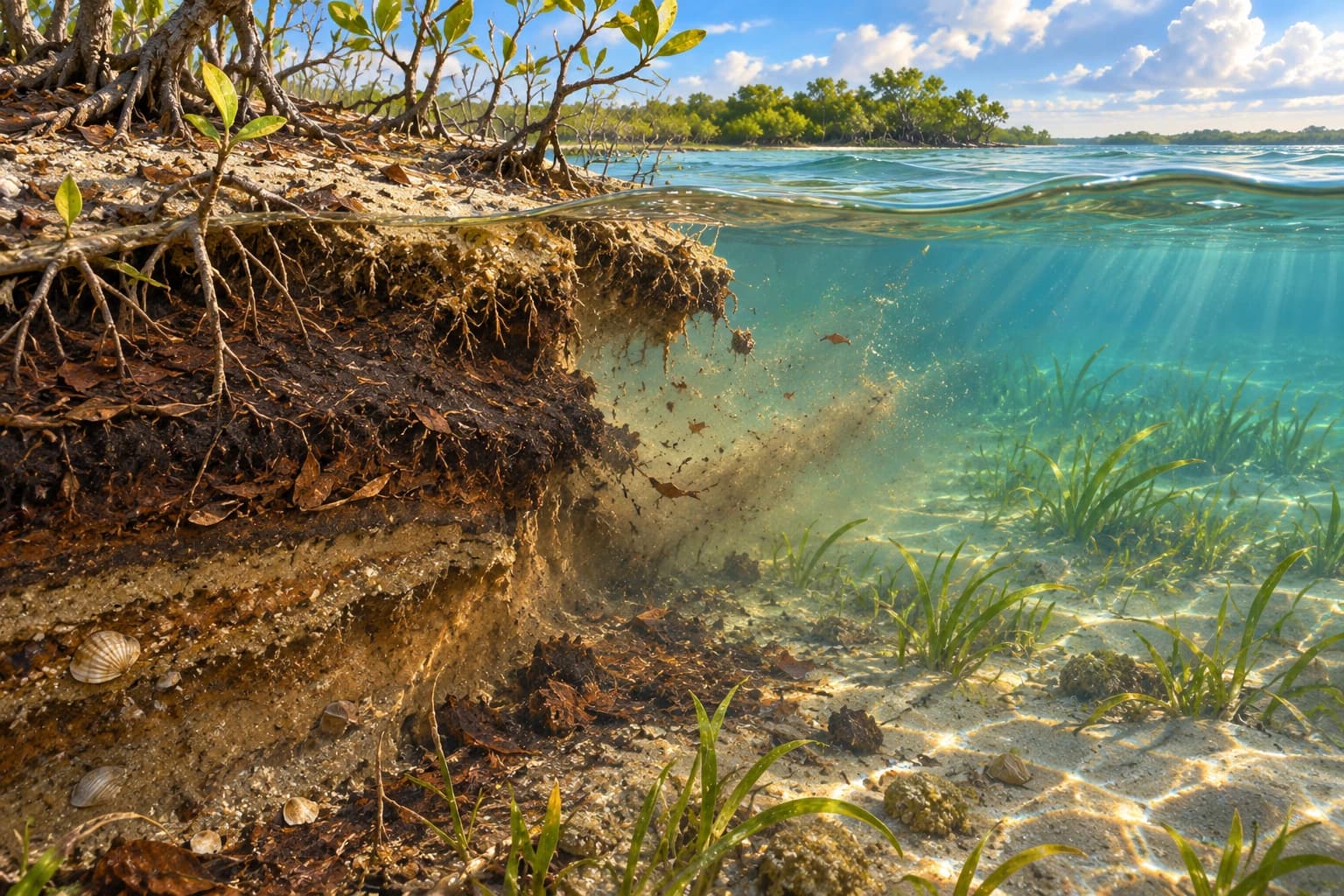
- 4
Warming is reinforced

↻ + The effect reinforces the initial change.
What we know
Coastal vegetation and sediments can retain carbon; their loss weakens that service.
What remains uncertain
Local adaptation, sea-level rise and human pressures determine whether habitats persist or recover.
Timescale
Episodic damage; habitat and sediment changes over decades or longer.
Sources and credits
Based on Ripple et al. (2023), One Earth. Study loop: 38.
- Mcleod, E. et al. (2011). A blueprint for blue carbon: toward an improved understanding of the role of vegetated coastal habitats in sequestering CO2. Frontiers in Ecology and the Environment 9, 552–560.
- Alongi, D. M. (2015). The impact of climate change on mangrove forests. Current Climate Change Reports 1, 30–39.
Educational adaptation and AI-assisted illustrations: EkoPulse.