
CO₂ fertilization
What does it mean?
A potential increase in photosynthesis and plant growth when more CO₂ is available in the air.
Some additional CO₂ can enter plants and soils, slowing its atmospheric accumulation.
How the loop works
- 1
Atmospheric CO₂ increases

- 2
Photosynthesis can increase
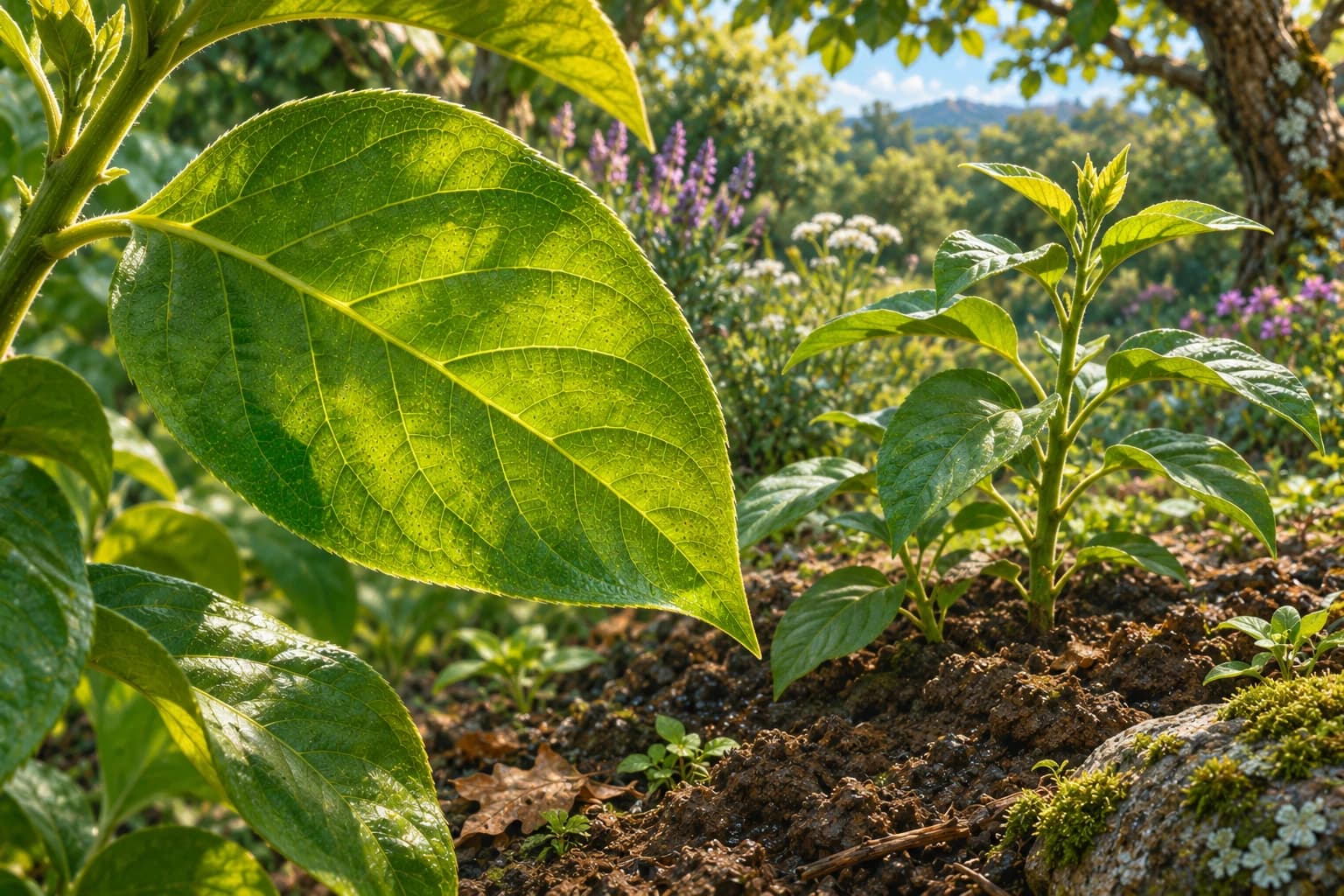
- 3
More carbon enters vegetation
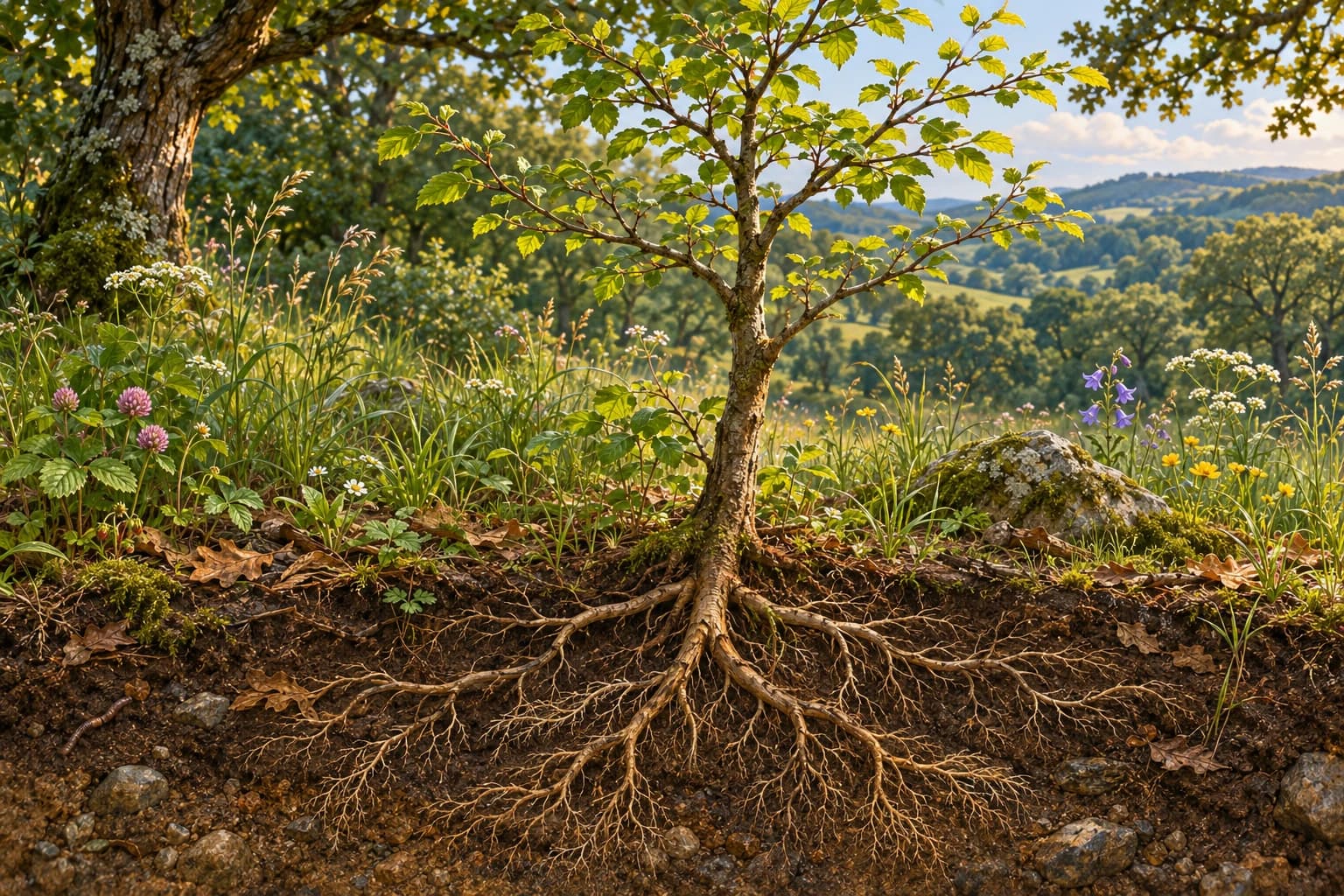
- 4
Some of the CO₂ increase is slowed
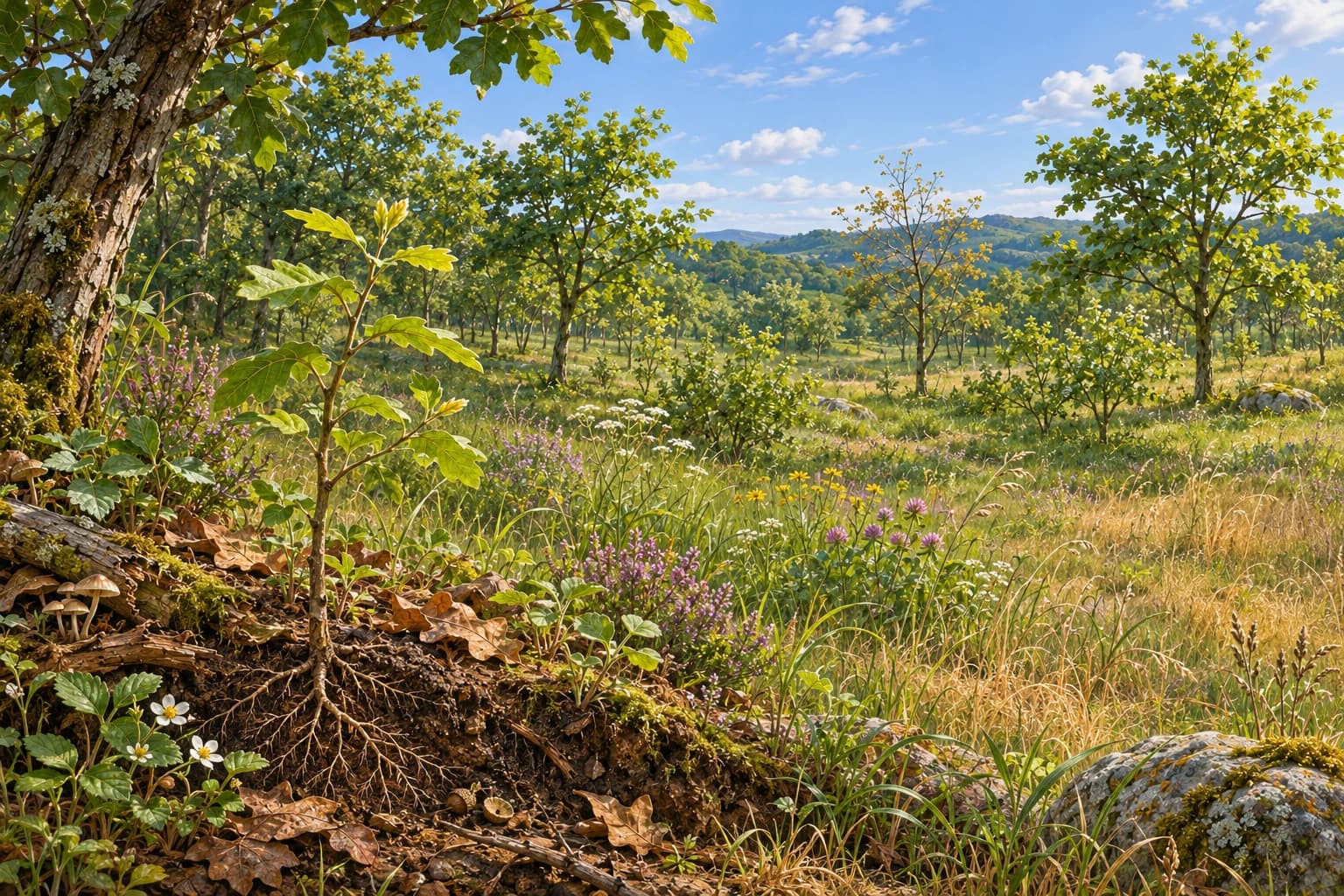
↻ − The effect opposes the initial change; it does not guarantee a return to the previous temperature.
What we know
Elevated-CO₂ experiments show higher productivity in many plants under suitable conditions.
What remains uncertain
Water, nutrients and heat limit the response; storage is not permanent and does not cancel human emissions.
Timescale
Rapid photosynthesis; storage changes over years or decades.
Sources and credits
Based on Ripple et al. (2023), One Earth. Study loop: 37.
- Norby, R. J. et al. (2005). Forest response to elevated CO2 is conserved across a broad range of productivity. Proceedings of the National Academy of Sciences 102, 18052–18056.
- Heinze, C. et al. (2019). ESD Reviews: Climate feedbacks in the Earth system and prospects for their evaluation. Earth System Dynamics 10, 379–452.
Educational adaptation and AI-assisted illustrations: EkoPulse.